Successful honey removal requires a balance of personal safety and efficient hive management. To remove honey-filled frames, you must equip yourself with standard protective gear, specifically a bee suit, gloves, and a veiled hat, alongside essential manipulation tools like a hive tool and a smoker. Furthermore, you need a specific mechanism to separate bees from the comb—such as an escape board, fume board, or bee brush—and a sealed container, like an empty super or plastic tub, to transport the harvest.
The critical challenge in harvesting is not just lifting the frames, but removing the bees from them without inducing robbing behavior or aggression. Your choice of removal tool dictates the speed of your workflow and the level of disturbance to the colony.
Essential Personal Protective Equipment (PPE)
Full-Body Protection
Harvesting honey often triggers a stronger defensive response than routine inspections. A high-quality bee suit is non-negotiable to cover your body and clothing.
Protecting Vulnerable Areas
You must wear gloves to protect your hands while manipulating sticky frames. A veiled hat is critical to protect your face and neck from stings, ensuring you remain calm while working.
Tools for Hive Manipulation
Gaining Access
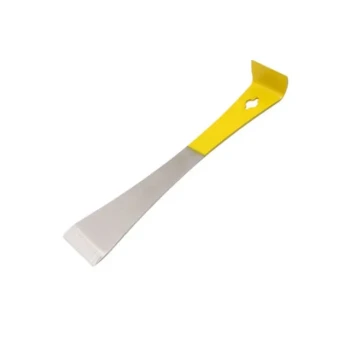
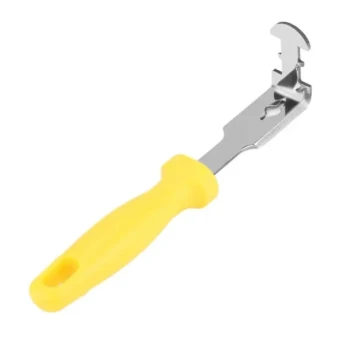
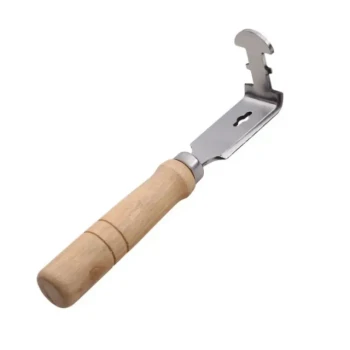
The propolis seals on honey supers can be incredibly strong. A sturdy hive tool is required to pry apart the boxes and lift the frames for inspection and removal.
Managing Colony Temperament
A smoker is essential for masking alarm pheromones. Even when harvesting, a few puffs of cool smoke help keep the bees calm and manageable during the disturbance.
Methods for Clearing Bees
The Passive Approach
An escape board acts as a one-way door mechanism. You place it between the brood nest and honey supers a day before harvesting, allowing bees to leave the honey supers but preventing their return.
The Chemical Approach
For faster results, a fume board combined with bee repellent can be used. The vapors drive the bees down out of the honey supers quickly, allowing for immediate removal.
The Manual Approach
A bee brush offers a low-tech solution for small-scale removal. You physically sweep the bees off each individual frame, though this requires precision to avoid agitating the colony.
Transport and Logistics
Securing the Harvest
Once frames are free of bees, they must be covered immediately to prevent robbing. An empty super with a lid or a designated plastic tub is necessary to transport the frames from the apiary to your processing area.
Understanding the Trade-offs
Speed vs. Disruption
Using fume boards and repellents is the fastest method, ideal for larger apiaries. However, it introduces strong odors and chemicals that some beekeepers prefer to avoid.
Labor vs. Agitation
Using a bee brush is inexpensive and chemical-free, but it is labor-intensive. It can also agitate the bees significantly more than passive methods, increasing the risk of stings.
Planning vs. Convenience
Escape boards are the calmest, most bee-friendly method. The downside is logistical: they require two trips to the apiary—one to install the board and another to harvest 24 to 48 hours later.
Making the Right Choice for Your Goal
Select your gear based on the size of your operation and your tolerance for chemicals.
- If your primary focus is speed and efficiency: Utilize a fume board with repellent to clear supers immediately without a return trip.
- If your primary focus is a chemical-free, low-stress harvest: Use an escape board to clear the bees passively over 24 hours.
- If your primary focus is low cost for a single hive: Rely on a bee brush to manually clear frames, provided you work gently.
With the right protection and the correct clearing method, you can secure your harvest while keeping the colony calm and intact.
Summary Table:
| Equipment Category | Essential Tools | Primary Function |
|---|---|---|
| Personal Protection | Bee Suit, Gloves, Veiled Hat | Prevents stings and ensures beekeeper safety during harvest. |
| Manipulation Tools | Hive Tool, Smoker | Pries frames apart and calms bees by masking alarm pheromones. |
| Bee Removal | Escape Board, Fume Board, Bee Brush | Clears bees from honey frames using passive, chemical, or manual methods. |
| Logistics | Empty Supers, Lids, Plastic Tubs | Secures and transports honey frames while preventing robbing behavior. |
Elevate Your Apiary’s Productivity with HONESTBEE
At HONESTBEE, we specialize in empowering commercial apiaries and distributors with the professional-grade tools required for a seamless honey harvest. Whether you need high-durability bee suits for maximum protection, precision hive-making machinery, or efficient honey-filling systems, our comprehensive wholesale portfolio has you covered.
Why partner with HONESTBEE?
- Full Spectrum Supply: From essential consumables to advanced beekeeping machinery.
- Built for Professionals: Our equipment is designed to withstand the demands of large-scale commercial operations.
- Industry Expertise: We cater specifically to the needs of distributors and commercial beekeepers globally.
Ready to scale your honey production and streamline your workflow? Contact us today to explore our wholesale offerings and discover how our equipment can drive your success.
Related Products
- Lightweight Plastic Uncapping Roller with Tines
- Professional Classic Wood Handle Honey Uncapping Fork
- Professional Stainless Steel Pry-Bar Hive Tool
- Adjustable Stainless Steel Honey Uncapping Fork with Plastic Handle for Beekeeping
- Professional Wide Head Honey Uncapping Fork for Beekeeping
People Also Ask
- How does an uncapping roller work for uncapping honey frames? A Guide to Wax Preservation Beekeeping
- What is the role of an uncapping roller in Varroa mite assessment? Boost Colony Health with Efficient Mite Control
- What are the benefits of using an uncapping roller? Save Bee Energy and Boost Hive Productivity
- How does an uncapping roller work on honey frames? Efficient Wax Preservation for Better Beekeeping
- What are the drawbacks of using an uncapping roller? Overcome Inefficiency in Honey Extraction