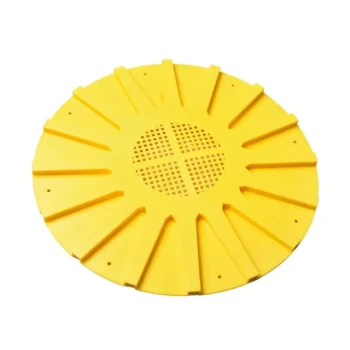
A pollen feeder is a specialized management device used by beekeepers to supply honey bees with pollen or a nutritionally equivalent substitute. These devices, which can be purchased commercially or constructed at home using simple hardware, serve as a critical life-support system for the colony when natural resources are unavailable.
Core Takeaway Pollen feeders are essential tools for bridging nutritional gaps, allowing beekeepers to artificially sustain brood rearing during the early Spring and late Summer when natural protein sources are scarce or nonexistent.
The Biological Necessity of Pollen Feeding
Fueling the Brood-Rearing Season
The primary biological driver for using a pollen feeder is the need for protein during reproduction.
In early Spring (typically March, April, and May), colonies attempt to rapidly expand their population. As temperatures rise, the queen begins laying eggs, requiring massive amounts of protein to rear the developing larvae (brood).
However, during this transitional window, natural pollen from flowering plants is often scarce. A pollen feeder provides the necessary resources to sustain this growth before the spring bloom fully arrives.
Surviving Seasonal Dearths
Bees also face nutritional crises outside of winter.
A "dearth" refers to a shortage of nectar and pollen-producing flowers, which often occurs in early Fall (August and September) or during prolonged droughts.
Without intervention via a feeder, the hive may lack the stored protein required to maintain colony health or survive through the coming winter.
Implementation and Management
Commercial vs. Homemade Solutions
Beekeepers have flexibility in how they deploy these feeders.
Commercial versions are available and ready for immediate use. However, homemade versions are highly effective and can be easily built using standard tools. This accessibility ensures that cost is rarely a barrier to providing essential nutrition.
Ease of Monitoring
Regardless of whether you buy or build, the utility of a feeder lies in its management.
Ideally, a feeder allows the beekeeper to easily check consumption rates. Monitoring how quickly bees consume the substitute helps the beekeeper gauge the colony's health and the severity of the local forage shortage.
Critical Trade-offs to Understand
Supplement vs. Substitute
It is vital to recognize that a pollen feeder provides a substitute or a supplement, not a perfect replacement for natural forage.
Beekeepers generally use these devices only when the natural supply of nectar and pollen is insufficient. Relying on them when natural sources are abundant is unnecessary and potentially less nutritionally complete than a diverse natural diet.
The Risk of Starvation
The most significant trade-off is the cost of management versus the risk of colony collapse.
During harsh winters or droughts, a colony without enough stored honey or pollen will fail. The effort required to install and refill a feeder is a necessary investment to prevent starvation when nature cannot provide enough food.
Making the Right Choice for Your Goal
Deciding when to deploy a pollen feeder depends on the specific seasonal challenge your apiary is facing.
- If your primary focus is Spring Buildup: Deploy the feeder in March or April to fuel rapid population growth before the main nectar flow begins.
- If your primary focus is Winter Survival: Install the feeder during late Summer or early Fall dearths to ensure the colony has enough protein reserves to last through the cold months.
- If your primary focus is Emergency Management: Utilize the feeder immediately during unexpected droughts when natural flowering plants stop producing.
By monitoring local conditions and intervening with the right nutrition at the right time, you transform a passive hive into a resilient, managed colony.
Summary Table:
| Feature | Purpose & Function | Timing for Deployment |
|---|---|---|
| Core Function | Supplies protein via pollen substitutes/supplements | Early Spring (March-May) & Late Summer (Aug-Sept) |
| Biological Goal | Fuels larval development and queen egg-laying | Pre-bloom expansion and drought survival |
| Equipment Type | Commercial or DIY hardware solutions | During natural forage shortages (Dearths) |
| Management | Easy monitoring of consumption rates | Continuous monitoring until natural flow starts |
Maximize Your Apiary’s Productivity with HONESTBEE
At HONESTBEE, we understand that large-scale beekeeping success depends on precision and reliable equipment. Whether you are managing a commercial apiary or supplying the industry as a distributor, we provide the robust wholesale solutions you need to thrive.
From advanced hive-making and honey-filling machinery to a comprehensive range of beekeeping tools and essential consumables, our portfolio is designed to enhance your operational efficiency and colony health.
Partner with HONESTBEE today to access high-quality equipment and expert support. Contact us now to discuss our wholesale offerings and how we can fuel your growth.
Related Products
- HONESTBEE Round Hive Top Bee Feeder for Syrup
- Removable Plastic Pollen Trap With Ventilated Tray for Bees Pollen Collector
- HONESTBEE Entrance Bee Feeder Efficient Hive Front Liquid Feeding Solution for Beekeeping
- HONESTBEE Entrance Bee Feeder Professional Hive Nutrition Solution for Beekeeping
- HONESTBEE Square Top Hive Bee Feeder Top Bee Feeder
People Also Ask
- What can the round hive top feeder be used for? A Guide to Efficient, Safe Bee Feeding
- What types of hive boxes is the round hive top feeder compatible with? Universal Fit for 8 & 10-Frame Langstroth Hives
- What is the capacity of the round hive top feeder for syrup and pollen? A Guide to Targeted Apiary Support
- What types of feed can be used with the round hive top feeder? Versatile Feeding for Optimal Apiary Health
- How do you use a top feeder for bees? Expert Guide to Installation and High-Volume Hive Feeding