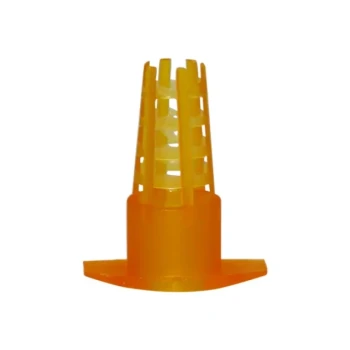
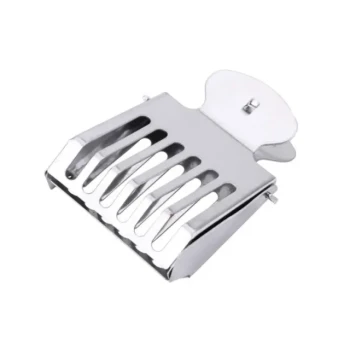
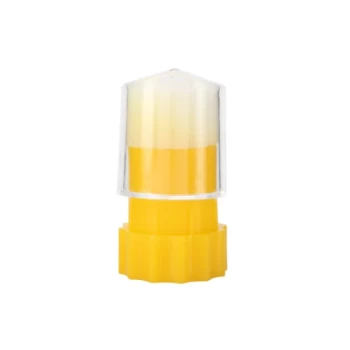
A queen cell protector is a specialized beekeeping tool designed to shield vulnerable queen cells from destruction. Typically constructed as a cone-shaped spiral of wire, it fits snugly around a mature queen cell. Its primary function is to safeguard the developing queen during transfer between colonies or to prevent the first emerging queen from killing her unhatched rivals.
In queen rearing, timing is everything; a protector acts as a physical barrier that safeguards the queen cell during its most vulnerable phase—introduction and emergence—ensuring the acceptance and survival of valuable genetic stock.
Physical Construction and Varieties
The Classic Wire Design
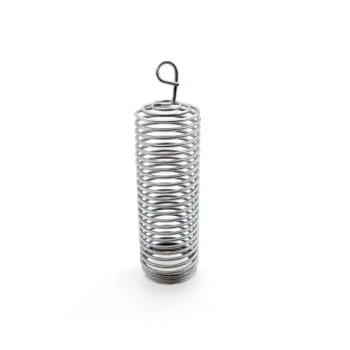
The most traditional form of a queen cell protector is a spirally wound wire cone. This structure is designed to encase the sides of the queen cell while leaving the tip exposed for emergence.
Component Parts
A standard wire protector consists of the coil itself and often a square tinplate. This plate acts as a barrier at the base, sliding between the cell and the comb, though it is not strictly necessary if the cell has a substantial natural base.
Alternative Materials
While spiral wire is the standard, beekeepers utilize various materials depending on resource availability. Alternatives range from solidly engineered Perret-Maisonneuve cups and woven bamboo to simple, cost-effective wraps made from aluminum foil.
The Function in Queen Rearing
Preventing "Fratricide"
In a batch of queen cells, the first virgin queen to emerge will instinctively locate and destroy the remaining unhatched cells. Beekeepers install protectors approximately 10 to 11 days after grafting to physically block this behavior, ensuring every mature queen can emerge safely.
Safe Introduction to New Colonies
When moving a queen cell from a "queen-right" colony (one that already has a queen) to a "queenless" one, rejection is a risk. The protector shields the cell from aggressive worker bees until the colony acclimates to and accepts the new queen.
Installation and Trade-offs
Importance of Proper Spacing
The wire coil must be adjusted carefully. You must pull the coil slightly to create even gaps that are smaller than the thickness of the wire itself.
Managing Temperature
These gaps are critical functionality, not just design. They allow worker bees to cluster directly on the protector, transferring body heat to the cell to maintain the correct incubation temperature.
Potential Impact on the Comb
Installing these devices often requires physical alterations to the frame. To ensure enough workers can surround the protector, you may need to crush adjacent worker cells to create adequate space.
Handling Risks
Great care is required during the installation process. The developing queen is fragile; you must avoid rattling or shaking the cell inside the protector, which can damage the pupa or wings.
Making the Right Choice for Your Goal
Whether you are a commercial breeder or a hobbyist, the use of protectors depends on your specific objective.
- If your primary focus is maximizing yield: Apply protectors to all mature cells 10 days post-grafting to prevent the first emerging queen from destroying the rest of the batch.
- If your primary focus is colony introduction: Use a protector when moving a valuable cell into a new, potentially aggressive queenless colony to guarantee its acceptance.
By mechanically securing the environment around the queen cell, you replace the uncertainty of bee behavior with the certainty of physical protection.
Summary Table:
| Feature | Classic Wire Protector | Alternative Wraps (Foil/Bamboo) |
|---|---|---|
| Primary Material | Spirally wound wire cone | Aluminum foil, woven bamboo, or plastic |
| Design Focus | Thermal access & easy emergence | Low cost & immediate availability |
| Key Component | Coil + optional tinplate base | Simple physical barrier wrapping |
| Main Benefit | Allows workers to maintain cell heat | Prevents worker bees from tearing cell |
| Best Use Case | Commercial queen rearing & grafting | Temporary or emergency cell protection |
Maximize Your Apiary's Productivity with HONESTBEE
At HONESTBEE, we understand that every queen cell represents the future of your colony. As a leading partner for commercial apiaries and distributors, we provide a comprehensive range of professional-grade beekeeping tools—from precision queen rearing equipment and hive-making machinery to honey-filling systems and essential consumables.
Whether you are scaling your wholesale operations or looking to improve queen survival rates with high-quality hardware, our expert-backed solutions are designed to deliver results. Strengthen your business with industry-leading equipment today.
Contact HONESTBEE to Request a Wholesale Quote
Related Products
- JZBZ Style Shipping Cell Protector for Queen Rearing Kit
- JZBZ Style Push-In Cell Protector for Professional Queen Rearing Kits
- Premium Nicot Style Cell Bar Holder and Queen Cell Cup Holder System
- JZBZ Langstroth Queen Rearing Frame for Beekeeping
- Portable Queen Bee Incubator with 12V Car Adapter for Safe Transport
People Also Ask
- What is the purpose of queen cell protectors? Safeguard Your Queen Rearing Success
- How can aluminum foil be used to protect a queen cell? Low-Cost Shielding for Queen Introduction
- What are some methods and types of queen cell protectors? Safeguard Your Queen Introduction Process
- What is the primary reason for using queen cell protectors? Secure Your Yield with Proven Protection
- What is the role of queen cell protectors and emergence cages? Secure Your Genetic Stock and Hive Stability