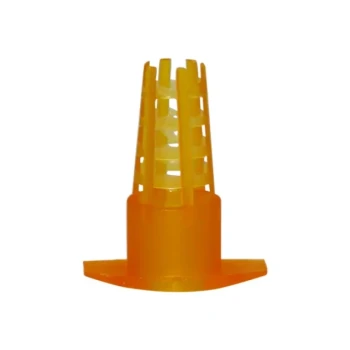
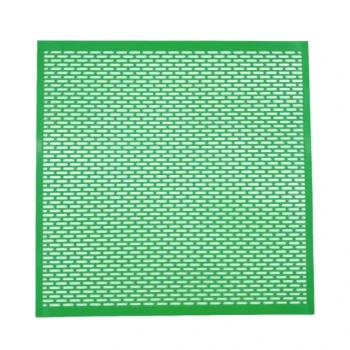
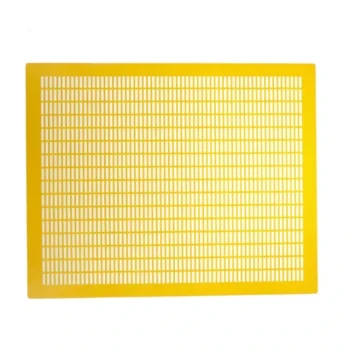
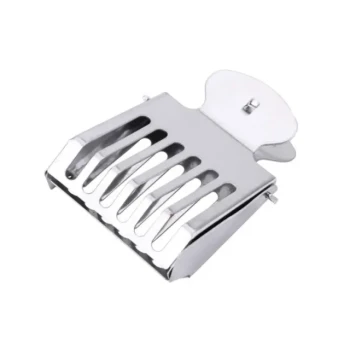
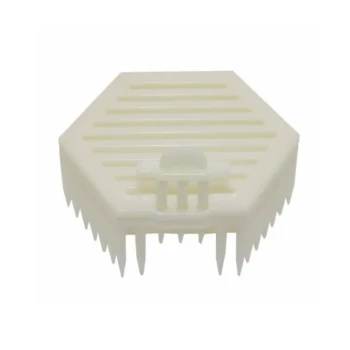
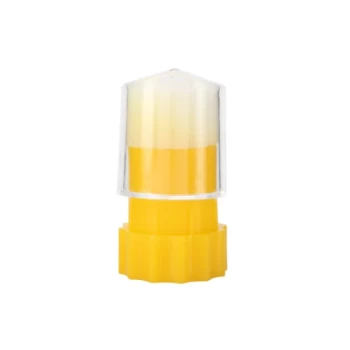
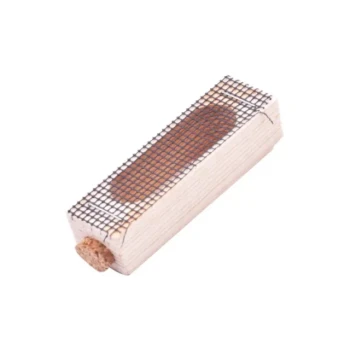
Queen cell protectors and emergence cages are the primary defense against stock loss in the final days of rearing. They are biologically necessary to create a physical barrier around mature cells within the hive. This isolation prevents newly emerged virgin queens from killing their rivals and stops the colony's worker bees from destroying the cells before emergence.
The Core Reality In a honeybee colony, biology dictates that only one queen survives to rule. Emergence cages provide essential physical isolation to override this instinct, ensuring that the first queen to hatch cannot destroy the remaining inventory of unhatched cells.
Managing the Instinct for Regicide
Prevention of Lethal Combat
The most critical function of an emergence cage is to prevent "survival of the fittest" combat. Without barriers, the first virgin queen to emerge will instinctively seek out other queen cells. She will chew through the wax walls and sting her unhatched sisters to death, destroying your entire production crop in a matter of hours.
Protecting the Hierarchy
If you are rearing queens in a colony that still possesses a laying queen (or if a virgin queen was missed during grafting), a newly emerged queen becomes an immediate threat. The cage restricts her movement, preventing her from locating and killing the existing colony queen or engaging in a lethal battle for dominance.
Defending Against Colony Aggression
Mitigating Worker Sabotage
Worker bees act as the colony's immune system and quality control. They may attempt to tear down cells they perceive as foreign, inferior, or superfluous. Queen cell protectors act as armor, preventing workers from chewing through the sidewalls of the cell and killing the developing pupa inside.
Preventing "Balling" Incidents
Upon emergence, a new virgin queen is vulnerable. If the colony's pheromones are not perfectly aligned, or if the workers are agitated, they may attack the new queen in a cluster behavior known as "balling." The emergence cage allows the workers to become accustomed to the new queen's scent through the mesh without being able to physically harm her.
Operational Control and Quality Assurance
Facilitating Safe Collection
For large-scale operations, searching for loose virgin queens on frames is inefficient and risky. Emergence cages trap the queen immediately upon hatching. This guarantees that every successful cell results in a captured queen that is ready for transfer or shipment.
Enabling Vitality Checks
As noted in supplementary observation protocols, confinement allows for immediate quality control. Before the queen is released or sold, the beekeeper can inspect her through the cage to verify she has fully formed wings, proper leg function, and sufficient body weight.
Understanding the Trade-offs
The Risk of Temperature Fluctuations
While protectors offer physical safety, they can inadvertently isolate the cell from the warmth of nurse bees. If installed too early in the cycle, the plastic barrier may prevent the pupa from receiving the necessary metabolic heat transfer from the cluster, leading to "chilled brood" or delayed emergence.
Nutritional Constraints
Once a queen emerges inside a cage, she is cut off from direct access to honey stores. While nurse bees can feed her through the mesh, she is entirely dependent on their willingness to do so. A queen left in an emergence cage for too long without manual feeding or release risks dehydration and starvation.
Making the Right Choice for Your Goal
If your primary focus is Volume Production: Prioritize emergence cages over simple protectors to ensure every hatched queen is automatically captured, preventing the loss of stock due to early emergence and combat.
If your primary focus is Genetic Selection: Use cages that offer high visibility to observe the vitality and morphology of the virgin queen immediately upon hatching, allowing you to cull inferior stock before mating flights.
If your primary focus is Hive Security: Ensure protectors are applied to separate the new genetics from the established colony, preventing accidental replacement or injury to your breeder queen during the finishing process.
By mechanically separating the queens from each other and the colony, you convert a biological battleground into a controlled production environment.
Summary Table:
| Feature | Primary Function | Business Impact |
|---|---|---|
| Regicide Prevention | Blocks virgin queens from killing rivals | Protects total production inventory |
| Worker Shielding | Prevents workers from tearing down cells | Reduces cell loss and "balling" risks |
| Operational Control | Traps queens for immediate collection | Streamlines transfer and shipping prep |
| Quality Assurance | Facilitates visual vitality checks | Ensures only high-grade queens are sold |
Maximize Your Apiary's Success with HONESTBEE
Protecting your genetic investment requires professional-grade equipment. HONESTBEE caters to commercial apiaries and distributors with a comprehensive wholesale offering designed for scale and reliability.
We provide the full spectrum of beekeeping tools, machinery, and equipment—from high-durability queen rearing consumables to industrial-grade hive-making and honey-filling machines. Our portfolio even extends to unique honey-themed cultural merchandise to help you diversify your brand.
Ready to streamline your operations and secure your stock?
Contact us today to explore our wholesale solutions
References
- Ustadi Ustadi, Djati Batoro. The Difference Queen Cup Materials on the Acceptance Grafted Larvae and Wing Morphometrics in <i>Apis cerana</i> Queen Rearing. DOI: 10.2991/absr.k.220401.051
This article is also based on technical information from HonestBee Knowledge Base .
Related Products
- JZBZ Style Shipping Cell Protector for Queen Rearing Kit
- JZBZ Style Push-In Cell Protector for Professional Queen Rearing Kits
- Premium Nicot Style Cell Bar Holder and Queen Cell Cup Holder System
- JZBZ Langstroth Queen Rearing Frame for Beekeeping
- JZBZ Type Wide Base Plastic Queen Cell Cups for Base Mounting and Queen Rearing
People Also Ask
- What is the purpose of queen cell protectors? Safeguard Your Queen Rearing Success
- How can aluminum foil be used to protect a queen cell? Low-Cost Shielding for Queen Introduction
- What are some methods and types of queen cell protectors? Safeguard Your Queen Introduction Process
- What is the primary reason for using queen cell protectors? Secure Your Yield with Proven Protection
- What is the role of queen cell protectors and emergence cages? Secure Your Genetic Stock and Hive Stability