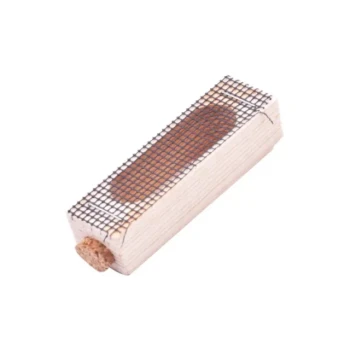
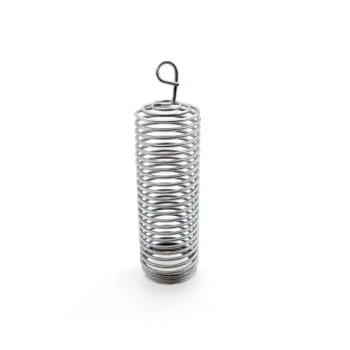
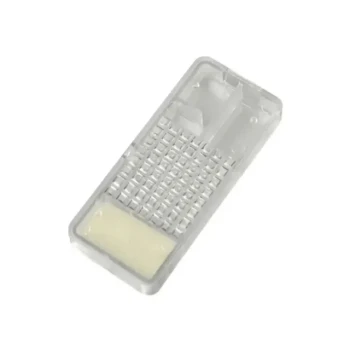
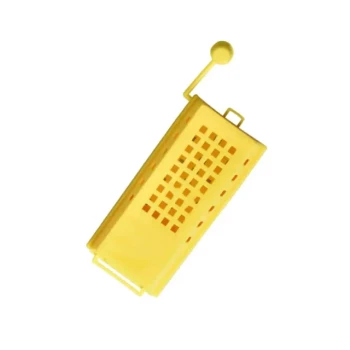
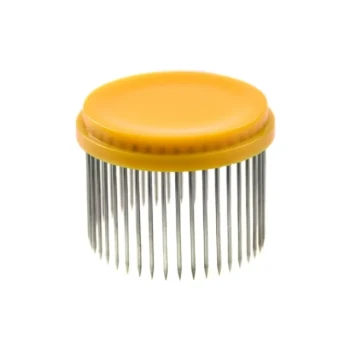
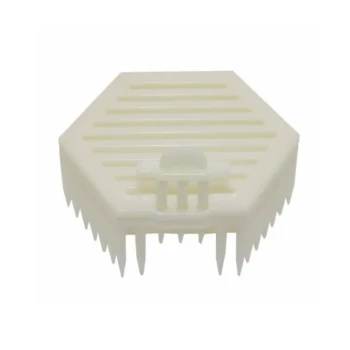
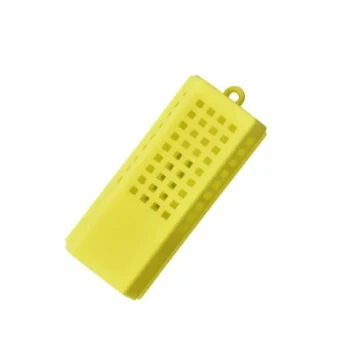
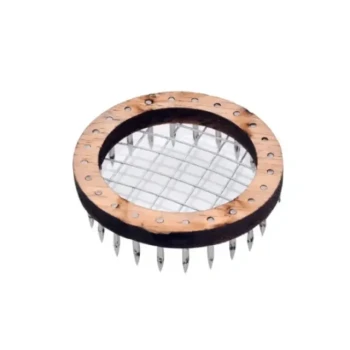
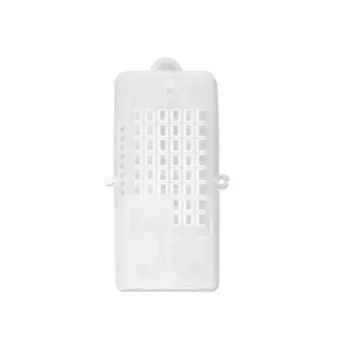
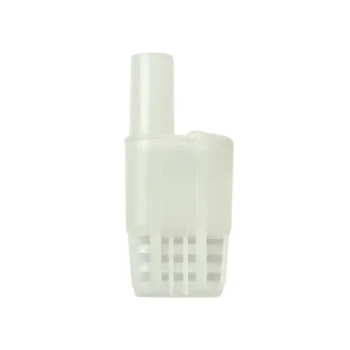
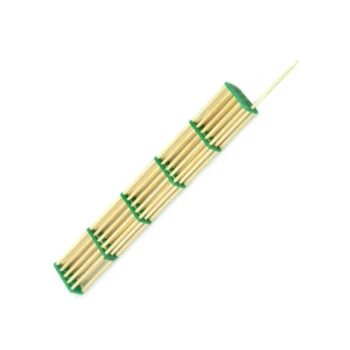
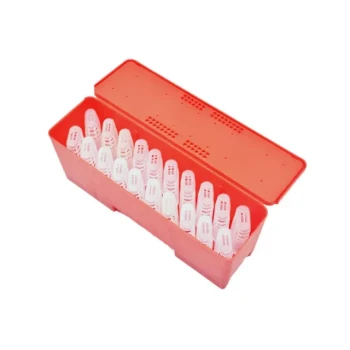
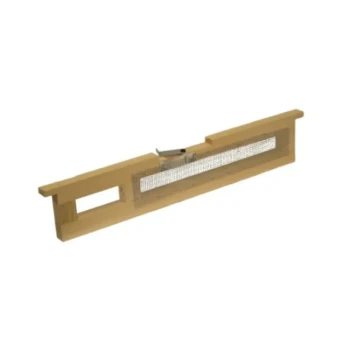
A standard queen cage is a wire mesh enclosure specifically designed to safely introduce a new queen bee into an existing colony. It typically consists of a durable metal frame, a clip for secure attachment within the hive, and a sliding screen mechanism. This device is critical for preventing the colony from immediately killing the new queen, giving them time to accept her pheromones while she remains physically protected.
Core Insight: The standard queen cage acts as a biological "airlock." It allows the critical exchange of scent and pheromones—which dictates hive identity—without allowing the physical contact that would lead to the new queen's injury or death.
The Anatomy and Function
Wire Mesh Enclosure
The body of the cage is made of wire mesh. This allows air and scent to flow freely between the queen and the colony. It also permits worker bees to feed the queen through the screen without being able to sting or ball (surround and overheat) her.
Metal Frame and Clip
The mesh is supported by a metal frame for structural integrity. A built-in clip allows the beekeeper to hang the cage securely inside the hive, ensuring it doesn't fall to the bottom board where the queen might be neglected or chilled.
Sliding Screen
The cage features a sliding screen. This is the control mechanism for the introduction. It can be adjusted to expose the queen to the colony through the mesh or, eventually, to release her.
Step-by-Step Usage
Inserting the Queen
The queen is gently inserted through one end of the cage. Once she is inside, that end is secured to prevent immediate escape.
Strategic Placement
The cage is placed inside the hive. Common placement locations include hanging it on a top bar of a frame or positioning it near the hive entrance. The goal is to place her where nurse bees congregate so she is cared for.
The Acclimation Process
Once placed, the sliding screen is opened specifically to expose the wire mesh (not to release her immediately). This allows the worker bees to smell, touch antennal tips, and get accustomed to the new queen's pheromones while she remains safely confined behind the wire.
Understanding the Risks and Trade-offs
The "Non-Laying" Vulnerability
A major limitation of the standard queen cage is that it confines the queen completely, preventing her from laying eggs. A queen that is not laying is viewed with suspicion by the colony. Because she cannot start her brood pattern while in the cage, her acceptance relies entirely on pheromone acclimation.
The Moment of Release
The riskiest part of using a standard cage is the manual release. Even after acclimation, the queen is vulnerable because she has not yet produced eggs. The disturbance of opening the hive to release her, combined with her non-laying status, can sometimes trigger the bees to turn on her.
Comparison to Other Methods
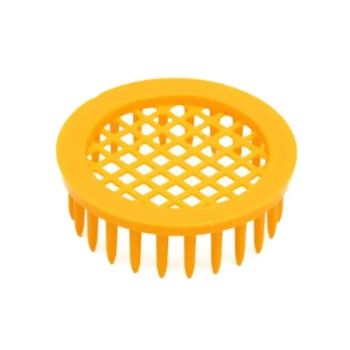
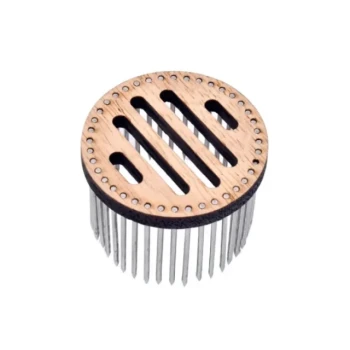
Unlike "push-in" or "press-in" cages—which are placed over a section of comb to allow the queen to lay eggs before release—the standard cage prioritizes portability and simple confinement. While easier to use, it lacks the biological advantage of allowing the queen to establish a brood nest before fully joining the colony.
Making the Right Choice for Your Goal
- If your primary focus is Simplicity: Use the standard queen cage for its ease of placement and secure confinement, but ensure you leave it in long enough for thorough pheromone distribution.
- If your primary focus is Risk Reduction: Be hyper-vigil during the release phase; minimize smoke and disturbance, as the colony may still be skeptical of a queen who has not yet begun to lay.
The standard queen cage is your first line of defense against rejection, trading immediate egg-laying for the physical safety required to survive the initial introduction.
Summary Table:
| Feature | Description | Primary Benefit |
|---|---|---|
| Wire Mesh Body | Durable mesh enclosure | Allows feeding and pheromone exchange while preventing stings. |
| Metal Frame/Clip | Structural support with attachment | Secures cage between frames to keep the queen in the cluster. |
| Sliding Screen | Adjustable opening mechanism | Controls the transition from physical protection to colony release. |
| Pheromone Exchange | Scent-based acclimation | Acts as a biological airlock for safe hive integration. |
Elevate Your Beekeeping Operations with HONESTBEE
At HONESTBEE, we specialize in empowering commercial apiaries and distributors with high-quality, reliable beekeeping solutions. Whether you need specialized queen introduction tools, advanced honey-filling machinery, or bulk hive-making equipment, our comprehensive wholesale portfolio is designed to scale your business.
Our value to you:
- Comprehensive Supply: From essential consumables to heavy-duty machinery.
- Industry Expertise: Tools tailored for commercial efficiency and colony health.
- Wholesale Support: Competitive pricing and merchandise for your distribution network.
Ready to optimize your apiary or restock your inventory? Contact us today to discuss your wholesale needs!
Related Products
- Classic Wooden and Mesh California Queen Cage
- Durable Galvanized Steel Spring Queen Bee Cage
- Professional Queen Bee Introduction and Transport Cage
- Professional Queen Cage with Sliding Gate and Feeder Plug
- Professional Round Push-In Queen Cage with Metal Tines
People Also Ask
- How are queen cages used to protect newly hatched queens? Secure Your Virgin Queens During Development
- Why are queen cages or grid cages used in bee studies? Achieve Precise Biological Data for Research
- Why are professional queen cages necessary for queen replacement? Secure Your Apiary’s Future
- What should be done if bees damage the queen cage? Secure Your Queen with These Emergency Intervention Steps
- What is the correct procedure for installing a queen cage into a new hive? A Pro Guide for Colony Success