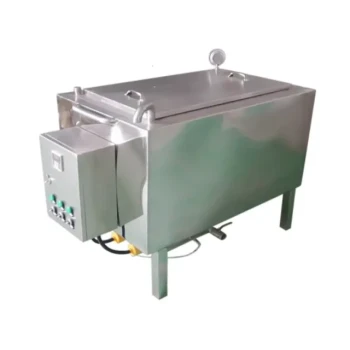
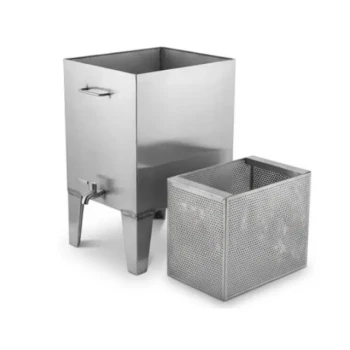
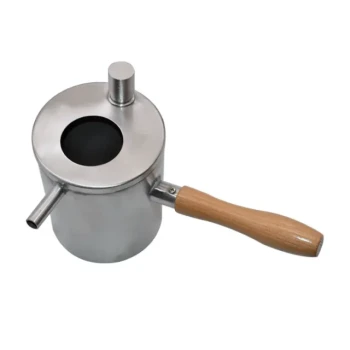
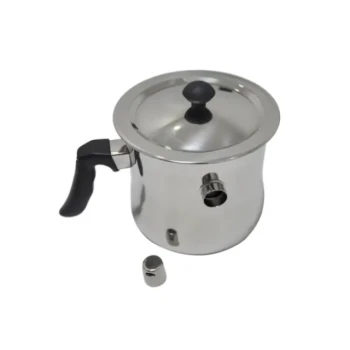
Industrial wax melting and processing equipment establishes biological safety by utilizing controlled high temperatures and rigorous fine filtration to purify old honeycombs. This specialized machinery converts raw, potentially contaminated material into high-purity beeswax, significantly reducing the biological risks associated with recycling hive products.
Industrial processing creates a biosecure production cycle by neutralizing active pathogens through heat and removing contaminants via filtration. This transforms high-risk waste into safe, reusable resources while minimizing environmental contamination.
The Mechanism of Purification
Controlled High-Temperature Processing
The core biological safety feature of industrial equipment is its ability to maintain consistent, high temperatures. This thermal treatment is designed to neutralize biological threats present in old combs. By sustaining these temperatures, the process effectively kills most non-spore-forming pathogens that may be lingering in the wax.
Fine Filtration Systems
Beyond heat, these systems employ fine filtration to physically separate impurities from the molten wax. This step removes organic debris and particulate matter where pathogens often reside. The result is a high-purity beeswax product that has been stripped of the physical reservoirs of disease.
Managing Disease Risks
Handling High-Risk Material
This equipment is specifically valuable when processing combs from colonies at high risk for serious diseases, such as American Foulbrood (AFB) or European Foulbrood (EFB). Rather than discarding these materials, the processing cycle provides a pathway to recover the wax safely. It acts as a sanitation barrier between infected hives and the final wax product.
Reducing Environmental Contamination
Processing old combs industrially prevents the accidental spread of disease back into the environment. By containing the melting process within a controlled system, the risk of pathogens escaping into the surrounding apiary is minimized. This containment is essential for maintaining a biosecure cycle for beekeeping production materials.
Understanding the Trade-offs
The Spore-Forming Distinction
While the process is highly effective against many pathogens, the primary reference notes that the high-temperature process specifically neutralizes non-spore-forming pathogens.
Limits of Sterilization
Beekeepers should understand that while the equipment handles combs at risk for AFB, the explicit neutralization claim applies to non-spore-formers. Total sterilization of highly resistant spores may require specific protocols or additional confirmation depending on the severity of the contamination.
Making the Right Choice for Your Goal
To determine if industrial processing fits your biosecurity needs, consider the following:
- If your primary focus is recovering wax from diseased hives: Rely on this equipment to safely convert high-risk combs into pure wax, isolating contaminants from the final product.
- If your primary focus is preventing reinfection: Utilize this process to neutralize active non-spore-forming bacteria effectively, breaking the cycle of disease transmission.
- If your primary focus is environmental safety: Use industrial melting to contain pathogens during processing, preventing the contamination of your wider operation.
Industrial wax processing turns a biological hazard into a valuable asset through the rigorous application of heat and filtration.
Summary Table:
| Feature | Mechanism of Action | Biological Safety Benefit |
|---|---|---|
| Thermal Treatment | Controlled high-temperature heating | Neutralizes active non-spore-forming pathogens |
| Fine Filtration | Multi-stage physical separation | Removes organic debris and particulate disease reservoirs |
| Enclosed Processing | Contained industrial environment | Prevents environmental contamination and apiary spread |
| Pathogen Targeting | Heat-intensive purification | Breaks the cycle of transmission for AFB and EFB risk materials |
Secure Your Apiary’s Bio-Security with HONESTBEE
At HONESTBEE, we specialize in empowering commercial apiaries and distributors with the professional tools needed to maintain a healthy, productive operation. Our industrial wax melting and processing machinery provides a robust sanitation barrier, transforming high-risk old combs into high-purity, reusable beeswax.
Why partner with HONESTBEE?
- Comprehensive Wholesale Catalog: From hive-making and honey-filling machines to essential consumables.
- Industry Expertise: We supply the full spectrum of beekeeping hardware designed for durability and biological safety.
- Value-Driven Solutions: Maximize your resource recovery while minimizing disease risks in your apiary.
Ready to upgrade your production cycle with industrial-grade reliability? Contact us today to discuss your equipment needs!
References
- Marco Pietropaoli, Giovanni Formato. Biosecurity measures in European beekeeping. DOI: 10.20506/rst.39.3.3174
This article is also based on technical information from HonestBee Knowledge Base .
Related Products
- Electric Commercial Beeswax Melter for Factory Use
- Steam Beeswax Melter Wax Warmer for Wax Processing
- Professional Stainless Steel Wax Melter for Beekeeping and Crafts
- Beeswax Melter for Candle Making Honey Bee Wax Melter
- Electric Beeswax Flat Sheet Machine with Operating Tray for Wax Processing
People Also Ask
- Why might a commercial beekeeper prefer an electric beeswax melter? Maximize Profit with Speed & Scale
- What safety precautions should be taken when melting beeswax? A Guide to Flammable Wax Handling
- What types of beeswax melters are available for different scales of beekeeping? Solar vs. Electric Melters Compared
- What are the three popular methods for melting beeswax? Safely Process Your Wax with Ease
- How do you melt beeswax without making a mess? Master Safe & Clean Techniques