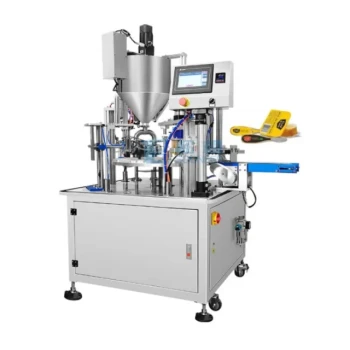
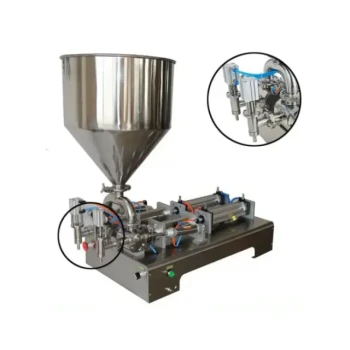
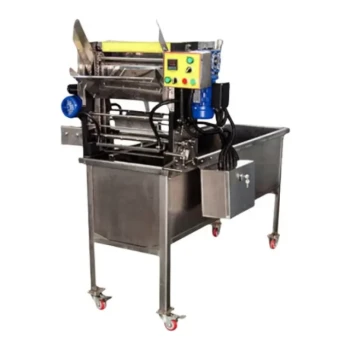
Automated honey filling technology is the critical link between raw agricultural volume and standardized commercial success. In high-output beekeeping regions, these machines provide high-precision quantitative filling that transforms massive raw harvests into finished products with speed and accuracy. By automating the process, producers significantly minimize the honey's contact time with the external environment, directly addressing the risks of air impurities and ensuring the product meets the rigorous consistency requirements of commercial distributors.
The central value of this technology is its ability to eliminate the variables of manual handling. By reducing the risk of secondary contamination and ensuring precise dosage, automated filling safeguards the biological quality of the honey while providing the throughput necessary for industrial-scale operations.
Preserving Quality Through Isolation
Minimizing Environmental Exposure
The primary threat to honey quality during processing is prolonged exposure to the environment. Automated machines drastically reduce the time honey spends in open air.
By speeding up the transfer from bulk storage to retail packaging, the window for oxidation or absorption of moisture is closed. This preserves the honey's biological integrity and flavor profile.
Eliminating Secondary Contamination
Manual filling introduces human error and biological risks. Automated systems create a closed, sanitary loop that effectively removes the operator from direct contact with the product.
This isolation is essential for reducing air impurities and preventing the introduction of foreign particles. It ensures the final product maintains the hygiene standards required for high-end retail.
Achieving Commercial Consistency
High-Precision Dosage Control
In high-output regions, material loss through overfilling can amount to significant financial waste. Automated machines utilize advanced volumetric or gravity-based principles to ensure exact weight per unit.
This precision ensures that every jar meets legal weight requirements without giving away product. It guarantees that thousands of units are identical, a necessity for wholesale distribution.
Meeting International Standards
Global markets demand strict adherence to food safety regulations. The use of food-grade stainless steel construction and sterile packaging environments allows producers to meet these benchmarks effortlessly.
Automation ensures that the physical and chemical stability of the honey is maintained during packaging. This reliability allows regional producers to qualify for international export certifications that manual operations often fail to meet.
Understanding the Operational Trade-offs
Maintenance and Technical Complexity
While automation solves volume issues, it introduces technical complexity. These systems require regular calibration and maintenance to maintain their "high-precision" status.
Operators must be trained not just in beekeeping, but in equipment management. A failure in a flow control sensor can halt production, making technical support availability a key consideration.
Viscosity and Flow Limitations
Honey varies greatly in viscosity depending on temperature and crystallization levels. Automated fillers rely on consistent flow properties to function correctly.
If the honey is not properly pre-processed (warmed or filtered) to match the machine's specifications, precision can drift. The machine is only as efficient as the consistency of the input material.
Making the Right Choice for Your Production Goals
To maximize the value of automated filling, align the equipment capabilities with your specific operational targets:
- If your primary focus is entering international markets: Prioritize machines with sterile packaging capabilities and food-grade stainless steel construction to ensure compliance with strict export safety regulations.
- If your primary focus is maximizing profit margins: Focus on systems with high-precision volumetric controls to eliminate material loss and ensure every ounce of the harvest is monetized.
Ultimately, investing in automated filling converts a raw agricultural commodity into a stable, compliant brand capable of competing on a global scale.
Summary Table:
| Feature | Benefit for Commercial Apiaries | Impact on Supply Chain |
|---|---|---|
| High-Precision Dosage | Eliminates product waste (overfilling) | Guaranteed weight consistency for distributors |
| Closed Sanitary Loop | Reduces environmental exposure & contamination | Compliance with international food safety standards |
| Automated Throughput | Rapidly processes massive raw harvests | Faster transition from bulk storage to retail-ready units |
| Consistent Output | Maintains biological integrity and flavor | Enables brand stability and export certification |
Scale Your Apiary with HONESTBEE Precision Equipment
At HONESTBEE, we specialize in empowering commercial apiaries and distributors with the tools needed to dominate the global market. Our comprehensive wholesale offering includes high-precision honey-filling machines, advanced hive-making technology, and professional-grade beekeeping equipment designed to turn your raw harvest into a high-value commercial asset.
Ready to eliminate production variables and maximize your margins? Contact us today to discover how our end-to-end solutions—from industrial machinery to essential industry consumables—can elevate your beekeeping operation to international standards.
References
- Amina Brhich, Mohamed Merzouki. Evaluation of Pesticide Effects on Honeybee Health and Colony Collapse: Findings from a Beekeeper Survey in the Beni Mellal-Khenifra Region, Morocco. DOI: 10.30564/jees.v7i2.7645
This article is also based on technical information from HonestBee Knowledge Base .
Related Products
- Fully Automatic Honey Filling Packaging Machine for Processing Line
- Automatic Honey Filling and Filtering Machine for Beekeeping Bottle Filling
- Precision Durable Efficient HONESTBEE Rotary Honey Filling Machine
- Semi Automatic Small Honey Bottle Filling Machine Honey Filler
- Precision Automated Packaging Turntable Honey Spoon Filling Sealing Packing Machine
People Also Ask
- Why are fully automatic honey filling and packaging lines essential? Boost Your Honey's Market Value and Quality
- What is a fully-automatic honey filler? Streamline Your Production with High-Precision Automation
- How do automated honey filling and packaging machines affect profitability? Boost Margins with HONESTBEE Technology
- How do automated honey filling and packaging machines contribute to the market value of honey products? Maximize Your ROI
- How do industrial-grade automated honey filling and packaging machines mitigate the risk of physical contamination?