Unframed Combs represent a shift toward biological mimicry in apiary management. This approach utilizes a single top attachment point instead of a rigid four-sided frame, allowing honeybees to construct wax combs with natural curvature. By abandoning artificial foundations, this method prioritizes the colony's internal climate needs and ensures the chemical purity of hive products.
By removing the rigid constraints of traditional framing, Unframed Combs allow colonies to optimize their own ventilation and structure, resulting in observable natural behaviors and higher-purity hive products free from foundational contaminants.
The Philosophy of Natural Architecture
The design philosophy behind Unframed Combs is rooted in allowing the colony to engineer its own environment rather than adapting to human-imposed structures.
Single-Point Attachment
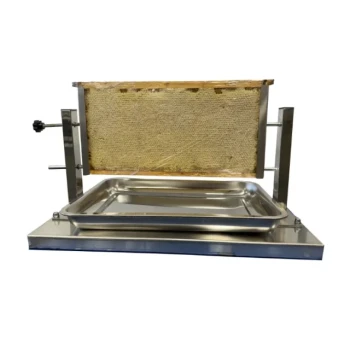
The defining feature of this method is the use of a top attachment point only. Traditional methods box the colony into a four-sided frame, enforcing a specific structure. The unframed approach removes the side and bottom constraints, providing a "blank canvas" for construction.
Thermoregulation and Ventilation
When left to their own devices, bees do not always build perfectly straight lines. They construct combs with natural curves. These curves are intentional adaptations that help the colony manage internal temperatures and optimize ventilation according to their immediate needs.
Benefits for Research and Product Quality
Beyond the structural freedom, Unframed Combs offer distinct advantages regarding biological study and chemical safety.
Studying Original Behaviors
Standard frames dictate how bees live, which can mask their natural instincts. Unframed combs facilitate the study of original honeybee biological behaviors. This allows researchers and keepers to observe how bees naturally organize their nest without the interference of pre-determined spatial guides.
Eliminating Chemical Residues
A major drawback of traditional beekeeping is the reliance on artificial wax foundations, which frequently contain chemical residues. The Unframed Comb process eliminates the need for these foundations entirely.
Ensuring High Purity
Because the bees build their home from scratch without contaminated starting materials, the risk of chemical introduction is minimized. This ensures the production of high-purity bee products, making it an ideal method for organic or health-focused operations.
Understanding the Trade-offs
While biologically beneficial, the Unframed Comb method presents specific operational realities that differ from standard framing.
Structural Stability
The primary text notes the use of "only a top attachment point." Without the support of a four-sided frame, the comb is inherently less rigid. This implies a need for careful handling, as the structural integrity relies entirely on the bees' natural attachment rather than wood or plastic boundaries.
Standardization vs. Adaptation
Traditional frames are designed for uniformity to fit industrial extractors and tools. Unframed combs feature "natural curves" driven by ventilation needs. These irregular shapes, while healthy for the bees, may not fit standardized processing equipment as easily as straight, framed combs.
Making the Right Choice for Your Goal
Adopting Unframed Combs is a decision to prioritize biological processes over industrial standardization.
- If your primary focus is Scientific Observation: This method provides the necessary freedom to study authentic nesting behaviors and thermoregulation strategies.
- If your primary focus is Product Purity: The elimination of artificial wax foundations creates the cleanest possible environment for wax and honey production.
By stepping back and allowing the hive to dictate its own architecture, you align your management practices with the bees' evolutionary strengths.
Summary Table:
| Feature | Unframed Combs (Biological Mimicry) | Traditional Framed Combs |
|---|---|---|
| Structural Support | Top attachment point only | Four-sided rigid frame |
| Comb Geometry | Natural curves for ventilation | Strict, linear alignment |
| Foundation Use | None (100% bee-constructed) | Often uses artificial wax/plastic |
| Product Purity | Maximum (No chemical residues) | Risk of foundation contamination |
| Primary Benefit | Authentic behavior & health | Industrial ease & standardization |
Elevate Your Apiary Standards with HONESTBEE
At HONESTBEE, we specialize in empowering commercial apiaries and distributors with the tools needed to bridge the gap between biological health and operational efficiency. Whether you are transitioning to unframed systems for research or scaling up a traditional honey-producing operation, our comprehensive wholesale portfolio has you covered.
Our value to you includes:
- Advanced Machinery: From precision hive-making equipment to high-speed honey-filling machines.
- Essential Tools: A full spectrum of professional beekeeping hardware and durable consumables.
- Unique Merchandise: Honey-themed cultural products to enhance your brand's market appeal.
Ready to optimize your production and offer your customers the highest quality hive products? Contact us today to explore our wholesale solutions!
References
- Daniel Basterfield. The Future Of Beekeeping?. DOI: 10.1080/0005772x.2011.11417399
This article is also based on technical information from HonestBee Knowledge Base .
Related Products
- Heart-Shaped Comb Honey Frame and Honeycomb Cassette
- Professional Sectional Comb Honey Frame with 250g Cassette System for Beekeeping
- Professional Honey Uncapping Fork Tool with Customizable Tine Options
- Professional Customizable Honey Uncapping Fork with Adjustable Tine Options
- Plastic Honey Comb Frames Cassette Box for Honey
People Also Ask
- How are honeybee combs utilized for non-destructive colony monitoring? Master Population Density Tracking
- What is a honeycomb frame? The Key to Modern, Sustainable Beekeeping
- What is the technical purpose of exchanging honeycomb frames? Master Apiary Equalization for Growth
- What frame to use for honeycomb? Choose the Right System for Pure, Edible Comb
- What is the significance of sampling honeycomb frames and hive bottoms? A Guide to Scientific Sanitation Monitoring