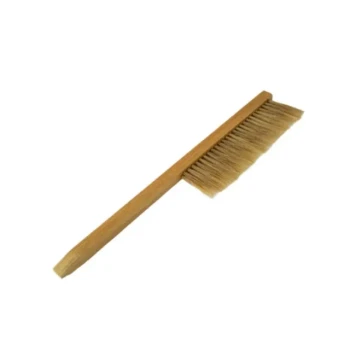
A fine camel hair brush acts as a high-sensitivity transfer tool within the queen rearing process. Its primary function is to lift extremely young larvae—specifically those around 24 hours old—from their original honeycomb cells and deposit them into artificial queen cups.
The success of queen rearing relies on preserving the physical integrity of the larva during transfer. The soft bristles of a camel hair brush provide the necessary gentleness to move fragile organisms without causing mechanical injury, directly impacting survival rates and queen quality.
The Mechanics of Gentle Transfer
Targeting the Right Age
In queen rearing, timing is critical. The brush is specifically employed to handle larvae that are approximately 24 hours old.
At this stage, the larvae are microscopic and gelatinous, requiring a tool that can interact with them without disrupting their structure.
The Advantage of Soft Bristles
The defining feature of the camel hair brush is the pliability of its bristles.
Unlike rigid metal or plastic tools, these soft bristles conform slightly to the shape of the cell and the larva. This minimizes the pressure applied to the larva's body, preventing crushing or piercing.
Impact on Rearing Outcomes
Reducing Mechanical Damage
The most significant threat to a graft's success is mechanical damage caused by the apiarist's hand.
Even invisible abrasions to the larval skin can cause the colony's nurse bees to reject the graft. The brush mitigates this risk by providing a cushioned contact point.
Ensuring Biological Quality
The condition of the larva at the moment of grafting dictates its future development.
By ensuring the larva is transferred stress-free and intact, the brush contributes to the biological vitality of the resulting queen bee. A healthy, undamaged start leads to a higher quality reproductive lifespan.
Understanding the Trade-offs
Precision vs. Gentleness
While the camel hair brush excels at gentleness, it functions differently than rigid grafting needles or automated tools.
A brush minimizes surface damage, but it may be more challenging to lift the larva along with a significant bed of royal jelly compared to a scoop-tipped needle.
Operational Requirements
Using a brush requires a high degree of manual dexterity and steadiness.
Because the bristles are soft, the operator must rely on visual cues rather than tactile resistance to ensure the larva is securely lifted and released at the bottom of the cup.
Making the Right Choice for Your Goal
Selecting the right grafting tool depends on your technique and priorities in the apiary.
- If your primary focus is minimizing trauma: The camel hair brush is the superior choice for preventing physical injury to the delicate skin of 24-hour-old larvae.
- If your primary focus is transferring royal jelly: A grafting needle with a specialized tip design may be more effective for scooping both the food and the larva simultaneously.
Mastering the use of the camel hair brush ensures that your future queens begin their development without the setback of physical injury.
Summary Table:
| Feature | Camel Hair Brush Function | Impact on Queen Rearing |
|---|---|---|
| Material Softness | Pliable natural bristles | Minimizes mechanical injury and skin abrasions |
| Precision Handling | Targeted for 24-hour-old larvae | Ensures transfer of larvae at the optimal developmental age |
| Grafting Success | Reduces colony rejection rates | High physical integrity leads to better acceptance by nurse bees |
| Queen Quality | Low-stress transfer process | Promotes superior biological vitality and reproductive lifespan |
Elevate Your Queen Rearing Success with HONESTBEE
Precise queen rearing starts with the right tools. At HONESTBEE, we specialize in supporting commercial apiaries and distributors with a comprehensive range of high-quality beekeeping equipment—from delicate camel hair brushes and grafting needles to advanced hive-making and honey-filling machinery.
Whether you are scaling up your production or stocking essential consumables, our wholesale offerings are designed to enhance your efficiency and queen quality. Contact us today to discover how our industry-leading portfolio can empower your beekeeping business!
References
- Ahmed M. Abdelaal. Effect of Rearing Queen Bees, Apis mellifera L. Raised from Grafted Larvae Under Magnetic Field Conditions on Its Characteristics. DOI: 10.21608/eajbsa.2020.131159
This article is also based on technical information from HonestBee Knowledge Base .
Related Products
- Premium Triple-Row Horsehair Bee Brush
- Wooden Bee Brush with Double-Row Horsehair Bristles
- Plastic Handle Single Row Artificial Fiber Bee Brush
- Wooden Bee Brush with Triple Row Artificial Fiber for Beekeeping
- Classic Wooden Bee Brush with Double-Row Boar Bristles
People Also Ask
- What is the specific function of a bee brush? Ensure Pure Harvests and Colony Welfare During Honey Extraction
- What are the key characteristics of the bristles on a bee brush? Master Gentle and Efficient Bee Removal
- What problem does a bee brush solve? Protect Your Colony with Gentle Precision Tools
- What are the key features of a popular bee brush? Essential Design for Bee Safety and Hive Hygiene
- What is a bee brush and what is its primary use? A Gentle Tool for Hive Management