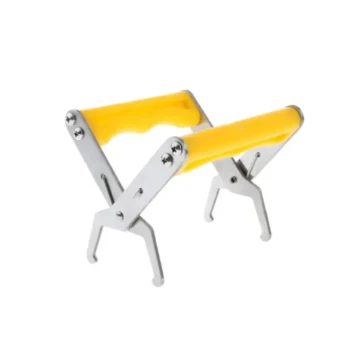
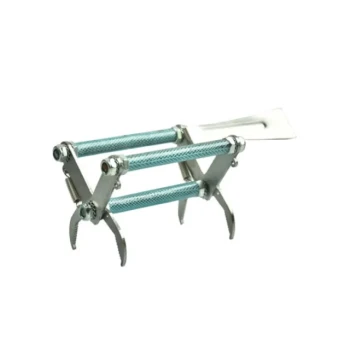
The Frame Hive acts as the fundamental infrastructure for controlling the honeybee artificial splitting and queen rearing process. It allows technical personnel to inspect colony strength and manage the precise distribution of resources. Specifically, it enables the verification of eggs, larvae, capped brood, and drones to ensure resources are physically partitioned equally between the mother colony and the new daughter colony.
The Frame Hive transforms a biological organism into a modular system. It allows for the accurate audit and division of biological assets, ensuring that both the original and the new colony have the necessary resources to survive the artificial split.
Precision Resource Management
Verifying Colony Strength
The primary function of the Frame Hive is to facilitate a deep inspection of the colony's current status.
Before any splitting occurs, technicians use the modular frames to assess the distribution of eggs, larvae, and capped brood.
This infrastructure also allows for the quantification of drones, ensuring the colony is robust enough to sustain a split.
Equal Partitioning
Success in artificial splitting relies on balance.
The Frame Hive allows for the physical removal and reallocation of resources.
Technicians can ensure that nest resources are partitioned equally between the mother colony and the new daughter colony, preventing the collapse of either unit due to resource scarcity.
Supporting the Biological Workflow
Creating the Donor Environment
Beyond simple storage, the hive structure is manipulated to trigger specific biological behaviors.
By utilizing a standardized 10-frame hive and removing the super, beekeepers can isolate the colony from the original queen.
This creates a queenless starter colony, mimicking natural swarming conditions which triggers the nursing instinct in worker bees essential for queen production.
Hosting Specialized Rearing Hardware
The Frame Hive serves as the chassis for specialized tools like the Doolittle Frame.
It supports the insertion of frames holding multiple artificial queen cell cups.
This allows for the centralized nursing of larvae and the arrangement of large-scale queen breeding operations within a standard colony footprint.
Operational Requirements and Trade-offs
The Necessity of Disturbance
Using a Frame Hive for queen rearing requires invasive management, specifically on the 9th and 16th days.
Hive tools must be used to open covers and inspect queen cell development, which disrupts the colony's internal climate.
While necessary to remove underdeveloped cells or verify emergence, these mechanical interventions carry a risk of damaging the delicate biological process if not performed with precision.
Material Sensitivity
The Frame Hive provides the space, but the success of that space depends on the materials introduced into it.
Research indicates that the bio-affinity of materials inside the hive matters significantly.
For example, while the hive structure supports them, plastic queen cell cups may have lower acceptance rates compared to those made of natural old comb beeswax.
Making the Right Choice for Your Goal
The Frame Hive is not just a box; it is a tool for biological manipulation. Your focus determines how you utilize this infrastructure.
- If your primary focus is Artificial Splitting: Prioritize the verification of brood stages (eggs vs. capped brood) to ensure the daughter colony has immediate and future population replacement.
- If your primary focus is Queen Rearing: Focus on using the hive to create a queenless state by removing supers to trigger the natural nursing instincts of the worker bees.
The Frame Hive provides the standardized environment that makes the complex biology of the honeybee manageable, measurable, and reproducible.
Summary Table:
| Function | Key Mechanism | Impact on Colony |
|---|---|---|
| Resource Audit | Inspection of eggs, larvae, and capped brood | Ensures both colonies have sufficient biological assets |
| Artificial Splitting | Modular partitioning of frames | Prevents resource scarcity in new daughter colonies |
| Queen Rearing | Creation of queenless starter environments | Triggers nursing instincts essential for queen production |
| Hardware Support | Integration with Doolittle frames & cell cups | Enables large-scale, centralized breeding operations |
Elevate Your Apiary’s Productivity with HONESTBEE
To succeed in large-scale queen rearing and colony splitting, you need more than just knowledge—you need precision-engineered infrastructure. HONESTBEE specializes in supporting commercial apiaries and distributors with a comprehensive wholesale range of professional beekeeping tools and machinery.
From standardized frame hives that ensure seamless resource partitioning to advanced honey-filling machines and specialized hive-making hardware, we provide the industrial-grade equipment required to scale your operations. Our portfolio also includes essential consumables and honey-themed cultural merchandise to help you grow your brand.
Ready to scale your beekeeping business? Contact HONESTBEE today to discuss our wholesale offerings and discover how our equipment can streamline your queen rearing and honey production workflow.
References
- Tesfaye Bekele, Dadi Genet. On-farm participatory Evaluation of Splitting Queen Rearing Technique (SQRT) at Ginnir District, Bale Zone, South-eastern Ethiopia. DOI: 10.5897/jaerd2016.0790
This article is also based on technical information from HonestBee Knowledge Base .
Related Products
- Wooden Bee Hive Frames for Beekeeping and Wholesale
- Plastic Bee Frame Beekeeping Hive Frames for Wholesale
- Ergonomic High Visibility Plastic Frame Grip Handles
- Professional 3-Bar Frame Grip with Integrated Hive Tool
- Professional Galvanized Steel Frame Rest for Beehives
People Also Ask
- How do wooden and plastic hive frames compare in terms of durability? Wood vs. Plastic Longevity & Repairability
- How does balancing the number of frames impact hive productivity? Optimize Your Apiary's Biological Output
- What are the main considerations when choosing between wooden and plastic bee hive frames? Optimize Your Apiary's Efficiency
- How should beehive frames be maintained to prolong their lifespan? 5 Pro Tips for Durable Beekeeping Equipment
- What are frames and combs used for in beekeeping? The Foundation of Modern Hive Management