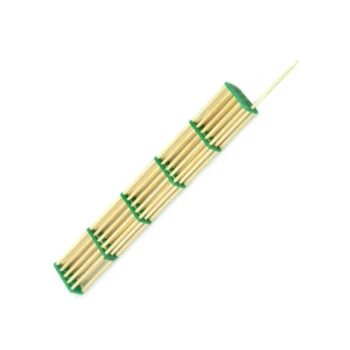
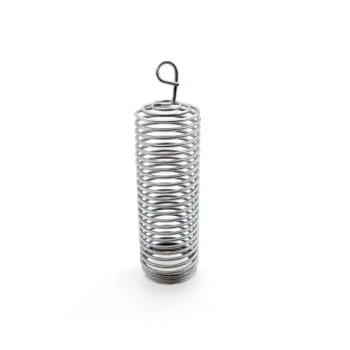
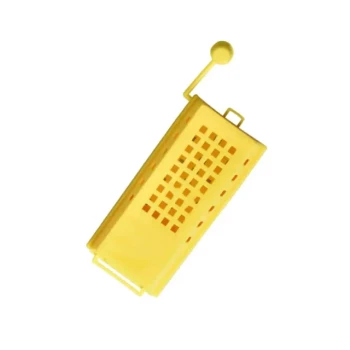
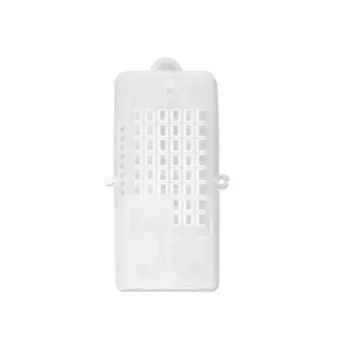
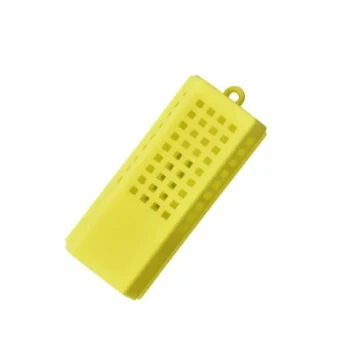
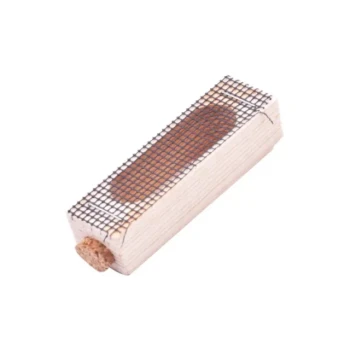
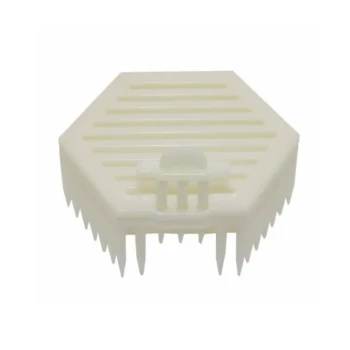
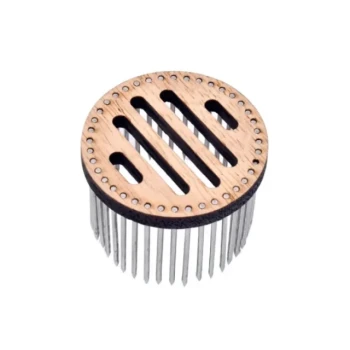
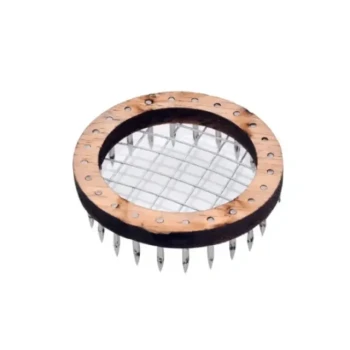
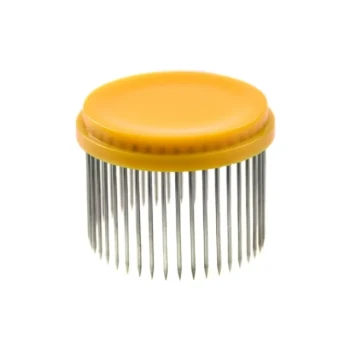
The queen bee exclusion cage is a precision tool used to restrict a queen's movement to a specific honeycomb frame for a set duration. By controlling exactly when and where the queen lays eggs, beekeepers and researchers can ensure that every larva on a frame is at an identical developmental stage. This synchronization is vital for eliminating age-related variables in scientific studies, such as toxicity testing or biochemical analysis.
The core function of an exclusion cage is to create biological uniformity by narrowing the egg-laying window to a few hours. This ensures that all resulting larvae are "age-matched," providing a standardized sample set that is critical for both commercial queen rearing and rigorous laboratory research.
Precise Control Over the Egg-Laying Window
Temporal Synchronization
The cage functions by physically isolating the queen on a single frame for a defined period, ranging from 5 to 48 hours. This narrow timeframe ensures that all eggs hatch within hours of each other.
Spatial Restriction
By confining the queen to a specific area of empty honeycombs, the cage forces her to focus her laying efforts. This results in a high-density, uniform cohort of larvae that follow an identical chronological timeline.
Facilitating Standardized Sampling
Without an exclusion cage, a queen may lay eggs across multiple frames over several days. The cage removes this randomness, allowing for the collection of highly synchronized biological samples for subsequent testing.
The Critical Role in Precision Research
Eliminating Bias in Sensitivity Studies
In toxicity or pesticide exposure studies, larval sensitivity often varies based on age. Synchronizing development ensures that all larvae are at the exact same stage (e.g., 4 days old) when receiving treatments, removing age-related bias from the data.
Enhancing Proteomic and Biochemical Accuracy
Researchers use exclusion cages to obtain larvae for proteomic and pheromone analysis. Identical ages are required to ensure that differences in protein expression or chemical signals are due to experimental variables rather than natural maturation.
Supporting Pathogen and Parasite Research
Uniform larval batches are essential for studying susceptibility to diseases like chalkbrood or observing Varroa mite behavior. Standardized developmental stages allow for more accurate observations of cell-capping periods and parasitism rates.
Understanding the Trade-offs
Impact on Queen Stress
Confining a queen for extended periods can cause stress or temporarily disrupt her natural laying cycle. Professional-grade cages must be designed to allow worker bee access to ensure the queen remains fed and groomed during isolation.
Labor Intensity and Timing
Using exclusion cages requires precise timing and multiple hive visits to insert the cage, release the queen, and harvest the larvae. Any delay in releasing the queen or collecting the samples can compromise the age-synchronicity of the cohort.
Strategies for Professional Sourcing and Distribution
Meeting the Demand for Technical Equipment
Distributors should recognize that exclusion cages are not just beekeeping accessories; they are specialized laboratory-grade instruments. Providing a full-spectrum portfolio of these tools positions your business as a partner to research institutions and commercial breeders.
Optimizing Supply Chain Value
When sourcing these tools, focus on manufacturers who offer high-precision manufacturing to ensure worker bees can pass through while the queen remains restricted. Rapid response times and efficient order fulfillment are essential for research clients working on strict seasonal biological timelines.
- If your primary focus is supporting research institutions: Prioritize sourcing cages with precise dimensions that ensure 100% queen retention for highly accurate age-matching.
- If your primary focus is serving commercial queen breeders: Emphasize sourcing durable, easy-to-sanitize materials that can withstand repeated field use across thousands of hives.
By providing these precision-engineered tools, you empower your clients to achieve the biological consistency required for high-stakes research and commercial success.
Summary Table:
| Key Feature | Functional Benefit | Primary Application |
|---|---|---|
| Temporal Control | Age-matched larval cohorts | Toxicity & pesticide testing |
| Spatial Restriction | High-density egg laying | Commercial queen rearing |
| Worker Access | Maintained queen health | Research & long-term isolation |
| Precision Design | Uniform biological samples | Proteomic & biochemical analysis |
Partner with HONESTBEE for Premium Beekeeping Solutions
As a leading one-stop source for distributors, wholesalers, and B2B resellers, HONESTBEE provides a comprehensive spectrum of professional beekeeping tools—from laboratory-grade exclusion cages to industrial honey-filling machinery and consumables.
- Global Sourcing Excellence: Access a full-spectrum product portfolio tailored for commercial apiaries and research institutions.
- Operational Advantage: Benefit from ultra-fast delivery, rapid response times, and deep professional industry expertise.
- Distributor Growth: Maximize your profit margins with our reliable supply chain, OEM/ODM support, and certified equipment quality.
Contact HONESTBEE Today to equip your customers with high-precision tools designed for commercial and scientific success.
References
- Tomáš Majchrák, László Molnár. Toxicity of oxalic acid and its toxic effect on antioxidative enzymes in honey bee larvae. DOI: 10.17221/18/2025-vetmed
This article is also based on technical information from HonestBee Knowledge Base .
Related Products
- Professional Bamboo Queen Isolation Cage
- Professional Queen Catcher and Introduction Queen Cage
- Durable Galvanized Steel Spring Queen Bee Cage
- Wooden Queen Bee Excluder for Beekeeping
- Professional Queen Cage with Sliding Gate and Feeder Plug
People Also Ask
- Why are specialized queen bee cages used for the banking of mated queen bees? Maximize Commercial Apiary Storage Efficiency
- What is the mechanism of action for using temporary queen bee cages? Master Successful Queen Introduction
- How does the side ventilation design of a queen bee cage impact the safety of the queen during long-distance transport?
- What should you do if the queen is still in the cage and the worker bees have not accepted her? Protect Your Colony from Queen Rejection
- What technical precaution must be taken regarding the mesh or grill side of a queen bee cage? Ensure Queen Survival