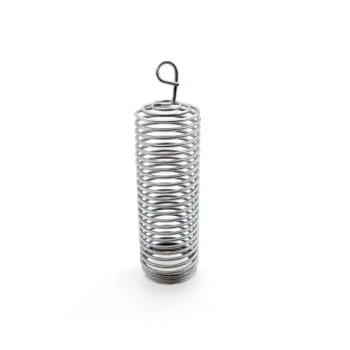
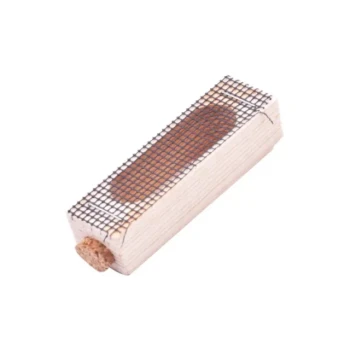
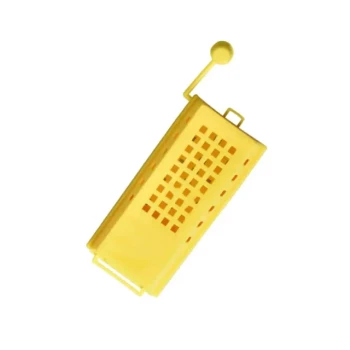
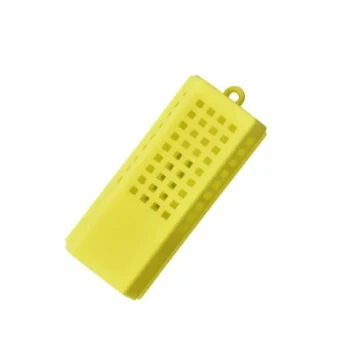
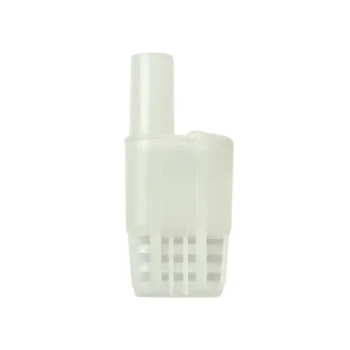
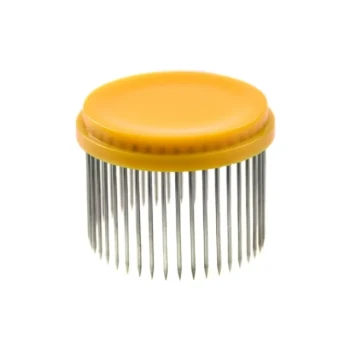
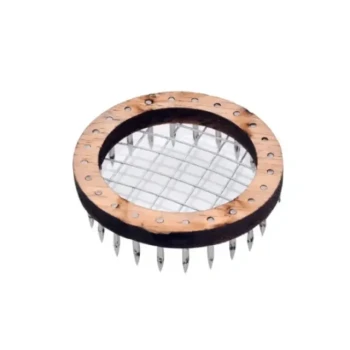
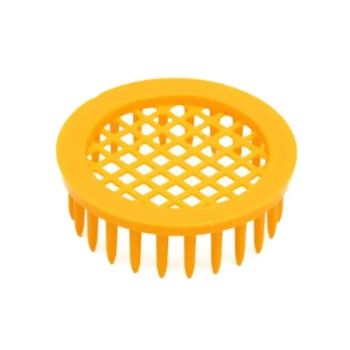
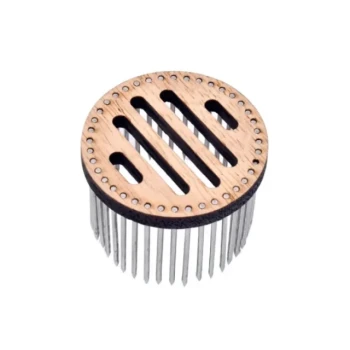
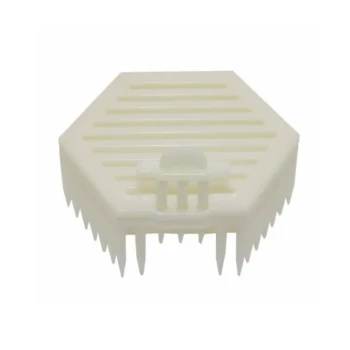
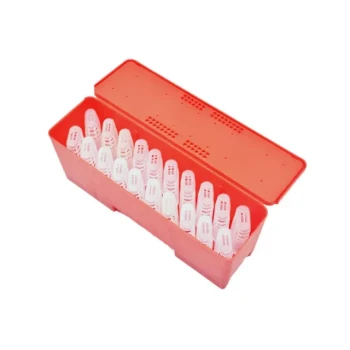
A queen cage functions as a precise physical isolation tool intended to restrict the queen bee to a confined space within the hive. By physically preventing the queen from accessing brood combs to lay eggs, the device allows for the deliberate reduction or total elimination of larvae, thereby controlling the colony's brood quantity.
By isolating the queen, beekeepers and researchers create an artificial "brood-break." This forces parasitic mites out of sealed cells and onto adult bees, enabling effective non-chemical pest control and accurate assessment of hygienic behaviors.
The Mechanics of Brood Restriction
Physical Confinement
The primary mechanism of the queen cage is spatial restriction. The queen is placed inside a mesh or barred enclosure that allows worker bees to interact with and feed her, but prevents her from leaving.
Stopping the Reproductive Cycle
Because the queen cannot access empty comb cells, she is unable to lay eggs. This immediately halts the generation of new brood.
Creating a Brood-Free Environment
As existing larvae mature and emerge as adults, they are not replaced by new eggs. Over a short period, this results in a colony that is virtually free of larvae, providing a "clean slate" for specific biological interventions.
Applications in Research and Pest Management
Concentrating Parasites on Adult Bees
Parasites like Varroa mites often hide inside sealed brood cells, making them difficult to count or treat.
When brood quantity is eliminated via caging, these mites are forced to attach themselves to adult bees. This concentration allows researchers to accurately measure infestation levels without the variable of hidden mites.
Evaluating Grooming Behavior
Once mites are concentrated on adult bees, the colony’s hygienic response can be observed clearly.
The primary reference notes that this setup is essential for evaluating honeybee grooming behavior. Researchers can observe how effectively adult bees detect and remove mites from one another when the distraction of brood care is removed.
Disrupting Mite Life Cycles
For parasites like Tropilaelaps species, which possess a very short survival time outside of brood cells, the queen cage is a lethal weapon.
By enforcing a brood-break, the mites lose their reproductive medium. This interrupts their life cycle, effectively crashing the mite population without the use of harsh chemicals.
Understanding the Trade-offs
Colony Stagnation
While effective for control, caging the queen halts colony growth. No new bees are being born during this period.
If the cage is utilized for too long, the colony population will age and decline, potentially weakening the hive before winter or major nectar flows.
Queen Re-acceptance Risks
Long-term confinement can sometimes alter the colony's pheromone balance.
Upon release, there is a slight risk that the workers may view the queen as foreign or failing, leading to potential rejection or supersedure (replacement) attempts.
Making the Right Choice for Your Goal
The use of a queen cage is a powerful intervention that shifts the colony's focus from reproduction to maintenance and sanitation.
- If your primary focus is Research Data: Use the queen cage to force mites onto adult bees, creating a standardized environment to measure grooming traits and infestation rates.
- If your primary focus is Pest Management: Use the queen cage to create a timed brood-break, severing the reproductive cycle of parasites like Tropilaelaps without chemical residues.
- If your primary focus is Colony Growth: Avoid prolonged use of the queen cage, as the cessation of egg-laying will directly result in a population dip in the following weeks.
Strategic use of the queen cage allows you to manipulate the biological rhythm of the hive to expose parasites and assess bee health with precision.
Summary Table:
| Feature | Function in Brood Control | Primary Benefit |
|---|---|---|
| Spatial Restriction | Limits queen access to empty comb cells | Halts the reproductive cycle and egg-laying |
| Brood-Break | Creates a hive environment free of larvae | Forces parasites (Varroa) onto adult bees |
| Pest Management | Interrupts the life cycle of mites | Enables non-chemical control of Tropilaelaps |
| Research Tool | Standardizes colony environment | Allows accurate assessment of grooming behavior |
Elevate Your Beekeeping Operations with HONESTBEE
At HONESTBEE, we understand that precision is the key to managing productive commercial apiaries. Whether you are conducting scientific research or scaling up pest management, our high-quality queen cages and specialized beekeeping tools are designed to give you total control over colony dynamics.
Why partner with us?
- Comprehensive Wholesale Offering: We provide distributors and large-scale apiaries with everything from precision queen cages to industrial honey-filling machines.
- Full Spectrum Equipment: From hive-making machinery to essential industry consumables, our portfolio supports every stage of the beekeeping lifecycle.
- Industry Expertise: We cater specifically to the needs of commercial beekeepers, ensuring our hardware meets the highest standards of durability and performance.
Ready to enhance your hive productivity and sanitation? Contact us today to explore our wholesale equipment and discover how HONESTBEE can empower your business!
References
- Geraldo Moretto, José Carlos Vieira Guerra. Taxa de mortalidade do ácaro <em>Varroa destructor</em> de acordo com a quantidade de crias em colônias de abelhas africanizadas (<em>Apis mellifera L.</em>). DOI: 10.4025/actascibiolsci.v29i3.487
This article is also based on technical information from HonestBee Knowledge Base .
Related Products
- Durable Galvanized Steel Spring Queen Bee Cage
- Classic Wooden and Mesh California Queen Cage
- Professional Queen Bee Introduction and Transport Cage
- Professional Queen Cage with Sliding Gate and Feeder Plug
- Professional Multi-Compartment Queen Cage with Sliding Lid
People Also Ask
- Why are specialized queen bee cages used for the banking of mated queen bees? Maximize Commercial Apiary Storage Efficiency
- What is the mechanism of action for using temporary queen bee cages? Master Successful Queen Introduction
- What is the step-by-step process for installing a queen bee's cage onto a frame? Ensure Hive Acceptance Safely
- What is the optimal placement for a queen bee cage? Essential Strategies for Successful Re-queening
- What are the advantages and disadvantages of introducing a queen bee by embedding the cage? Boost Your Queen Acceptance