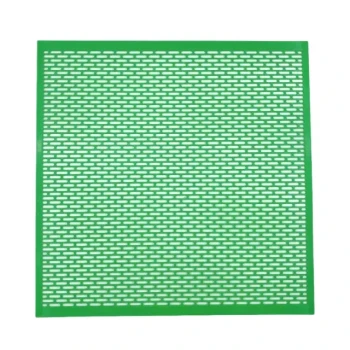
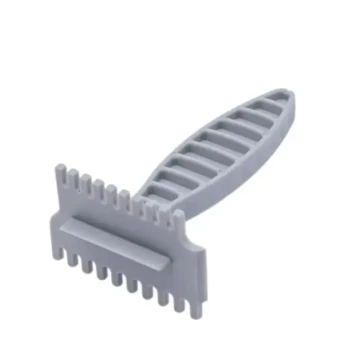
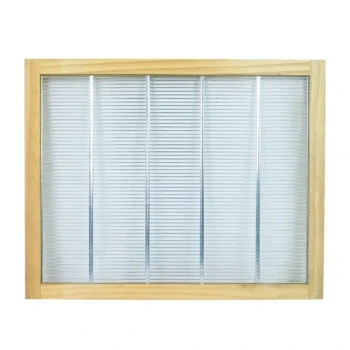
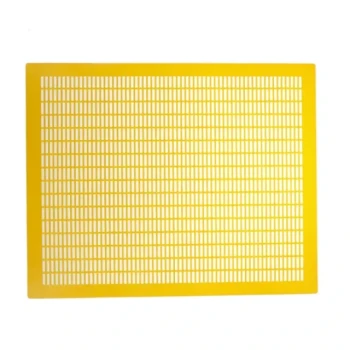
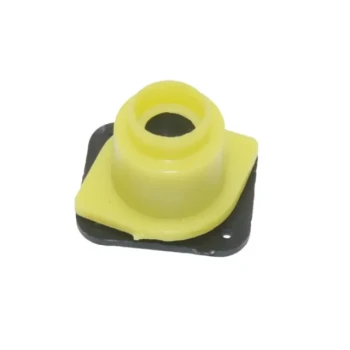
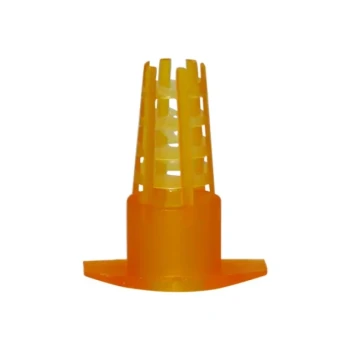
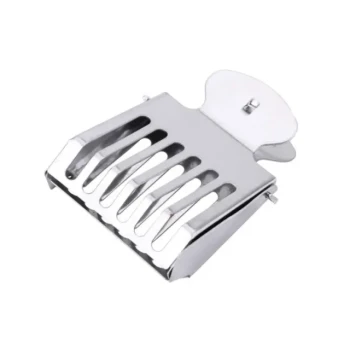
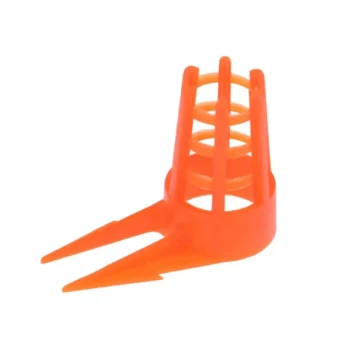
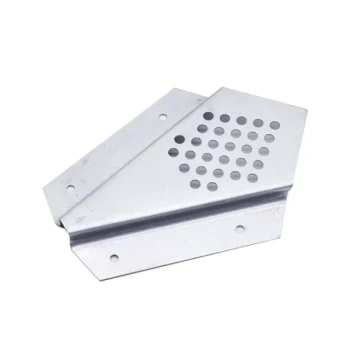
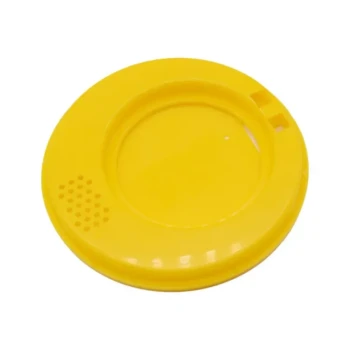
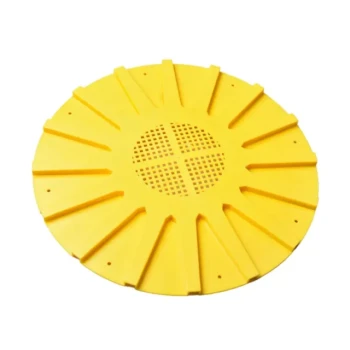
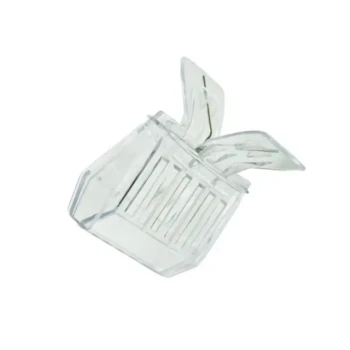
A queen excluder controls where the queen can move and lay eggs. Installed between the brood chamber and honey supers, its precisely sized openings allow worker bees to pass upward while keeping the larger queen in the brood area. This keeps honey-super frames largely free of brood, making inspection, comb-honey production, and harvesting cleaner and more efficient.
A queen excluder is both a brood-control tool and a management choice. Select one with accurately sized, smooth openings and a reliable fit, then balance the benefit of brood-free supers against any restriction it may create in worker movement.
What a Queen Excluder Does in the Hive
It separates brood space from honey-storage space
The excluder is placed between the lower brood chamber and the upper honey supers. Worker bees can cross the grid to store nectar, while the queen is physically restricted to the brood area.
Standard excluders are designed primarily to exclude the queen; drones are also generally too large to pass through the openings.
It keeps honey supers brood-free
When the queen remains below the excluder, she cannot lay eggs in the honey-super frames above it. This produces cleaner honey frames with less risk of brood being present during inspection or extraction.
This is especially valuable for comb honey and chunk honey, where the appearance and purity of the comb are important commercial considerations.
It supports more predictable hive management
By defining where brood is raised and where honey is stored, an excluder creates a clearer division within the hive. That can simplify super inspection, frame handling, and harvesting decisions.
However, it does not replace regular colony inspections. The beekeeper must still monitor brood-nest condition, queen performance, congestion, and colony strength.
How to Select the Right Queen Excluder
Choose accurate grid dimensions
The effectiveness of an excluder depends on consistent openings. Commonly cited spacing is approximately 0.163–0.164 inches, although the correct specification can vary by product standard and market.
Poorly controlled spacing can create two problems: openings that are too small may impede worker traffic, while openings that are too large may allow the queen to pass through.
Compare metal wire and plastic construction
Precision metal wire excluders are often preferred for demanding or high-volume operations because they are rigid, durable, and maintain consistent spacing when properly manufactured.
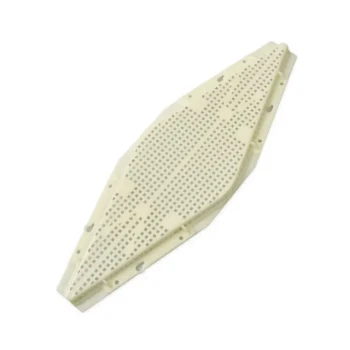
Smooth plastic excluders can be lightweight, easy to clean, and resistant to some forms of corrosion. Their suitability depends heavily on molding accuracy, material quality, rigidity, and whether the edges are smooth.
Prioritize smooth, rounded surfaces
The bars or openings should have smooth edges without burrs, sharp points, or rough molding seams. Rounded wire surfaces can reduce unnecessary wing wear as worker bees move through the excluder, particularly when they are returning heavily loaded with nectar.
Surface quality is therefore not a cosmetic detail. It affects bee passage, product durability, and the long-term usability of the equipment.
Confirm hive and frame compatibility
The excluder must match the hive body, super dimensions, and frame configuration. A poor fit can leave gaps that allow the queen around the edge or create obstructions that interfere with normal bee movement.
For distributors and resellers, compatibility information should be clear in product specifications. Buyers need to know the intended hive format, dimensions, material, and installation position before ordering.
Evaluate durability and fulfillment requirements
Commercial apiaries need equipment that withstands repeated handling, cleaning, transport, and seasonal installation. Rigid construction, stable dimensions, and dependable packaging are important when supplying large orders.
For wholesale purchasing, selection should also include consistent batch quality, rapid response, dedicated technical support, and reliable delivery. A technically suitable product is less useful if replacements or replenishment cannot be supplied promptly.
When Queen Excluders Are Most Useful
For comb and chunk honey production
An excluder is particularly useful when the objective is to keep upper combs visually clean and free of brood. This supports more consistent presentation and reduces the need to sort out brood-containing frames before sale.
For organized honey-super management
Beekeepers managing several supers may benefit from the clear separation between brood and honey-storage areas. The excluder helps make upper-super inspections and harvesting more predictable.
For strong, well-established colonies
A strong colony with sufficient worker numbers is generally better positioned to move through the excluder and occupy the supers. The device should be used as part of an overall management plan rather than as a substitute for adequate colony population and forage conditions.
When extracted honey is the main product
Some beekeepers choose not to use an excluder for extracted honey because it may slightly restrict worker traffic between the brood chamber and supers. In that management style, the beekeeper accepts the possibility of brood in upper frames in exchange for potentially freer movement through the hive.
The right decision depends on harvesting goals, colony behavior, local conditions, and the beekeeper’s inspection discipline.
Understanding the Trade-offs
It can restrict worker movement
Although worker bees can pass through a correctly made excluder, the grid still creates an additional passage point. Some colonies may use the supers less readily when the excluder is introduced, particularly if the colony is not strong or the timing is poor.
This is the main reason some apiary managers omit excluders when producing extracted honey.
It can create a false sense of control
An excluder does not guarantee perfect brood-free supers. Gaps around the equipment, incorrect placement, inaccurate openings, or an existing queen above the excluder can undermine its purpose.
The queen’s location and the condition of the brood nest should be checked before relying on the barrier.
It requires correct product quality
A low-quality excluder may have inconsistent openings, sharp edges, warping, or poor dimensional stability. These defects can restrict worker access, injure bees, or allow the queen to bypass the grid.
For professional supply programs, quality control and product consistency are as important as the nominal material specification.
It is not a general swarm-control device
A queen excluder is designed to control the queen’s access to specific hive sections. It should not be treated as a complete method for preventing swarming or as a universal device for preventing the queen from leaving the hive.
Swarm management requires broader measures, including monitoring colony congestion and queen-cell development.
How to Apply This to Your Project
The best selection depends on whether the priority is product cleanliness, unrestricted bee movement, durability, or supply reliability.
- If your primary focus is brood-free honey and comb presentation: Choose a precisely manufactured excluder with smooth openings and a secure hive-compatible fit.
- If your primary focus is extracted-honey throughput: Consider whether the colony and operating system will benefit from unrestricted movement, and evaluate the excluder’s possible effect on super access.
- If your primary focus is commercial apiary durability: Prioritize rigid metal wire or high-quality plastic construction, stable dimensions, smooth surfaces, and dependable cleaning performance.
- If your primary focus is wholesale or distribution supply: Source from a supplier able to provide consistent specifications, broad hive-equipment coverage, rapid quotations, responsive technical service, and efficient fulfillment.
The right queen excluder is not simply a grid; it is a management component selected to match the colony, harvest method, hive format, and supply requirements.
Summary Table:
| Selection Criteria | Important Considerations |
|---|---|
| Grid dimensions | Ensure accurate spacing (approx. 0.163–0.164 in) to prevent queen passage while allowing workers through. |
| Material quality | Choose precision metal wire or smooth plastic based on durability needs and maintenance. |
| Surface smoothness | Smooth, rounded surfaces reduce wing wear and ease bee movement. |
| Compatibility | Must match hive body, super dimensions, and frame style. |
| Durability & supply | For commercial use, require consistent quality and reliable supply. |
Upgrade your hive management with precision queen excluders from HONESTBEE. As a one-stop sourcing partner for commercial apiaries and distributors, we provide premium quality, certified equipment, rapid response, and fast fulfillment. Ensure brood-free supers and efficient operations—contact us today for bulk pricing and expert support!
Related Products
- High Performance Plastic Queen Excluder for Beekeeping and Apiary Management
- Lightweight Durable Plastic Queen Excluder Scraper for Beekeeping
- Premium Wood Framed Metal Wire Queen Bee Excluder
- Professional Plastic Queen Excluder for Modern Beekeeping
- Metal Queen Bee Excluder for Beekeeping
People Also Ask
- What are the characteristics of a plastic queen excluder? Key Benefits for Cost-Effective Beekeeping
- What are the operational and cost advantages of using plastic queen excluders over metal or wire excluders in commercial hive management? Discover how they reduce labor, prevent wing damage, and lower total costs.
- What types of queen excluders are available for beekeepers? Choose the Right Tool for Your Hive
- Why are standardized hive frames and queen excluders essential for maintaining honey purity and quality? Scale Your Purity
- Do plastic queen excluders work? A Cost-Effective Solution for Modern Apiaries