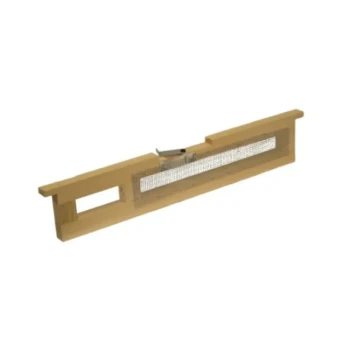
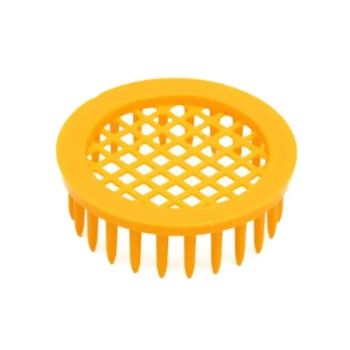
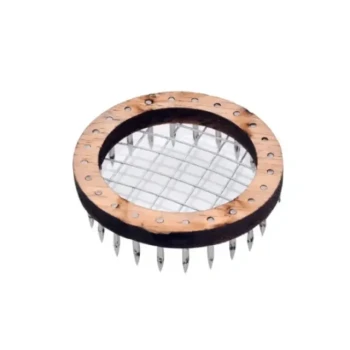
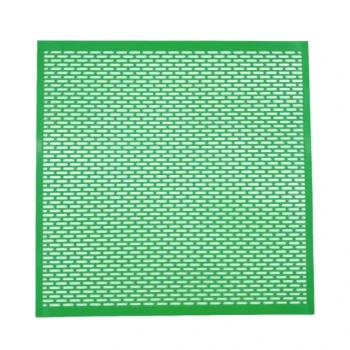
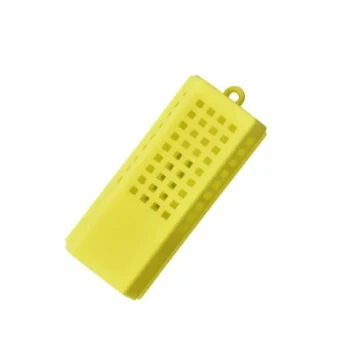
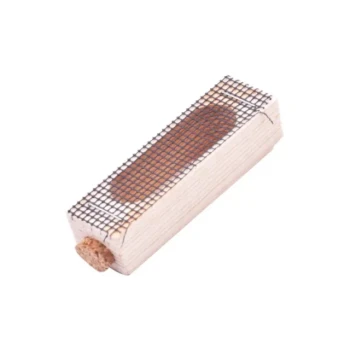
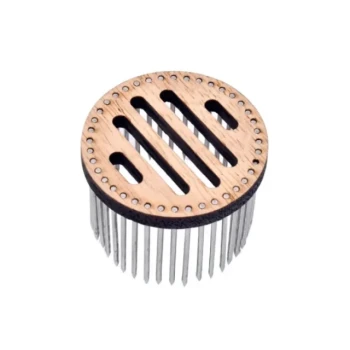
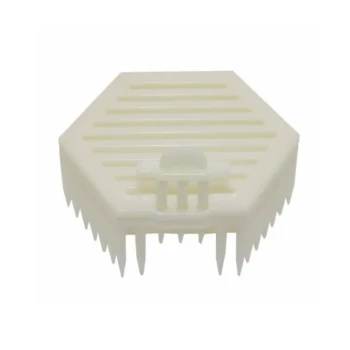
A single-frame Queen Excluder Cage functions as a precision isolation tool designed to confine the queen bee to a specific, modified nest frame. By restricting her movement for a strictly limited duration—typically 48 hours—researchers compel her to lay eggs exclusively on that frame, creating a distinct and uniform cohort of brood.
The ultimate goal of this isolation is brood synchronization. By forcing all eggs to be laid within a narrow 48-hour window, you ensure the resulting pupae develop at the exact same rate, creating the standardized biological control required to accurately measure complex genetic traits like Varroa Sensitive Hygiene (VSH).
The Mechanics of Brood Synchronization
Creating a Controlled Timeline
In a natural hive setting, a queen lays eggs sporadically across various frames, resulting in a mix of developmental stages.
The single-frame cage forces a tightly defined egg-laying window. This ensures that every larva and pupa on the test frame is essentially the same age.
Eliminating Experimental Variables
Scientific testing requires minimizing variables to ensure data accuracy.
By synchronizing the brood age, researchers remove developmental disparity as a variable. This allows them to attribute observed changes solely to the behavior of the bees or the mites, rather than the age of the brood.
Critical Metrics Enabled by Isolation
Measuring Varroa Sensitive Hygiene (VSH)
VSH is a hygienic behavior where worker bees detect and remove pupae that are infested with mites.
To measure VSH clearing rates, you must know exactly when infestation occurred and when removal should happen. Synchronized brood allows researchers to pinpoint the specific window when hygienic bees are actively clearing infested cells.
Assessing Mite Non-Reproduction (MNR)
Some bees possess genetic traits that suppress the reproductive capabilities of Varroa mites.
Evaluating MNR rates requires inspecting mites at a very specific stage of pupal development. Because the cage ensures all pupae are at this stage simultaneously, researchers can assess the entire frame at once for reproductive success or failure.
Standardizing Infestation Rates
Determining the baseline level of mites in a colony is the first step in resistance testing.
The cage creates a uniform target for mites. This makes observing and calculating Varroa mite infestation rates more consistent compared to sampling from frames with mixed-age brood.
Operational Constraints and Trade-offs
The Requirement for Specialized Gear
This method is not compatible with standard hive setups alone.
As noted in the reference, the process requires a modified nest frame to fit within the excluder cage. This necessitates preparation and equipment modification before testing can begin.
Time Sensitivity
The effectiveness of this method relies entirely on strict adherence to the timeline.
Leaving the queen in the cage longer than the typical 48 hours dilutes the synchronization. This compromises the "controlled and standardized" environment necessary for accurate VSH and MNR data.
Optimizing Your Experimental Design
If your primary focus is trait selection (VSH/MNR):
- Use the cage to create a narrow 48-hour egg-laying window, ensuring you can accurately verify if hygienic behavior is targeting the correct pupal stage.
If your primary focus is general infestation monitoring:
- Utilize the cage to create a "trap frame" of synchronized brood, which acts as a standardized magnet for mites to enter, providing a clear snapshot of colony health.
Precision in isolating the queen is the single most important factor in generating reliable data for Varroa resistance research.
Summary Table:
| Feature | Function in Varroa Testing |
|---|---|
| Queen Isolation | Confines egg-laying to a 48-hour window on a single modified frame. |
| Brood Synchronization | Ensures all pupae develop at the same rate for standardized data. |
| VSH Measurement | Allows precise timing to observe hygienic clearing of infested cells. |
| MNR Assessment | Enables uniform inspection of mite reproductive suppression at specific stages. |
| Variable Control | Eliminates developmental age as a factor in infestation rate calculations. |
Scale Your Varroa Research with HONESTBEE
Precision beekeeping requires high-quality tools that deliver reliable results. HONESTBEE specializes in supporting commercial apiaries and distributors with a comprehensive range of professional-grade equipment.
Whether you need specialized hardware like queen excluder cages and modified frames, large-scale honey-filling machinery, or essential industry consumables, we provide the wholesale solutions you need to optimize your operations. Our mission is to empower beekeeping professionals with the tools to breed healthier, mite-resistant colonies.
Ready to upgrade your apiary’s efficiency? Contact us today to explore our full product portfolio and find the right equipment for your business.
References
- Marie-Lou Morin, Pierre Giovenazzo. Mite non-reproduction, recapping behavior, and hygienic behavior (freeze-kill method) linked to <i>Varroa destructor</i> infestation levels in selected <i>Apis mellifera</i> colonies. DOI: 10.1177/10406387231172141
This article is also based on technical information from HonestBee Knowledge Base .
Related Products
- Professional Bamboo Queen Isolation Cage
- Premium Wood Framed Metal Wire Queen Bee Excluder
- Professional Queen Catcher and Introduction Queen Cage
- Wooden Queen Bee Excluder for Beekeeping
- Professional Wooden Requeening Frame for Beekeeping
People Also Ask
- Why are specialized queen bee cages used for the banking of mated queen bees? Maximize Commercial Apiary Storage Efficiency
- What is the mechanism of action for using temporary queen bee cages? Master Successful Queen Introduction
- How does the side ventilation design of a queen bee cage impact the safety of the queen during long-distance transport?
- What should you do if the queen is still in the cage and the worker bees have not accepted her? Protect Your Colony from Queen Rejection
- What technical precaution must be taken regarding the mesh or grill side of a queen bee cage? Ensure Queen Survival