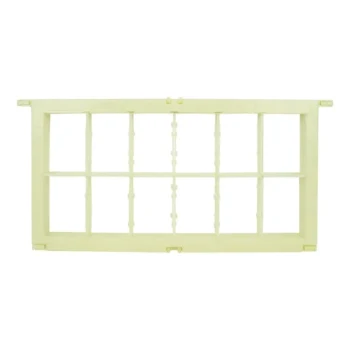
In honeybee larval development research, the wax comb frame functions as a precise isolation tool designed to synchronize biological timing and standardize environmental conditions. Its primary purpose is to restrict the queen bee to a specific section of the comb, forcing egg-laying (oviposition) to occur within a strictly controlled time window. This ensures that all larval samples collected are of a consistent, known age, which is a prerequisite for sensitive time-resolved studies.
The wax comb frame acts as a standardization device, eliminating variability in both larval age and colony environment. It allows researchers to attribute observed changes solely to experimental treatments rather than developmental discrepancies or external colony fluctuations.
Ensuring Chronological Precision
The most critical function of the wax comb frame is solving the problem of age heterogeneity in a colony.
Controlling Oviposition Timing
In a natural hive, larvae exist at various developmental stages simultaneously. By using the frame to confine the queen, researchers dictate exactly when eggs are laid.
This creates a cohort of larvae that are age-matched to the hour.
Facilitating Time-Resolved Studies
Precise aging is vital for fields like hemolymph proteomics.
Biological markers change rapidly during larval development. If samples vary in age even slightly, the data becomes noisy and unreliable. The frame ensures the biological "clock" is synchronized for all subjects.
Creating a Unified Environment
Beyond timing, modified frames are used to neutralize environmental variables that could skew toxicity or development data.
Side-by-Side Comparison
Modified Langstroth frames often feature a removed central area. This structure supports the insertion of distinct comb blocks—such as a low-residue control block next to a high-residue treatment block.
Removing Colony-Level Variables
This configuration keeps both the control and experimental groups within the same hive.
Both groups are exposed to the exact same worker activity, temperature, and resource allocation. This ensures that any difference in larval health is due to the treatment (e.g., pesticide exposure) and not because one hive was healthier than another.
Understanding the Trade-offs
While essential for precision, using specialized wax comb frames introduces specific challenges that must be managed.
Disruption of Natural Behavior
Restricting the queen is an artificial intervention.
Confining the queen to a specific frame area may induce stress or alter standard laying patterns if not managed carefully. Researchers must account for this manipulation when analyzing baseline behavior.
Preparation and Equipment Complexity
Unlike standard beekeeping, this method requires modified hardware.
Researchers must prepare frames with removable sections or isolation cages. This increases the setup time and complexity compared to observational field studies.
Making the Right Choice for Your Goal
To maximize the effectiveness of your research, apply the specific function of the frame that aligns with your data requirements.
- If your primary focus is time-resolved proteomics: Prioritize the frame's ability to restrict the queen for tight oviposition windows to ensure identical larval age.
- If your primary focus is pesticide toxicity: Utilize modified frames to place treatment and control blocks in the same frame to eliminate environmental variables.
Successful larval research relies on using this equipment to turn a chaotic natural environment into a controlled laboratory setting.
Summary Table:
| Function | Research Benefit | Key Mechanism |
|---|---|---|
| Chronological Precision | Eliminates age heterogeneity | Restricts queen to specific oviposition windows |
| Environmental Control | Neutralizes colony-level variables | Side-by-side placement of control and treatment blocks |
| Data Reliability | High-fidelity proteomic markers | Synchronizes biological clocks for time-resolved studies |
| Standardization | Reduces experimental noise | Ensures identical worker activity and hive conditions |
Elevate Your Beekeeping Operations with HONESTBEE
At HONESTBEE, we understand the precision required for both advanced larval research and large-scale commercial success. As a dedicated partner to commercial apiaries and global distributors, we offer a comprehensive wholesale portfolio designed to streamline your productivity:
- Precision Hardware: From hive-making machinery to honey-filling systems.
- Essential Equipment: A full spectrum of professional beekeeping tools and specialized frames.
- Industry Consumables: Every essential supply needed to maintain healthy, productive colonies.
- Custom Merchandise: Unique honey-themed cultural products to differentiate your brand.
Whether you are scaling a distribution network or optimizing honey production, our high-quality equipment delivers the reliability you need. Contact us today to discuss our wholesale offerings and discover how HONESTBEE can empower your business growth.
References
- Feng Mao, Jianke Li. Hemolymph proteome changes during worker brood development match the biological divergences between western honey bees (Apis mellifera) and eastern honey bees (Apis cerana). DOI: 10.1186/1471-2164-15-563
This article is also based on technical information from HonestBee Knowledge Base .
Related Products
- Professional Sectional Comb Honey Frame with 250g Cassette System for Beekeeping
- Heart-Shaped Comb Honey Frame and Honeycomb Cassette
- Plastic Honey Comb Frames Cassette Box for Honey
- Manual Beeswax Comb Foundation Machine Wax Foundation Mill Embossing Machine
- Professional Stainless Steel Frame Cleaner with Ergonomic Wood Handle
People Also Ask
- How are honeybee combs utilized for non-destructive colony monitoring? Master Population Density Tracking
- What is the technical purpose of exchanging honeycomb frames? Master Apiary Equalization for Growth
- What frame to use for honeycomb? Choose the Right System for Pure, Edible Comb
- What is a honeycomb frame? The Key to Modern, Sustainable Beekeeping
- What are the recommended temperature and duration settings for freezing honey frames? Ensure Pest-Free Comb Storage