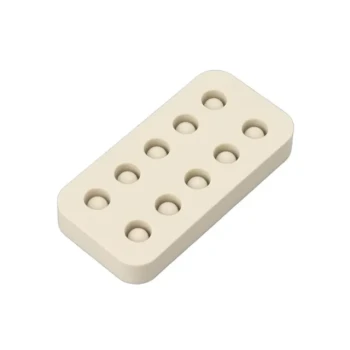
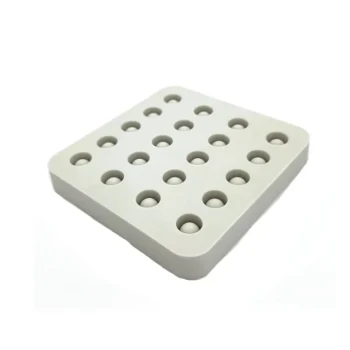
In the Doolittle Method, artificial plastic cell cups serve as the standardized physical foundation for rearing queen bees. They act as durable, uniform vessels into which larvae from mite-resistant stock are grafted, mimicking natural queen cells to stimulate nurse bees to feed them royal jelly and initiate queen development.
Core Takeaway While natural wax cells vary in shape and fragility, plastic cell cups provide a biologically neutral and structurally consistent environment. This standardization eliminates physical variables, ensuring that the success of the queen depends on her genetics—such as Varroa resistance—rather than the quality of the cell construction.
The Role of Standardization in Breeding
Establishing a Consistent Environment
In breeding programs focused on specific traits like Varroa resistance, controlling variables is critical. Plastic cell cups provide a uniform substrate with consistent geometric dimensions.
This uniformity ensures that every larva experiences the exact same spatial environment. By removing the irregularities found in natural wax construction, you reduce developmental variations that could skew your breeding results.
Mimicking Nature to Trigger Instinct
The primary function of the cup is biological deception. The plastic domes are designed to mimic the natural shape and orientation of a queen cell.
When a 12-to-24-hour-old larva is placed inside, this structure signals the nurse bees to switch their behavior. Instead of rearing a worker, they begin secreting royal jelly, the essential nutrient required to transform the larva into a queen.
Operational Advantages for the Breeder
Facilitating Large-Scale Production
For a breeding program to be effective, you often need to produce queens in high volume to select the best genetics. Plastic cups are modular components designed to fit onto specialized frame mounts.
This modularity allows for rapid assembly and disassembly of rearing frames. It streamlines the workflow, making it possible to manage large batches of queens efficiently without the delicacy required for handling natural wax cells.
Protection During Handling
Breeding involves significant physical manipulation, including grafting, inspection, and moving ripe cells to mating nucs. Plastic cups offer material stability that wax cannot.
They protect the developing larvae and the bed of royal jelly from compression or accidental crushing. This durability is vital when transferring valuable genetics from the cell builder colony to the incubator or hive.
Understanding the Trade-offs
The Necessity of Maintenance
While plastic cups are reusable, this benefit comes with an operational cost. Unlike wax cells which are torn down by the bees or discarded, plastic cups must be thoroughly cleaned and sterilized between uses.
Failure to properly clean the cups can lead to the spread of pathogens or a refusal by nurse bees to accept the new larvae.
Initial Acceptance Variables
Plastic provides a consistent structure, which generally increases larval acceptance rates. However, because it is an artificial material, it lacks the natural pheromones and texture of fresh wax.
Some breeders may find they need to prime new plastic cups (often with a thin coating of wax or honey water) to encourage immediate attention from nurse bees, though the structural consistency usually outweighs this minor hurdle.
Making the Right Choice for Your Goal
To maximize the effectiveness of your breeding program, align your equipment choice with your operational scale.
- If your primary focus is commercial scalability: Prioritize plastic cups for their durability and modularity, which allow for rapid, standardized batch processing of queens.
- If your primary focus is genetic precision: Use plastic cups to eliminate environmental variables, ensuring that survival and performance data reflect the true genetic potential of your Varroa-resistant stock.
By standardizing the rearing vessel, you transform queen breeding from an art form into a controlled, repeatable science.
Summary Table:
| Feature | Plastic Cell Cup Function | Benefit for Breeding |
|---|---|---|
| Structural Foundation | Provides a uniform vessel for grafting larvae | Eliminates physical variables for consistent development |
| Biological Trigger | Mimics natural queen cell shape and orientation | Stimulates nurse bees to secrete royal jelly immediately |
| Durability | High-strength material stability | Protects larvae and genetics during handling and transport |
| Modularity | Modular design fits specialized frame mounts | Enables efficient, large-scale commercial queen production |
| Genetic Precision | Standardizes the larval environment | Ensures success is based on genetics (e.g. Varroa resistance) |
Scale Your Queen Breeding with HONESTBEE Precision Equipment
Are you looking to enhance the efficiency of your commercial apiary or expand your distribution of professional beekeeping supplies? HONESTBEE specializes in providing the high-quality tools and machinery required for modern, large-scale apiculture.
From durable artificial cell cups and modular rearing frames to industrial-grade honey-filling machines and hive-making hardware, we supply everything your business needs to succeed. We help commercial apiaries achieve genetic precision and operational scalability with our comprehensive wholesale offering.
Ready to elevate your production? Contact us today to discuss our wholesale solutions and see how HONESTBEE can support your growth in the beekeeping industry.
References
- Selvinar SEVEN-ÇAKMAK. BAL ARISI (Apis mellifera anatoliaca) KOLONİLERİNDE PUDRA ŞEKERİ YÖNTEMİ İLE VARROA (Varroa destructor) BULAŞIKLIK SEVİYESİNİN BELİRLENMESİ VE KOLONİ SEÇİMİ. DOI: 10.31467/uluaricilik.373723
This article is also based on technical information from HonestBee Knowledge Base .
Related Products
- JZBZ Type Wide Base Plastic Queen Cell Cups for Base Mounting and Queen Rearing
- Clear Black Plain Polystyrene Queen Bee Grafting Cell Cups No Lug for Bee Queen Cup
- 10-Cell Silicone Beeswax Bee Queen Cups Forming Mold
- JZBZ Push-In Queen Cell Cups for Beekeeping
- Brown Nicot Queen Cell Cups for Breeding Queen Bees Beekeeping
People Also Ask
- What are the primary advantages of using plastic queen cell cups? The Industrial Choice for High-Efficiency Apiaries
- What technical advantages do commercial plastic queen cell cups offer? Scale Your Queen Rearing for Maximum Efficiency
- What is the function of standardized plastic Queen Cell Cups? Boost Efficiency in Commercial Larval Grafting
- Why are standardized plastic queen cell cups preferred? Boost Commercial Queen Rearing Efficiency
- Why are standardized plastic queen cell cups typically used in large-scale queen bee production? Boosting Apiary Output