Artificial queen cells serve as the primary biological trigger in the commercial production of royal jelly. By mimicking the physical structure of a natural queen's nest, these cells deceive worker bees into engaging their nursing instincts. This prompts the colony to secrete and fill the artificial cups with massive quantities of royal jelly to feed the larvae housed within.
The artificial queen cell functions as a bridge between natural biology and industrial efficiency. It converts a colony’s instinctive drive to rear a new queen into a systematic, high-yield production method for harvesting royal jelly.
The Mechanics of Biological Mimicry
Simulating the Natural Nest
The primary function of the artificial queen cell is to simulate the specific environment where honeybees rear queens.
In a natural hive, queen cells look distinct from standard worker cells. By replicating this shape and size, the artificial cell signals to the colony that the larva inside is destined to be a queen, necessitating special care.
Triggering the Nursing Instinct
Once a specific larva is grafted into this artificial environment, the worker bees’ nursing instinct is aggressively induced.
The colony prioritizes the survival of potential queens. Consequently, nurse bees are compelled to secrete significant amounts of royal jelly—far more than they would for a standard worker bee—to fill the cup and nourish the larva.
Standardization and Efficiency
Enabling Large-Scale Harvesting
Beyond biology, these cells act as standardized consumable components that allow for mass production.
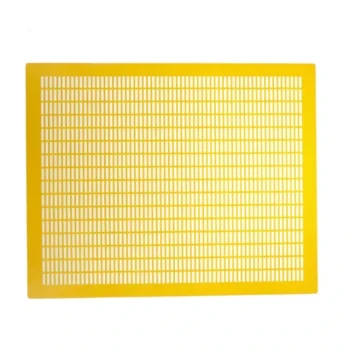
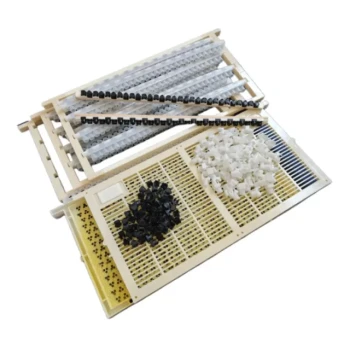
Natural queen cells are built irregularly. Artificial cells, often arranged in large numbers on grafting frames, allow apiarists to organize and predict the layout of the hive. This transforms royal jelly production from a random occurrence into a systematic agricultural process.
Maximizing Biological Output
The use of artificial cells allows beekeepers to manipulate the density of queen rearing.
By introducing high numbers of these cups simultaneously, producers can increase the biological output per colony. This setup forces the hive to produce royal jelly at maximum capacity, enabling bulk harvesting every 48 to 72 hours.
Material Composition and Acceptance
The Role of Beeswax
To ensure the colony does not reject these foreign objects, artificial cells rely heavily on material familiarity.
They are typically manufactured from beeswax or feature a beeswax coating. This organic layer is critical for acceptance; without it, worker bees may detect the artificial nature of the cup and remove the larva rather than feeding it.
Plastic as a Structural Carrier
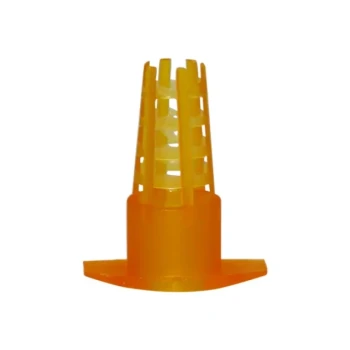
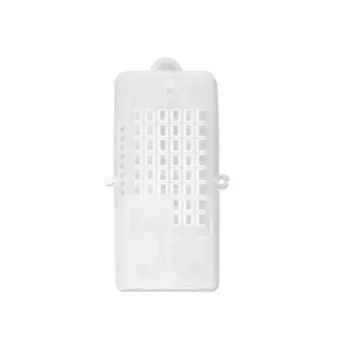
In modern commercial setups, the core of the cell is often plastic for durability and standardization, serving as a carrier.
However, the function remains the same: to provide a stable, reusable vessel that supports the beeswax coating and protects the larva during the delicate transfer process.
Critical Factors for Success
While artificial queen cells provide the vessel, they do not guarantee success on their own.
Larval Age is Critical The deception only works if the grafted larva is the correct age, typically 1 to 2 days old. If the larva is too old, the bees will not accept it as a potential queen candidate, regardless of the cell structure.
The Necessity of "Priming" The artificial cell functions best when "primed" with a small amount of royal jelly at the base before the larva is introduced. This acts as a lubricant to prevent dehydration and physical damage, ensuring the larva survives the initial transfer long enough to trigger the worker bees' response.
Optimizing Your Production Strategy
To maximize the yield of royal jelly, you must align your equipment choices with your operational goals.
- If your primary focus is Larval Acceptance: Prioritize cells that are manufactured from pure beeswax or have a high-quality beeswax coating to minimize rejection rates by the colony.
- If your primary focus is Scalability: Utilize plastic cell strips with standardized spacing, as they facilitate faster manual or mechanized harvesting while acting as a sturdy carrier for the necessary wax coating.
- If your primary focus is Yield Consistency: Ensure strict adherence to harvesting cycles (48–72 hours) using standardized frames to maintain a rhythm that aligns with the peak secretion phase of the nurse bees.
The artificial queen cell is the essential tool that redirects the hive's energy, turning the biological imperative of survival into a harvestable resource.
Summary Table:
| Feature | Function in Royal Jelly Production | Primary Benefit |
|---|---|---|
| Biological Mimicry | Simulates a queen's nest to deceive worker bees | Triggers high-volume royal jelly secretion |
| Standardization | Provides uniform layout on grafting frames | Enables systematic, large-scale harvesting |
| Beeswax Coating | Provides organic scent and material familiarity | Ensures high larval acceptance rates by the colony |
| Structural Carrier | Maintains stable shape for larvae during transfer | Protects delicate larvae and allows for reuse |
| Density Control | Increases the number of queen cells per colony | Maximizes biological output per hive unit |
Scale Your Royal Jelly Production with HONESTBEE
At HONESTBEE, we specialize in empowering commercial apiaries and distributors with the professional-grade tools needed for high-yield operations. Whether you are looking for high-acceptance artificial queen cells, specialized grafting frames, or advanced honey-filling machinery, our comprehensive wholesale portfolio has you covered.
Our Value to You:
- Full Spectrum Supply: From essential consumables like beeswax-coated cells to heavy-duty hive-making equipment.
- Commercial Expertise: Tailored solutions designed for scalability and industrial efficiency.
- Diverse Portfolio: Access everything from specialized hardware to honey-themed cultural merchandise.
Ready to optimize your beekeeping business? Contact us today to explore our wholesale offerings and see how we can enhance your production strategy!
References
- Dimitrios Kanelis, Chrysoula Tananaki. Production and Quality Characteristics of Royal Jelly in Relation to Available Natural Food Resources. DOI: 10.3390/resources13040055
This article is also based on technical information from HonestBee Knowledge Base .
Related Products
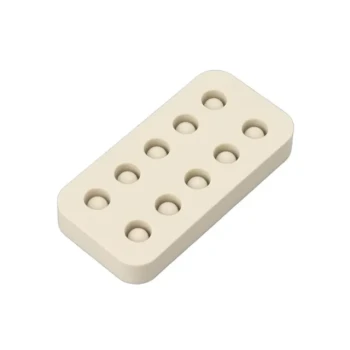
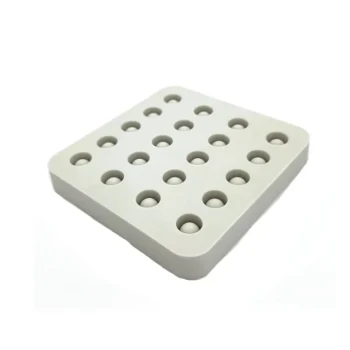
- 10-Cell Silicone Beeswax Bee Queen Cups Forming Mold
- JZBZ Type Wide Base Plastic Queen Cell Cups for Base Mounting and Queen Rearing
- Clear Black Plain Polystyrene Queen Bee Grafting Cell Cups No Lug for Bee Queen Cup
- Premium Nicot Style Cell Bar Holder and Queen Cell Cup Holder System
- Brown Nicot Queen Cell Cups for Breeding Queen Bees Beekeeping
People Also Ask
- How do beeswax queen cell cups function? Optimize Queen Rearing with Biological Mimicry
- What is the biological function of beeswax queen cell cups? Boost Acceptance in Artificial Queen Rearing
- What role do specialized queen rearing tools play in developing mite-resistant honeybee stock? Master Genetic Selection
- What materials are used to make artificial queen cell cups for grafting? Beeswax vs. Plastic Guide
- What roles do specialized queen cell cups play in royal jelly production? Optimize Your Hive's Secretion and Yield