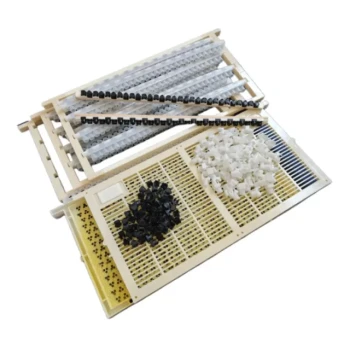
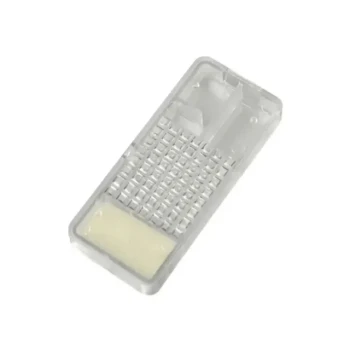
Controlled breeding equipment and specialized consumables function as the infrastructure for precise genetic selection and scalable production. By utilizing mating nuclei, grafting frames, and artificial insemination tools, breeders can maintain strict genetic purity while scaling operations to produce thousands of queens with specific, desirable traits.
The core function of this equipment is to convert queen rearing from a variable natural event into a standardized, measurable science. By controlling the physical and nutritional environment, breeders can isolate specific genetic traits—such as disease resistance and gentleness—to improve the economic efficiency and health of the entire stock.
Establishing Genetic Control and Scale
Enabling High-Frequency Selection
Controlled breeding tools are the mechanism behind modern genetic improvement. They allow breeders to execute high-frequency selection procedures, rapidly iterating through generations to isolate favorable characteristics.
Scaling Production Volume
Tools like grafting frames and mating nuclei are designed for mass production. They enable a single operation to produce thousands of queens, moving beyond the limitations of natural hive reproduction rates.
Targeting Specific Traits
The primary output of this equipment is not just more bees, but better bees. The gear facilitates the selection of specific phenotypes, focusing on high productivity, disease resistance, and gentleness.
Standardizing the Rearing Environment
Centralizing Larval Management
Specialized queen rearing frames act as the primary carrier for the operation. They allow for the concentrated placement of large numbers of developing larvae within a single colony.
Facilitating Data Tracking
These frames enable researchers and breeders to record the complete development timeline. By fixing the location of every cell, breeders can accurately track progress from grafting to pupation and emergence.
Mimicking Natural Geometry
Specialized Queen Cups serve as the physical interface for the larvae. They mimic the natural base structure of a queen cell, providing a stable attachment point that encourages worker bees to expand the cell and secrete royal jelly.
Creating a Controlled Interface
Beeswax cups are used to simulate the exact physical environment of a natural cell. This allows for precise observation of how the cup material might influence chemical properties, such as pH levels, which directly impacts larval survival rates.
Guaranteeing Nutritional Consistency
Stimulating Glandular Activity
Specialized bee feeders do more than just prevent starvation; they trigger a physiological response. A continuous supply of syrup stimulates the hypopharyngeal and mandibular glands in nurse bees, ensuring they secrete sufficient royal jelly.
Maintaining Rearing Drive
The volume of royal jelly directly correlates to the quality of the resulting queen. Feeders ensure this nutrient supply remains constant, maintaining the colony's "rearing drive" even when natural nectar or pollen sources are scarce.
Understanding the Trade-offs
Material Sensitivity
While specialized cups provide standardization, the material matters. The interaction between the cup material and royal jelly can alter chemical properties or pH levels, potentially reducing larval survival if the material is not biocompatible.
Dependency on Artificial Inputs
Rearing programs heavily reliant on feeders require vigilant management. Because the system is optimized around a continuous artificial supply, a failure in the feeding schedule can cause an immediate drop in royal jelly production and larval quality.
Making the Right Choice for Your Program
- If your primary focus is Genetic Improvement: Prioritize mating nuclei and artificial insemination tools to ensure strict control over male and female lineage for traits like disease resistance.
- If your primary focus is Commercial Scale: Invest heavily in standardized grafting frames and specialized cups to maximize the density of larvae per colony and streamline workflow.
- If your primary focus is Consistency: Ensure you have a robust specialized feeding system to maintain royal jelly production regardless of external weather or floral conditions.
Success in queen rearing relies on using these tools not just to breed more bees, but to build a predictable, high-quality genetic foundation.
Summary Table:
| Equipment Category | Primary Function | Impact on Queen Quality |
|---|---|---|
| Grafting Frames | Centralizes larval management | Enables high-volume production & tracking |
| Queen Cups (Wax/Plastic) | Mimics natural cell geometry | Encourages royal jelly secretion & larval survival |
| Mating Nuclei | Isolates genetic lineages | Ensures strict genetic purity & trait control |
| Specialized Feeders | Stimulates nurse bee glands | Guarantees consistent royal jelly volume |
| AI Tools | Precision breeding control | Allows for high-frequency trait selection |
Elevate Your Apiary with HONESTBEE’s Professional Breeding Solutions
To achieve true genetic excellence and commercial scale, your breeding program requires more than just tools—it needs a precision-engineered infrastructure. HONESTBEE provides a comprehensive wholesale portfolio tailored for commercial apiaries and distributors worldwide.
From standardized grafting frames and biocompatible queen cups to high-efficiency honey-filling and hive-making machinery, we supply the full spectrum of equipment and consumables necessary to turn queen rearing into a measurable science. Partner with us to enhance your stock's productivity, disease resistance, and overall health.
Ready to scale your production? Contact us today for wholesale inquiries and expert equipment solutions!
References
- Ivan Štefanić, Zoran Grgić. Beekeeping in the Republic of Croatia. DOI: 10.1080/0005772x.2004.11099608
This article is also based on technical information from HonestBee Knowledge Base .
Related Products
- Premium Nicot Style Queen Rearing Kit with Hair Roller Bee Cages
- No Grafting Queen Rearing Kit: System for Royal Jelly Production and Queen Rearing
- Retractable Chinese Queen Rearing Grafting Tools Equipment
- Nicot Queen Rearing Kit for Beekeeping and Grafting in Nicot System
- Stainless Steel Beekeeping Queen Grafting Tool for Honey Bee Rearing
People Also Ask
- What is the primary function of a queen rearing kit? Eliminate Manual Grafting for Superior Bee Breeding
- What are some alternative methods to grafting for queen cell production? Discover Graft-Free Queen Rearing Systems
- How do specialized queen rearing kits and queen management tools improve the success rate of bee colony expansion?
- How do modern queen bee rearing and breeding kits improve apiary management? Transition to Proactive Precision Breeding
- How is 'active' queen rearing defined in beekeeping? Master Intentional Colony Management & Genetic Control