In a balanced and healthy honey bee colony, the brood chamber should exhibit a specific developmental distribution known as the 1:2:4 ratio. This means that for every single egg present, there should be approximately two larvae and four times as many capped cells.
The 1:2:4 ratio serves as a vital diagnostic benchmark for beekeepers. A significant deviation from this balance, particularly when accompanied by a scarcity of adult bees, is a strong indicator of colony distress, such as heavy mite infestation or Colony Collapse Disorder (CCD).
The Biology Behind the Ratio
To effectively manage a hive, you must understand that this ratio is not arbitrary. It mirrors the natural biological timeline of honey bee development.
The Developmental Timeline
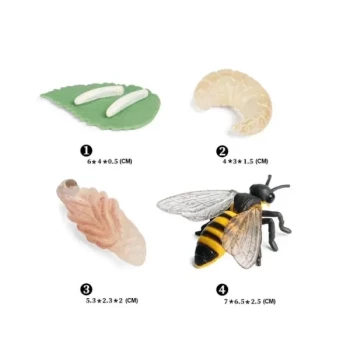
The 1:2:4 distribution exists because each stage of the bee's life cycle requires a different amount of time to complete. The capped pupa stage is the longest, followed by the larval stage, with the egg stage being the shortest.
Visualizing the Balance
When inspecting a healthy frame, you should see a gradient of development. The area covered by capped brood should be roughly double the size of the area containing larvae, which in turn should be double the area containing eggs.
Consistency is Key
This ratio assumes a steady, uninterrupted laying pattern by the queen. It confirms that the colony is successfully rearing brood through every stage without significant mortality or interruption.
Identifying Critical Warning Signs
While slight fluctuations are normal due to seasonality, sharp deviations from the 1:2:4 ratio are cause for concern. You must analyze these imbalances in the context of the entire hive.
The "Shotgun" Pattern
A ratio that is heavily skewed—often manifesting as "spotty" brood patterns—suggests that brood is dying or being removed before it can emerge. This breaks the mathematical progression of the colony.
The Role of Adult Coverage
The primary reference highlights a critical correlation: a skewed brood ratio is most dangerous when combined with a lack of adult bee coverage.
Diagnosing Disease
If you observe a broken ratio and the brood is not adequately covered by nurse bees, this is often a symptom of heavy Varroa mite damage or Colony Collapse Disorder (CCD). The colony is likely failing to replace the adult bees dying in the field.
Assessing Your Hive's Health
Use this ratio as a fundamental metric during your hive inspections to gauge the colony's trajectory.
- If your primary focus is Routine Maintenance: Look for the 1:2:4 pattern to confirm the queen is laying consistently and brood is developing normally.
- If your primary focus is Disease Diagnosis: Treat any significant deviation from this ratio, especially with low adult population, as an immediate trigger to test for mites or pathogens.
Mastering this ratio allows you to move beyond simple observation and start predicting the future health of your colony.
Summary Table:
| Brood Stage | Development Duration | Ideal Ratio | Visual Representation |
|---|---|---|---|
| Eggs | ~3 Days | 1 | Smallest area; indicates recent queen activity |
| Larvae | ~6 Days | 2 | Double the area of eggs; high nutritional demand |
| Capped Cells | ~12 Days | 4 | Largest area; indicates future population growth |
| Total Balance | 21 Days | 1:2:4 | Consistent, solid brood pattern |
Scale Your Apiary Operations with HONESTBEE
Understanding brood biology is just the first step—having the right infrastructure is what ensures colony success. HONESTBEE specializes in supporting commercial apiaries and distributors with high-capacity equipment designed for professional scale. From precision hive-making machinery to automated honey-filling systems and premium beekeeping tools, we provide the hardware you need to maintain healthy 1:2:4 ratios across thousands of hives.
Ready to upgrade your wholesale supply or commercial honey production? Contact our expert team today to discover how our comprehensive equipment portfolio can streamline your business and maximize your yield.
Related Products
- Langstroth Honey Bee Box Hive Boxes for Different Depths
- Assembled Wooden Bee Frames with Plastic Foundation for Durability and Convenience by HONESTBEE
- Twin Queen Styrofoam Honey Bee Nucs Mating and Breeding Box
- Automatic Heat Preservation 6 Frame Pro Nuc Box for Honey Bee Queen Mating
- Honey Bee Lifecycle Model: A Detailed Honeycomb Display of Bee Development
People Also Ask
- What role do standardized Langstroth boxes play in commercial apiary management and honey bee research? | HONESTBEE Guide
- What are the primary advantages of using standardized Langstroth boxes? Scale Your Commercial Beekeeping Operation
- What are the differences between the three standard depths of Langstroth boxes? Choose the Best Size for Your Apiary
- What features of Langstroth hive boxes contribute to expandability and honey yield? Maximize Your Apiary Production
- What are the typical uses for the different box sizes in a Langstroth hive? Master Hive Management & Efficiency