Honey super frames function as both a biological storage unit and a digital interface. Physically, they provide a dedicated structure above the brood area for bees to store surplus honey. In modern automated systems, these frames serve as a consistent visual reference, allowing image recognition technology to accurately quantify honey volume and monitor hive progress.
Traditional beekeeping uses super frames to separate the harvest from the brood, but automated systems rely on them for data standardization. By providing a uniform visual structure, these frames enable non-invasive software to calculate storage levels and capped cell ratios with precision.
The Biological Role: Separation and Storage
Segregating the Harvest
The primary physical purpose of the super frame is to isolate honey production from the bee's reproductive cycle. By placing these frames in a "super chamber" above the brood box, you create a dedicated zone for surplus resources.
Protecting the Brood Nest
This separation ensures that when you harvest, you are collecting clean honey rather than disturbing the queen or the larvae. It allows for extraction without damaging the egg-laying area, maintaining the colony's long-term health.
Increasing Production Efficiency
Bees are naturally inclined to store honey away from the brood. Providing this specific, standardized vertical space encourages rapid comb building and storage, significantly boosting overall production efficiency.
The Technological Role: Enabling Automation
Providing a Visual Constant
For automated detection algorithms, variables are the enemy. Honey super frames offer a standardized "canvas" or background against which the variable data (the honey and comb) can be measured.
Automating Volume Analysis
Because the frame size is known and constant, image recognition software can quantitatively analyze the comb within it. This allows the system to calculate the exact volume of honey stored without requiring a human to open the hive.
Detecting Capped Cell Ratios
The frame structure helps algorithms distinguish between open nectar cells and capped, mature honey. The visual standardization assists the software in calculating the ratio of capped cells, which is the primary indicator that honey is ready for harvest.
Understanding the Trade-offs
The Requirement for Uniformity
Automation relies heavily on the "standardized space" mentioned in the technical specifications. If frames are damaged, warped, or non-standard, the detection algorithms may produce inaccurate volume estimates.
Comb Irregularities
While the frame provides a boundary, bees do not always respect it perfectly. If bees build "burr comb" (comb bridging gap between frames) or irregular structures, it can disrupt the visual reference required for accurate automated analysis.
Making the Right Choice for Your Goal
Whether you are managing a traditional apiary or designing a smart hive, the role of the frame changes based on your objectives.
- If your primary focus is High-Quality Harvest: Prioritize the use of super frames to strictly enforce the separation between the brood nest and honey stores to ensure contaminant-free honey.
- If your primary focus is Smart Hive Automation: Ensure your frames are physically uniform and kept in pristine condition to provide the clear, consistent visual reference required for image recognition accuracy.
The honey super frame is the critical hardware link that bridges natural bee behavior with modern data collection.
Summary Table:
| Feature | Biological Role (Traditional) | Technological Role (Automated) |
|---|---|---|
| Core Purpose | Isolates surplus honey from the brood nest | Serves as a standardized visual reference |
| Data Benefit | Manual inspection of capped cells | Automated volume & capped ratio calculation |
| Efficiency | Encourages rapid, clean comb building | Enables non-invasive remote monitoring |
| Key Requirement | Clean, separate honey chambers | Uniformity & pristine physical condition |
Scale Your Honey Production with HONESTBEE Precision Equipment
At HONESTBEE, we empower commercial apiaries and distributors with the high-performance tools needed for modern beekeeping. Whether you are implementing smart hive automation or traditional large-scale production, our comprehensive wholesale range has you covered.
Our Value to You:
- Complete Equipment Solutions: From standardized hive-making machinery to precision honey-filling systems.
- Quality Consumables: A full spectrum of beekeeping tools and essential hardware built for durability.
- Market Growth: Boost your brand with our honey-themed cultural merchandise and specialized machinery.
Ready to optimize your apiary’s efficiency? Contact us today to explore our wholesale offerings and industrial machinery.
References
- Abigail Paradise Vit, Yarden Aronson. Automatic Detection of Honey in Hive Frames using Deep Learning. DOI: 10.11159/mvml23.120
This article is also based on technical information from HonestBee Knowledge Base .
Related Products
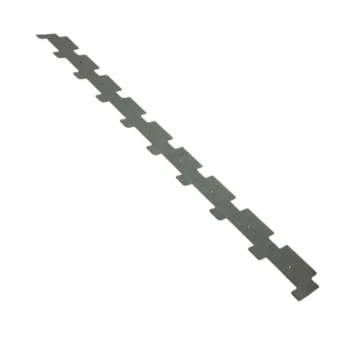
- Heavy Duty Castellated Iron Frame Spacer for Honey Supers
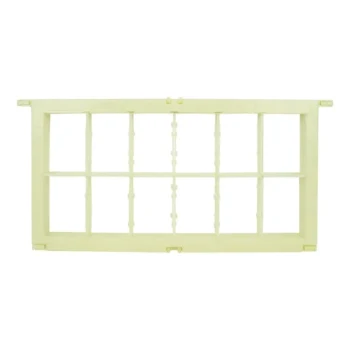
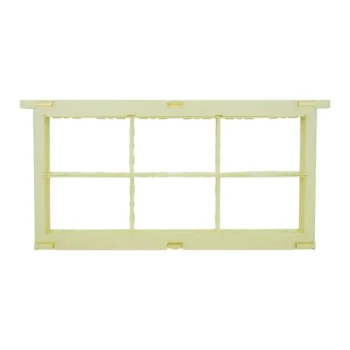
- Professional Sectional Comb Honey Frame with 250g Cassette System for Beekeeping
- Professional 500g Sectional Comb Honey Frame System for Beekeeping
- Heart-Shaped Comb Honey Frame and Honeycomb Cassette
- Plastic Honey Comb Frames Cassette Box for Honey
People Also Ask
- What are honey super frames and what foundation options are available? Choose the Best Support for Your Bees
- What are the reasons and drawbacks of using nine frames in a ten-frame honey super? Boost Extraction Speed Today
- What are honey super frames and how many are needed per box? A Beekeeper's Essential Guide
- What are honey super frames and their foundation options? Choose the Best Support for Your Hive's Honey Production
- Why might a beekeeper use fewer than the standard number of frames in a honey super? Boost Extraction Efficiency