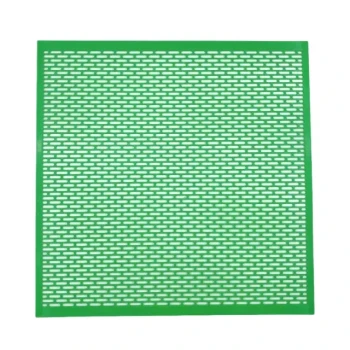
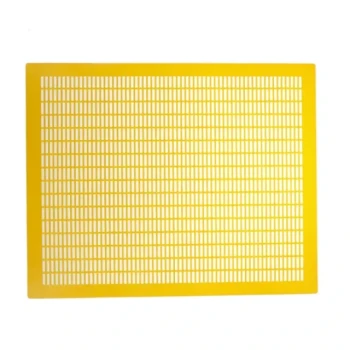
A queen excluder is a dimensionally precise barrier that keeps the queen in the brood chamber while allowing worker bees to reach the honey supers. Installed between the lower brood box and upper supers, its openings are large enough for worker bees to pass through but too narrow for the queen and drones. This prevents the queen from laying eggs in honey frames, keeping supers substantially brood-free and easier to inspect, remove, and extract.
A queen excluder works by exploiting the size difference between worker bees and the larger queen. Correctly specified openings isolate brood production in the lower hive bodies without blocking worker access to nectar-storage areas.
How a Queen Excluder Functions
The grid creates a physical barrier
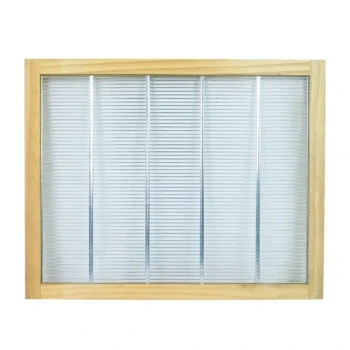
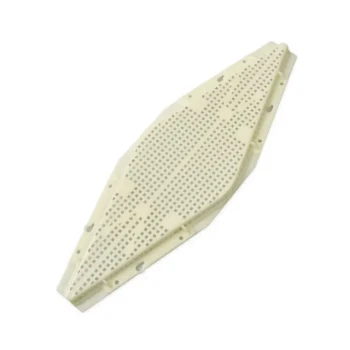
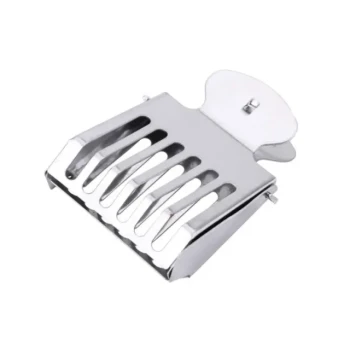
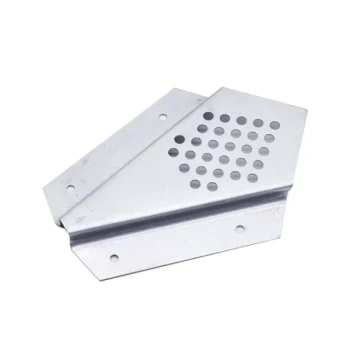
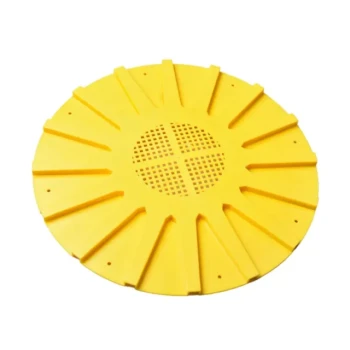
A queen excluder is a flat metal or plastic grid held in a rigid frame. It is placed directly above the brood chamber and below the honey supers.
The device does not rely on behavior, chemicals, or active control. Its function is purely mechanical: bee size determines who can pass through.
Worker bees can cross the barrier
Worker bees are smaller than the queen and can move through openings typically specified around 4.0 to 4.2 millimeters wide, depending on the excluder standard and manufacturer.
They continue carrying nectar upward, feeding developing brood below, and moving through the hive as normal.
The queen is restricted below
The queen's larger body, particularly her abdomen, cannot pass reliably through correctly spaced excluder openings. She therefore remains in the lower brood chamber, where she continues laying eggs.
Drones are also generally blocked because they are larger than worker bees. The primary management objective, however, is to prevent the queen from entering the supers.
How Dimensions Isolate Brood From Honey Supers
The separation depends on narrow dimensional tolerances
The basic dimensional relationship is straightforward:
- Worker bee width: approximately 3.2 to 3.5 millimeters
- Excluder opening: approximately 4.0 to 4.2 millimeters
- Queen abdomen width: approximately 4.4 to 4.5 millimeters
These figures illustrate the operating principle rather than a universal specification for every bee strain, product design, or measurement point. Commercial buyers should confirm the manufacturer's stated spacing and compatibility with the target hive system.
The queen cannot reach super comb
Because the queen is confined below the grid, she cannot normally access the combs in the honey supers to lay eggs. Brood production therefore remains concentrated in the lower brood chamber.
Worker bees can still pass upward and store nectar in the super frames. Once the nectar is ripened and capped, those frames are less likely to contain eggs, larvae, or pupae.
The excluder separates colony zones
The excluder creates a practical division within a frame hive:
- Below the excluder: brood-rearing and queen activity
- Above the excluder: worker-accessible honey storage
It does not create a perfect biological seal. Workers, food, and hive odors still move between sections; the separation is specifically intended to limit the queen's movement.
Why Brood-Free Supers Matter
Extraction becomes more efficient
Honey frames without brood are easier to inspect, uncap, and process. Commercial operators can reduce the risk of damaging larvae during extraction and simplify the handling of harvested comb.
Product handling is cleaner
Keeping brood out of the supers supports cleaner separation between the colony's reproductive area and the honey intended for harvest. The excluder does not itself separate honey from pollen, nor does it guarantee a particular sensory or quality grade.
Frame management becomes more predictable
A consistent brood boundary helps beekeepers plan super placement, inspections, harvest timing, and equipment throughput. This predictability is particularly useful for distributors and commercial operations managing standardized hive equipment at scale.
Selecting and Supplying Queen Excluders
Match the excluder to the hive format
The excluder must cover the full opening between the brood chamber and super body without leaving bypass gaps. Dimensions should match the hive type, box footprint, frame configuration, and intended installation method.
Prioritize dimensional consistency
A high-quality product should maintain uniform slot spacing across the entire grid. Oversized openings may allow the queen through, while undersized or obstructed openings can restrict workers.
For B2B sourcing, dimensional tolerances, material specifications, packaging, and lot consistency are as important as the nominal product size.
Choose metal or plastic according to use
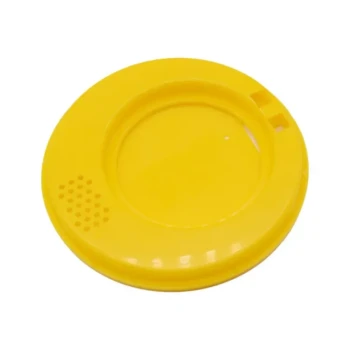
Metal excluders can provide rigidity and long service life, while smooth plastic designs may offer lower weight and easier handling. The most appropriate choice depends on operating volume, cleaning practices, climate, transport requirements, and customer preference.
Smooth, accurately formed surfaces are valuable because damaged or rough grids can interfere with bee movement and reduce user confidence in the product.
Understanding the Trade-offs
Worker acceptance can affect performance
Some colonies may be slow to cross a newly installed excluder, especially when the upper super does not yet contain attractive storage space. Beekeepers should monitor colony strength, nectar flow, and super readiness rather than assuming immediate movement.
Poor specifications defeat the purpose
An excluder with inconsistent spacing, warped edges, damaged wires, or an incorrect footprint can create two opposite problems: the queen may enter the super, or workers may be unnecessarily obstructed.
Product inspection and accurate hive-system matching are therefore essential parts of reliable supply.
It adds a management step
The excluder must be installed correctly and checked during inspections. It may also require cleaning or replacement if propolis, burr comb, wax, or physical damage reduces the usable opening.
It is not suitable for every management objective
A queen excluder is useful when the priority is brood-free honey storage, but it is not automatically required in every colony or production method. Beekeepers must balance extraction convenience against colony behavior, seasonal conditions, and the possibility of reduced worker movement.
Making the Right Choice for Your Goal
Use the product specification and operating context to guide the purchase and installation decision.
- If your primary focus is brood-free honey extraction: Install a correctly sized excluder between the brood chamber and supers, and verify uniform openings and a complete perimeter fit.
- If your primary focus is commercial distribution: Source metal and plastic options with documented dimensions, consistent manufacturing tolerances, reliable packaging, and fast replenishment capability.
- If your primary focus is colony productivity: Monitor worker movement and colony conditions after installation, because correct dimensions alone do not guarantee rapid acceptance.
- If your primary focus is specialized hive management: Select an excluder format compatible with the specific brood, super, and frame arrangement used in the operation.
A queen excluder is effective when precise dimensions, correct hive placement, and disciplined inspection work together to keep brood below and honey storage above.
Summary Table:
| Feature | Worker Bees | Queen Bee | Excluder Opening |
|---|---|---|---|
| Body Width | ~3.2–3.5 mm | ~4.4–4.5 mm | 4.0–4.2 mm |
| Passage | Pass freely | Blocked | Allows workers, blocks queen |
| Impact | Access supers | Confined to brood chamber | Creates brood-free honey supers |
Ensure your hive management is optimized with high-quality queen excluders. At HONESTBEE, we supply precision-engineered excluders and a full range of beekeeping equipment to distributors and commercial apiaries. Benefit from our one-stop sourcing, rapid delivery, and expert support. Contact us today to discuss your wholesale needs and enhance your operational efficiency.
Related Products
- High Performance Plastic Queen Excluder for Beekeeping and Apiary Management
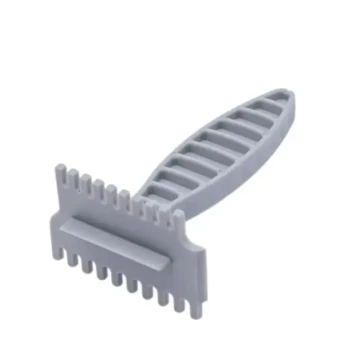
- Lightweight Durable Plastic Queen Excluder Scraper for Beekeeping
- Premium Wood Framed Metal Wire Queen Bee Excluder
- Professional Plastic Queen Excluder for Modern Beekeeping
- Metal Queen Bee Excluder for Beekeeping
People Also Ask
- What are the characteristics of a plastic queen excluder? Key Benefits for Cost-Effective Beekeeping
- What are the operational and cost advantages of using plastic queen excluders over metal or wire excluders in commercial hive management? Discover how they reduce labor, prevent wing damage, and lower total costs.
- What types of queen excluders are available for beekeepers? Choose the Right Tool for Your Hive
- Why are standardized hive frames and queen excluders essential for maintaining honey purity and quality? Scale Your Purity
- Do plastic queen excluders work? A Cost-Effective Solution for Modern Apiaries