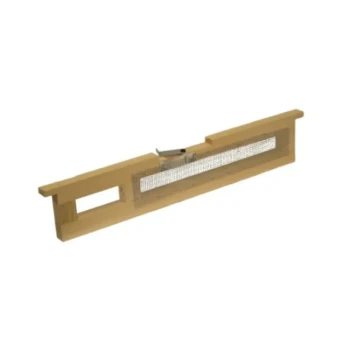
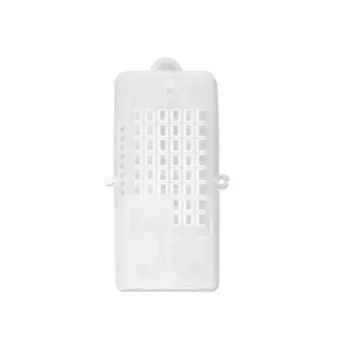
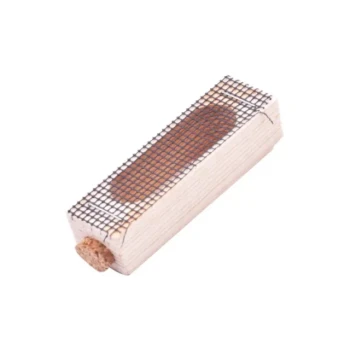
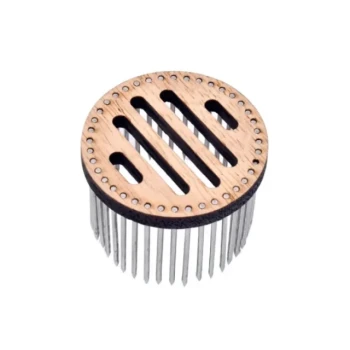
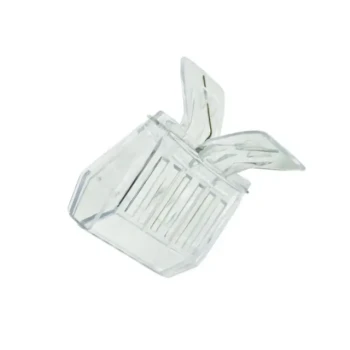
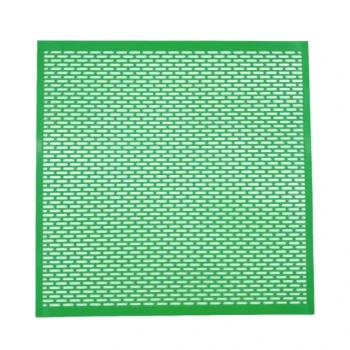
A queen gate functions as a specialized physical filtration system installed at the entrance of a beehive. Its operation relies entirely on a simple mechanical constraint: the significant size difference between the thorax of a queen bee and that of a worker bee. By calibrating the entrance apertures to a specific width, the gate physically blocks the queen from exiting the hive while maintaining open traffic for the smaller worker bees.
Core Insight While worker bees manage resources, the presence of the queen dictates the colony's location. By mechanically restricting the queen's movement, you effectively anchor the entire colony to the hive, preventing migration even during periods of severe environmental stress.
The Mechanical Principle
Size-Based Filtration
The queen gate operates on a pass/fail geometric principle. The device is typically a metal or plastic strip featuring slots or holes of a precise dimension.
These openings are large enough to allow the efficient passage of worker bees. However, they are slightly too narrow for the queen, whose abdomen and thorax are significantly larger and wider.
Selective Permeability
Unlike a solid door that stops all activity, a queen gate creates a semi-permeable barrier. It ensures that the biological functions of the hive—specifically foraging and resource gathering—continue without interruption.
The colony functions normally in terms of food collection, but the reproductive center (the queen) is physically quarantined inside the box.
The Functional Purpose
Preventing Colony Migration (Absconding)
The primary function of the queen gate is to prevent the colony from absconding. This occurs when a colony decides to abandon the hive entirely due to poor conditions, such as extreme food shortages or environmental stress.
If the workers attempt to leave, they will eventually return to the hive if the queen cannot accompany them. Without the queen, a swarm cannot establish a new home.
Economic Risk Management
For the beekeeper, the queen gate acts as an insurance policy. Losing a colony to migration represents a total economic loss of the bees and potential honey production.
By installing this hardware during high-risk periods, the beekeeper minimizes the risk of losing the livestock essentially due to the colony's instinct to relocate.
Important Distinctions and Trade-offs
Queen Gate vs. Queen Excluder
It is vital not to confuse the queen gate with a queen excluder, even though they function on similar mechanical principles.
- The Queen Gate is external. It keeps the queen in the hive to prevent colony loss.
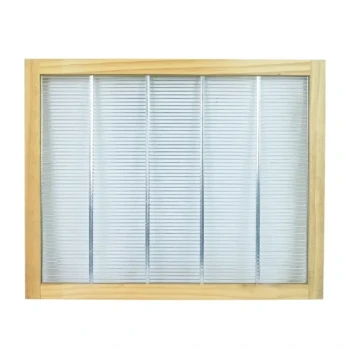
- The Queen Excluder is internal. It is a flat screen placed between the brood box and honey supers. Its goal is to keep the queen out of the honey storage areas to prevent egg-laying in the harvestable honey, not to keep her in the hive.
Queen Gate vs. Entrance Block
Similarly, a queen gate is distinct from an entrance block.
- Entrance Blocks narrow the opening to defend against intruders (like robber bees) or to retain heat during cold months.
- Queen Gates may reduce the opening size, but their defining feature is the grid structure designed for filtration, not just flow reduction.
The Drone Problem
A common trade-off when using a queen gate is drone entrapment. Male bees (drones) are often larger than workers and comparable in width to the queen.
Because the gate blocks the queen, it often blocks drones as well. This can lead to congestion at the entrance or an accumulation of dead drones inside the hive if the gate is left on for extended periods.
Making the Right Choice for Your Goal
To select the correct hardware, you must clearly identify the problem you are trying to solve.
- If your primary focus is Colony Retention: Use a Queen Gate. This is the only tool that physically prevents the colony from absconding during stress or swarming season.
- If your primary focus is Honey Purity: Use a Queen Excluder. This internal screen keeps the queen out of your honey supers.
- If your primary focus is Climate Control or Defense: Use an Entrance Block. This restricts airflow and makes the entrance easier for guard bees to defend against robbers.
Summary: The queen gate is a temporary containment tool that leverages the queen's larger size to anchor the colony to the hive, safeguarding your investment during unstable environmental conditions.
Summary Table:
| Feature | Queen Gate | Queen Excluder | Entrance Block |
|---|---|---|---|
| Primary Goal | Colony Retention (Prevent Absconding) | Honey Purity (Prevent Egg Laying) | Climate Control & Defense |
| Installation | External (Hive Entrance) | Internal (Between Hive Bodies) | External (Hive Entrance) |
| Mechanism | Size-based grid to trap Queen inside | Size-based grid to keep Queen out of supers | Solid block to reduce aperture size |
| Best Used For | High-risk migration periods | Honey harvest season | Winter or defense against robbers |
Secure Your Apiary with HONESTBEE Professional Hardware
Protect your colonies from unexpected migration and maximize your production efficiency with high-quality hive components. HONESTBEE provides commercial apiaries and distributors with a comprehensive wholesale range of beekeeping tools, from precision-engineered queen gates and excluders to advanced honey-filling machinery.
Whether you are scaling your commercial operations or supplying the industry, our portfolio of hardware and essential consumables ensures your success.
Ready to upgrade your equipment?
Contact HONESTBEE today for wholesale pricing and expert guidance!
References
- S. Pokhrel, SM Shrestha. Absconding Behavior and Management of Apis cerana F. Honeybee in Chitwan, Nepal. DOI: 10.3126/jiaas.v27i0.699
This article is also based on technical information from HonestBee Knowledge Base .
Related Products
- Professional Wooden Requeening Frame for Beekeeping
- JZBZ Langstroth Queen Rearing Frame for Beekeeping
- Heavy Duty Stainless Steel Queen Bee Catcher Clip
- Durable Galvanized Steel Spring Queen Bee Cage
- Professional Queen Bee Introduction and Transport Cage
People Also Ask
- What are the primary functions of beekeeping frames? Boost Efficiency with Professional Hive Management
- What are the best practices for assembling beekeeping frames? Pro Tips for Maximum Durability & Efficiency
- How are deep, medium, and shallow frames typically used in beekeeping? Optimize Your Hive Setup
- What are the characteristics of wooden frames in beekeeping? Unlock Natural Flexibility & Cost-Effectiveness
- What are the common specifications for wooden beekeeping frames used in colony expansion? Your Complete Guide