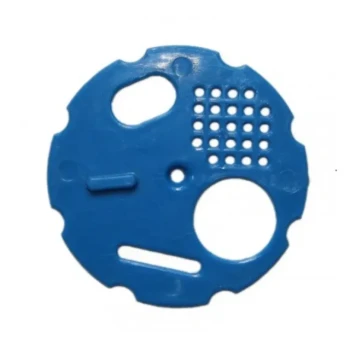
A hive entrance reducer is a physical barrier designed to restrict the size of the beehive opening. It is typically a thin bar that fits snugly into the hive entrance, allowing worker bees to pass freely while significantly shrinking the area the colony must defend. While designs vary between wood, metal, and plastic, the fundamental goal is to give the beekeeper precise control over the hive's accessibility.
By limiting the access point, an entrance reducer empowers a colony—particularly a weak or new one—to defend its resources against robbers and pests. It serves as a critical tool for regulating hive temperature and preventing drafts during colder months.
The Physical Design
Material Composition
Reducers are commonly manufactured from wood or metal. While the primary reference emphasizes these materials, some modern versions are made of plastic to improve durability and ease of cleaning.
Standardized Fit
These devices are engineered to be compatible with standard hive dimensions. They are generally available to fit both 8-frame and 10-frame equipment, ensuring a tight seal regardless of the hive body size.
Adjustable Openings
Most wooden reducers feature notches of different sizes. By rotating the bar, a beekeeper can select a medium opening for moderate traffic or a very small opening for maximum security.
Core Functions and Benefits
Defense Against Robbing
The most critical function of a reducer is colony defense. By narrowing the entrance, a small number of guard bees can effectively protect the hive against robber bees from other colonies who attempt to steal honey.
Protection for New Colonies
This defense mechanism is vital for new or weak colonies. These hives lack the population to defend a wide-open entrance, making them vulnerable without the assistance of a reducer.
Pest Deterrence
Reducers are frequently referred to as mouse guards. In the fall and winter, mice seek warmth and will destroy comb if allowed inside; a reducer physically blocks them from entering.
Climate Control
In cold climates, the reducer acts as a weather shield. It minimizes drafts and prevents wind-blown snow from accumulating inside the hive, helping the cluster maintain the necessary internal temperature.
Transport and Treatment
Beekeepers use reducers to seal the hive completely or restrict airflow temporarily. This is necessary when relocating a hive to a new site or when applying certain treatments that require a closed environment.
Understanding the Trade-offs
Risk of Overheating
While excellent for insulation, a reducer restricts ventilation. Leaving a reducer on its smallest setting during hot summer days can cause the hive to overheat, potentially leading to brood damage.
Traffic Congestion
During a heavy nectar flow, a small entrance creates a bottleneck. If the entrance is too narrow, returning foragers may crowd the opening, slowing down production and reducing the colony's efficiency.
Making the Right Choice for Your Goal
To maximize the health of your colony, you must adjust the entrance based on the current season and the colony's strength.
- If your primary focus is establishing a new colony: Keep the reducer on the smallest setting to prevent robbery until the population grows.
- If your primary focus is overwintering: Install the reducer (with the opening facing up if possible) to block mice and reduce cold drafts.
- If your primary focus is moving the hive: Use the reducer to temporarily block the entrance completely to keep the bees contained during transport.
An entrance reducer is not a permanent fixture, but a dynamic tool used to balance defense with airflow.
Summary Table:
| Feature | Description | Key Benefit |
|---|---|---|
| Material | Wood, Metal, or Plastic | Durability and easy cleaning |
| Compatibility | Fits 8-frame and 10-frame hives | Versatile application for standard equipment |
| Adjustable Notches | Small and medium opening options | Precise control over traffic and security |
| Pest Barrier | Functions as a "mouse guard" | Prevents rodents from damaging honeycomb |
| Climate Shield | Restricts airflow and drafts | Helps maintain internal cluster temperature |
Scale Your Beekeeping Success with HONESTBEE
At HONESTBEE, we specialize in empowering commercial apiaries and distributors with high-performance beekeeping solutions. Whether you are looking to secure your hives with precision-fit entrance reducers or seeking to modernize your operations with advanced honey-filling and hive-making machinery, we provide the comprehensive wholesale support you need.
Our extensive portfolio ranges from essential industry consumables and specialized hardware to honey-themed cultural merchandise, ensuring your business has the tools to thrive in any season. Partner with a supplier that understands the demands of large-scale beekeeping.
Ready to upgrade your inventory or equipment? Contact HONESTBEE Today to discover how our wholesale expertise can drive your growth!
Related Products
- Steel Round Disc Entrance Reducer for Flexzion Bee Hive Nuc Box Gate
- Beehive Entrance Reducer Guardian Metal Hive Entrance for Bees
- Professional Hive Front Entrance Bee Feeder
- Multi-Functional Rotary Hive Entrance Disc for Beekeeping
- HONESTBEE Entrance Bee Feeder Efficient Hive Front Liquid Feeding Solution for Beekeeping
People Also Ask
- What is the purpose of an entrance reducer for a beehive? Strengthen Colony Defense and Prevent Robbery
- Why are entrance reducers used to counter hornet infestations? Protect Your Hive with Strategic Choke Points
- Why is it critical to maintain a smaller entrance for a newly established bee hive? Boost Colony Growth and Security
- Under what conditions should a beekeeper adjust the size of a beehive entrance? Seasonal & Defense Management Tips
- What is the function of an entrance reducer on a beehive? Strengthen Colony Defense and Climate Control