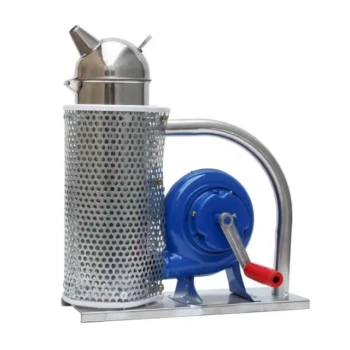
The primary function of a beekeeping smoker is to produce cold smoke that sedates honeybees and masks their alarm pheromones. By interrupting the colony's defensive signals, the smoker significantly lowers aggression, ensuring the safety of the beekeeper and reducing accidental bee mortality during hive manipulations.
The smoker serves as a critical safety device that masks chemical communication and triggers a feeding instinct. This intervention allows for efficient inspections while protecting the colony’s population from the stress and danger of a defensive escalation.
The Mechanics of Colony Control
Masking Chemical Signals
Honeybees rely heavily on olfactory communication. When a hive is disturbed, guard bees release alarm pheromones to alert the colony of a threat.
The cool smoke generated by the smoker effectively masks these pheromones. This blockage prevents the alarm signal from spreading throughout the hive, stopping a localized defensive reaction from escalating into a full-colony attack.
Triggering the Survival Instinct
Beyond masking signals, the presence of smoke triggers a deep-seated evolutionary response in bees. When they detect smoke, they interpret it as a potential forest fire.
This induces the bees to consume honey in preparation for potentially abandoning the hive. Engorged with honey, the bees become physically lethargic and significantly more docile, making them less likely to sting.
Enhancing Operational Safety
Reducing Bee Mortality
A calm colony is safer for the bees themselves. When bees are agitated and flying erratically, the risk of accidental crushing increases significantly.
By keeping the bees calm and on the frames, the smoker allows the beekeeper to manipulate hive components smoothly. This precise handling is crucial for avoiding injury to the queen or worker bees during inspections.
Facilitating Complex Tasks
The smoker creates a "safe operational window" for essential beekeeping tasks. Whether the goal is queen rearing, harvesting honey, or cleaning nest plates, the smoker ensures the environment remains manageable.
Without this tool, routine maintenance would require fighting through a defensive cloud of bees, making delicate tasks nearly impossible and highly stressful for the colony.
Operational Trade-offs and Best Practices
The Criticality of Smoke Temperature
The references explicitly emphasize the need for cool smoke. Hot smoke is a significant hazard; it can singe the bees' wings or burn their bodies, causing permanent damage to the colony.
If the combustion material in the chamber burns too hot, it becomes a weapon rather than a tool. The goal is a gentle, cool vapor, not heat.
Balancing Usage
While smoke is a safety tool, it creates a physiological disruption in the hive. Over-smoking can cause excessive stress, disrupt the colony's daily workflow, or even contaminate the flavor of the honey.
The objective is to use the minimum amount of smoke necessary to mask pheromones and induce feeding, not to fill the hive with thick fumes.
Making the Right Choice for Your Goal
If your primary focus is Routine Inspection:
- Use light puffs of cool smoke primarily to mask alarm pheromones at the entrance and top bars to prevent initial defensive behavior.
If your primary focus is heavy manipulation (Harvesting/Re-queening):
- Apply smoke more deliberately to trigger the honey-feeding response, ensuring the colony remains docile for an extended period of disruptive work.
Mastering the smoker is about respecting the delicate balance between necessary intervention and colony well-being.
Summary Table:
| Feature | Function & Benefit | Impact on Colony |
|---|---|---|
| Pheromone Masking | Blocks alarm signals from guard bees | Prevents defensive escalation and mass attacks |
| Survival Instinct | Triggers honey consumption (feeding) | Makes bees lethargic, docile, and less likely to sting |
| Operational Safety | Keeps bees calm on the frames | Reduces accidental bee mortality and protects the queen |
| Temperature Control | Production of "cool smoke" | Prevents singed wings and physical injury to the bees |
Elevate Your Beekeeping Operations with HONESTBEE
At HONESTBEE, we understand that high-quality tools are the backbone of a successful apiary. Whether you are a large-scale commercial apiary or a dedicated equipment distributor, our comprehensive wholesale range is designed to meet your every need.
We supply everything from precision beekeeping smokers and protective gear to advanced hive-making and honey-filling machinery. By choosing HONESTBEE, you gain a partner committed to improving your efficiency and ensuring the health of your colonies through superior hardware and essential industry consumables.
Ready to scale your business with professional-grade equipment? Contact HONESTBEE Today to Explore Our Wholesale Catalog
References
- Clara Montagnin, Valentina Lorenzi. Preliminary study on the extention of the IT system ClassyFarm to the apiary. DOI: 10.21014/actaimeko.v13i2.1630
This article is also based on technical information from HonestBee Knowledge Base .
Related Products
- Stainless Steel Honey Bee Smoker Hive and Honeycomb Smoker for Beekeeping
- Miniature Stainless Steel Bee Smoker for Beekeeping
- Professional Bee Smoker with Elongated Spout and Durable Bellows for Beekeeping
- Electric Bee Smoker European Style Bee Hive Smoker for Beekeeping
- Galvanized Beekeeping Smoker for Honey Bee and Apiculture
People Also Ask
- What are bee smokers made out of? Choose the Right Material for Your Apiary
- What type of bee smoker is recommended for a beginner? Top Picks for Easy Hive Management
- Why is a stainless steel bee smoker considered indispensable? Master Hive Management with Cool Smoke Technology
- Why is a specialized bee smoker considered a critical tool for apiary safety? Master Hive Control & Productivity
- When should you add more fuel to the bee smoker? Watch for This Critical Smoke Signal