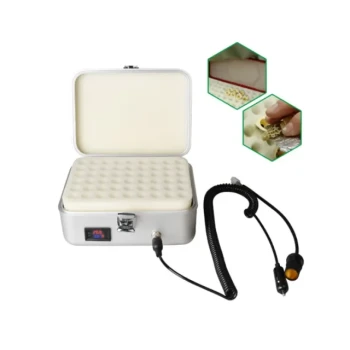
The primary function of a high-precision constant temperature and humidity incubator is to act as a surrogate colony, rigorously simulating the natural environmental conditions required for queen bee development. Specifically, it maintains exact set points—such as 32°C and 70% relative humidity—to ensure capped queen cells experience a stable transition from the pupal stage to successful emergence.
The incubator does more than simply keep larvae warm; it eliminates environmental variables. By guaranteeing a consistent developmental baseline, it allows researchers to attribute physiological changes—such as protein accumulation in ovaries—solely to experimental interventions rather than temperature or humidity fluctuations.
Simulating the Natural Colony Environment
Creating a Surrogate Hive
In artificial incubation, the incubator replaces the nursing colony once the queen cells are capped. Its goal is to replicate the homeostasis naturally achieved by worker bees.
Precision Parameter Control
The device is engineered to maintain specific parameters with minimal deviation. As noted in primary research, settings such as 32°C for temperature and 70% relative humidity are commonly utilized to mirror optimal hive conditions.
Stability Over Time
Natural hives can fluctuate, but scientific analysis requires constancy. The incubator ensures that from the moment of capping until the queen emerges, the environmental pressure remains static.
Ensuring Developmental Integrity
Protecting the "Capping to Emergence" Window
The period after the cell is capped is critical. The incubator shields the developing queen from external shocks that could occur if left in a variable environment.
Supporting Ovarian Development
A key objective of using this equipment is to facilitate normal physiological growth. A stable environment is essential for the proper accumulation of protein in the ovaries of newly emerged queens.
Preventing Morphology Issues
Fluctuations in humidity or heat can lead to physical defects or wing deformities. High-precision control mitigates the risk of quality degradation, ensuring the queens are morphologically sound upon emergence.
The Role in Research Standardization
Minimizing Experimental Error
In scientific studies, environmental noise destroys data integrity. By locking down temperature and humidity, the incubator isolates variables, ensuring that results reflect the actual biological or genetic factors being tested.
Standardizing the Sample
For research regarding artificial intervention, every subject must start from the same baseline. The incubator ensures that every queen bee in a trial has been exposed to identical atmospheric conditions.
Understanding the Trade-offs
Parameter Specificity vs. Universality
While 32°C is a standard baseline, different genetic strains or experimental goals may require slight adjustments (e.g., up to 34°C or 36°C). Relying strictly on a single "universal" setting without accounting for specific breed requirements can lead to suboptimal emergence rates.
The Risk of Equipment Calibration
"High precision" is a dependency, not a guarantee. If the incubator's sensors are not regularly calibrated, the "stable" environment may drift unnoticed, introducing the exact experimental errors the device is meant to prevent.
Making the Right Choice for Your Goal
Depending on your specific objectives in queen rearing or research, focus your attention on different aspects of the incubation process:
- If your primary focus is Physiological Research: Prioritize the stability of the environment to ensure that data regarding protein accumulation and ovarian health is statistically valid.
- If your primary focus is Production Efficiency: Focus on the emergence rate, ensuring the temperature settings are optimized (potentially adjusting between 32°C and 35°C) to maximize the number of live, healthy queens.
- If your primary focus is Genetic Sampling: Prioritize uniformity, ensuring that all samples are processed in the exact same batch conditions to remove environmental bias.
Precision in incubation is the only way to transform a biological variable into a scientific constant.
Summary Table:
| Feature | Ideal Setting/Target | Benefit for Queen Bee Development |
|---|---|---|
| Temperature | 32°C - 35°C (Stable) | Prevents wing deformities and ensures physiological integrity. |
| Relative Humidity | ~70% | Prevents cell dehydration and supports successful emergence. |
| Environment | Surrogate Hive Simulation | Eliminates environmental variables for standardized research. |
| Key Outcome | Ovarian Development | Facilitates optimal protein accumulation in the ovaries. |
Elevate Your Queen Rearing Precision with HONESTBEE
At HONESTBEE, we understand that commercial success in apiculture depends on scientific precision. Whether you are managing a large-scale commercial apiary or distributing high-end beekeeping machinery, our comprehensive wholesale portfolio is designed to meet your needs.
We provide everything from high-precision incubation equipment and honey-filling machines to essential consumables and specialized hardware. Let us help you eliminate environmental variables and maximize your production efficiency with tools engineered for excellence.
Ready to scale your beekeeping operations? Contact HONESTBEE Today to explore our wholesale equipment solutions!
References
- Madeha Mustafa, A. DIAB. SOME FACTORES AFFECTING ON PROTEIN CONTENT IN QUEENS AND DRONES OF HONEY BEE( Apis mellifera carnica.). DOI: 10.21608/jppp.2001.256988
This article is also based on technical information from HonestBee Knowledge Base .
Related Products
- Portable Queen Bee Incubator with 12V Car Adapter for Safe Transport
- Queen Bee Artificial Insemination Instrument Equipment for Instrumental Insemination
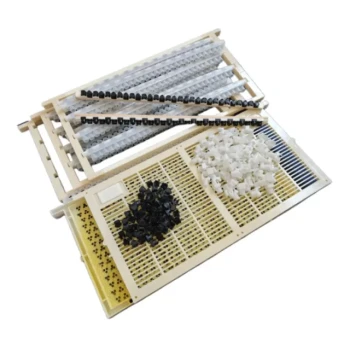
- JZBZ Langstroth Queen Rearing Frame for Beekeeping
- Professional Queen Bee Introduction and Transport Cage
- Professional Multi-Functional Queen Bee Cage
People Also Ask
- What happens if a colony loses its queen during the nectar flow? A Guide to Salvaging Your Honey Harvest
- How can you tell if the worker bees have accepted the queen? Decode Bee Behavior for a Thriving Hive
- How can the queenless state of a newly created nuc be resolved? Expert Solutions for Colony Growth
- What are the primary reasons for replacing a queen bee? Boost Your Commercial Honeybee Colony's Success
- What queen bee behaviors should be observed after introduction? Ensure Hive Success with Our Expert Monitoring Guide