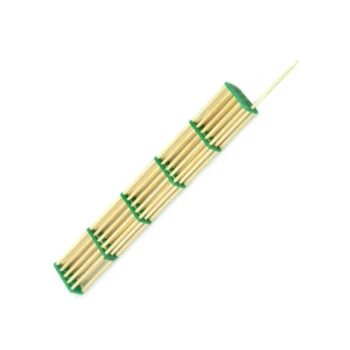
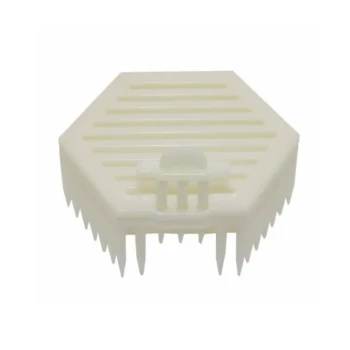
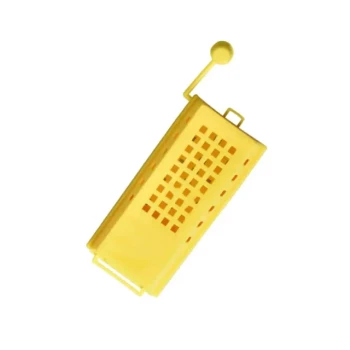
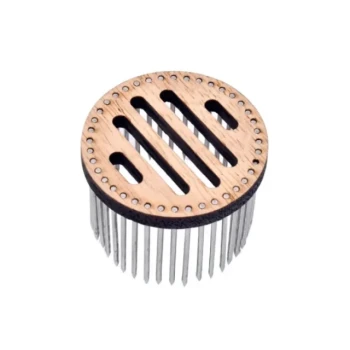
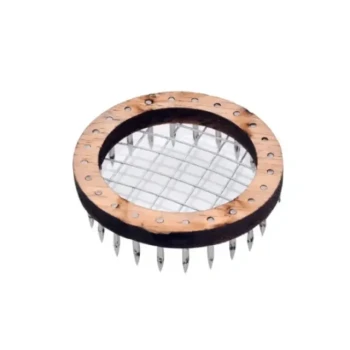
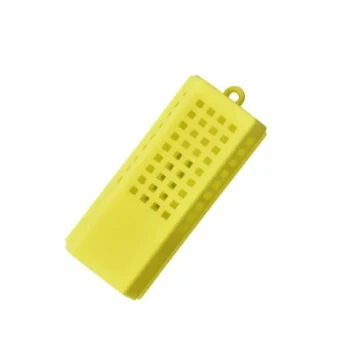
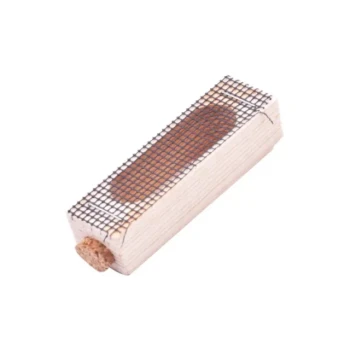
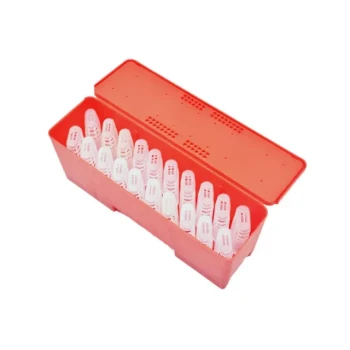
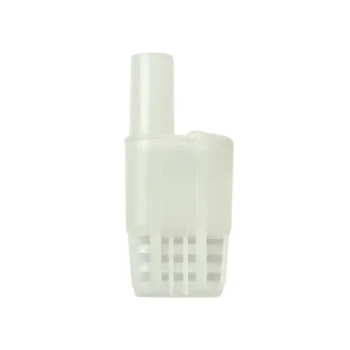
The primary function of a specialized confinement cage is to mechanically restrict the queen bee within a narrow space to enforce physical contact. By limiting the queen's movement, the design ensures her body remains against the cage walls. This physical restriction forces the uniform deposition of pheromones secreted by her mandibular glands onto the cage surfaces, creating a standardized chemical baseline for testing worker bee recognition.
Experimental consistency relies on controlling the "dosage" of chemical signals. By forcing the queen to physically brush against the cage walls, researchers convert the enclosure itself into a standardized pheromone emitter for subsequent behavioral testing.
The Mechanism of Standardization
To understand the value of the confinement cage, one must understand the challenge of variable pheromone distribution.
Restricting Movement for Uniformity
In a natural environment, a queen moves unpredictably. This results in patchy or uneven pheromone trails.
The confinement cage eliminates this variable. By creating a narrow space, the cage dictates the queen's position relative to the walls. This ensures that every section of the targeted surface receives a comparable amount of contact.
Harnessing Mandibular Gland Secretions
The specific biological target here is the mandibular gland.
This gland produces the chemical signals responsible for colony cohesion and recognition. The cage design effectively "harvests" these secretions by capturing the marks left by the queen's body directly onto the cage structure. This turns the cage into a consistent induction source for later experiments.
Distinguishing Between Cage Types
It is critical not to confuse the pheromone confinement cage with other containment tools used in apiculture research. Different experimental goals require drastically different cage architectures.
Confinement vs. General Observation
While the confinement cage focuses on restriction and contact, wooden frame cages are designed for security and visibility.
These general-purpose cages often feature glass panels and stainless steel mesh. The glass allows for monitoring without disturbance, while the mesh ensures ventilation.
The Role of Ventilation
The stainless steel mesh found in general observation cages serves a specific purpose: anesthesia management.
When researchers need to sedate bees using carbon dioxide, high ventilation allows the gas to diffuse rapidly and uniformly. This is a distinct function from the contact-based design of the pheromone confinement cage.
Automated Monitoring Tools
For long-term data collection, researchers use integrated observation boxes.
These are sealed hardware casings installed on the hive exterior. They do not confine the bee for pheromone collection but rather protect electronic sensors and cameras from weather and light interference.
Understanding the Trade-offs
When designing an experiment, choosing the confinement cage involves accepting specific limitations to gain standardization.
Specificity vs. Versatility
The confinement cage is a single-purpose tool. Its narrow design is excellent for ensuring pheromone contact but makes it unsuitable for long-term housing or general observation.
Using it for general observation would likely induce unnecessary stress on the queen due to the severe restriction of movement.
Biological Context
The confinement cage creates an artificial environment.
While it standardizes the chemical signal, it removes the behavioral context of the queen's natural movement. Researchers must account for this, recognizing they are testing the response to the chemical mark, not necessarily the queen's dynamic behavior.
Making the Right Choice for Your Goal
Select your containment hardware based strictly on the variable you need to control.
- If your primary focus is Pheromone Standardization: Use a specialized confinement cage to restrict the queen's movement and ensure uniform deposition of mandibular gland secretions on the cage walls.
- If your primary focus is General Observation or Sedation: Use a wooden frame cage with glass and stainless steel mesh to maximize visibility and allow for rapid CO2 diffusion.
- If your primary focus is Automated Data Collection: Use an integrated observation box to protect cameras and standardize lighting conditions for image acquisition algorithms.
Precision in apiculture research begins with matching the physical constraints of the cage to the biological question you need to answer.
Summary Table:
| Cage Type | Primary Function | Key Design Feature |
|---|---|---|
| Confinement Cage | Pheromone standardization & deposition | Narrow space for enforced body contact |
| Wooden Frame Cage | General observation & anesthesia | Glass panels and high-ventilation mesh |
| Observation Box | Automated data collection & monitoring | Weatherproof casing for sensors/cameras |
| Mandibular Gland Tool | Chemical signal harvesting | Contact-based surface marking |
Elevate Your Apiary Research with HONESTBEE
Precision in beekeeping starts with the right equipment. At HONESTBEE, we specialize in supporting commercial apiaries and distributors with a comprehensive range of professional tools. Whether you need specialized hardware like hive-making and honey-filling machines, or essential consumables for large-scale operations, our portfolio is designed to meet the rigorous demands of the industry.
From advanced research tools to honey-themed cultural merchandise, we provide the wholesale solutions you need to scale your business and enhance your research outcomes. Contact HONESTBEE today to discover how our expertise and equipment can drive your success.
References
- A. Skirkevičius. First symptoms of queen loss in a honeybee colony(<i>Apis mellifera</i>). DOI: 10.1051/apido:2004057
This article is also based on technical information from HonestBee Knowledge Base .
Related Products
- Professional Bamboo Queen Isolation Cage
- Hexagonal Direct Comb Introduction Queen Bee Cage
- Professional Queen Cage with Sliding Gate and Feeder Plug
- Durable Galvanized Steel Spring Queen Bee Cage
- Professional Queen Bee Introduction and Transport Cage
People Also Ask
- Why are specialized queen bee cages used for the banking of mated queen bees? Maximize Commercial Apiary Storage Efficiency
- What is the mechanism of action for using temporary queen bee cages? Master Successful Queen Introduction
- How does the side ventilation design of a queen bee cage impact the safety of the queen during long-distance transport?
- What should you do if the queen is still in the cage and the worker bees have not accepted her? Protect Your Colony from Queen Rejection
- What technical precaution must be taken regarding the mesh or grill side of a queen bee cage? Ensure Queen Survival