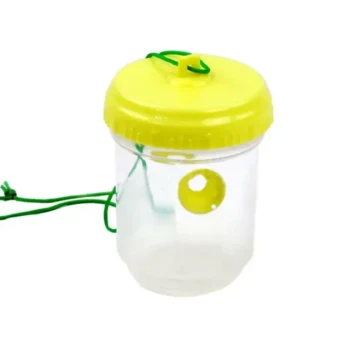
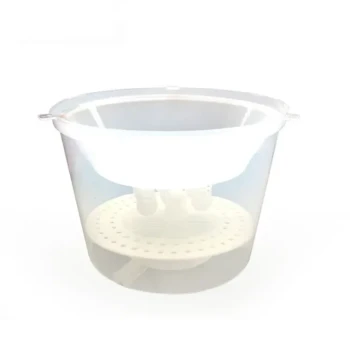
The primary function of a pollen trap is to mechanically intercept and collect pollen pellets from the legs of returning forager bees before they enter the hive. In the context of non-invasive environmental sampling, this device transforms the bee colony into a passive data collection tool. It allows researchers to harvest biological material for analyzing plant biodiversity and pesticide residues without harming the insects or disrupting the colony structure.
The pollen trap serves as the bridge between the field and the laboratory. By harvesting a portion of the bees' yield, it provides the essential raw material required to quantitatively assess ecosystem health and environmental quality.
Mechanisms of Non-Invasive Collection
The Physical Interception Process
Pollen traps utilize a specialized mechanical structure installed at the hive entrance. This structure features stripping plates or grids designed with specific physical dimensions.
As forager bees attempt to enter the hive, they must pass through these grids. The narrow openings gently dislodge the pollen pellets attached to their hind legs.
Collection and Storage
Once dislodged, the pollen pellets fall into a designated storage drawer or collection tray beneath the grid. This ensures the samples are isolated immediately, maintaining their purity for subsequent analysis.
This process is continuous and stable, allowing for the accumulation of significant sample sizes over time without manual interference by researchers.
Preserving Colony Integrity
The core advantage of this function is its non-invasive nature. The design allows the bees to pass through unharmed, ensuring the colony remains active and viable.
Because the bees are not injured, the colony continues its natural foraging behavior. This ensures that the data collected remains representative of a functioning biological system.
Transforming Samples into Environmental Data
Monitoring Plant Biodiversity
The pollen collected serves as direct material evidence of local flora. Through palynological analysis (the study of pollen grains), researchers can identify the specific plant species the bees have visited.
This effectively maps the plant diversity along the bees' foraging paths. It provides a comprehensive snapshot of the botanical landscape surrounding the hive.
Assessing Chemical Exposure
Beyond botany, the function of the trap is critical for chemical monitoring. The collected pollen is tested for pesticide residues and other environmental pollutants.
This allows for a quantitative assessment of the chemicals present in the environment. It reveals exactly what types and concentrations of pollutants the local ecosystem—and the bees—are encountering.
Understanding the Operational Trade-offs
Reliance on Foraging Behavior
While highly effective, the pollen trap is limited by the biological behavior of the bees. It can only collect samples from plants that honeybees actively select and visit.
Therefore, the resulting data represents the foraged environment, not necessarily the entire botanical reality of the region.
The Necessity of "consumable" Hardware
The references note that pollen traps are mechanical, consumable devices. Their function relies on physical barriers that may wear or require maintenance to remain efficient.
To maintain data integrity, the hardware must be checked to ensure the stripping plates remain effective at dislodging pellets without blocking bee access entirely.
Making the Right Choice for Your Research
To effectively utilize pollen traps for environmental assessments, align your analysis goals with the samples collected.
- If your primary focus is Biodiversity Monitoring: Use the collected samples for palynological analysis to identify plant species and map local flora distribution.
- If your primary focus is Environmental Toxicology: Prioritize chemical analysis of the pollen to detect specific pesticide residues and quantify pollutant levels in the local area.
By leveraging the natural foraging range of bees, you turn a single hive into a sophisticated, wide-area environmental monitor.
Summary Table:
| Feature | Function in Environmental Sampling |
|---|---|
| Mechanism | Mechanical stripping of pollen pellets from returning forager bees |
| Data Application | Palynological analysis for biodiversity; toxicology for pesticide detection |
| Sample Integrity | Immediate isolation in collection trays prevents contamination |
| Invasiveness | Non-invasive; preserves colony health and natural foraging behavior |
| Core Value | Transforms bee colonies into passive, wide-area environmental monitors |
Maximize Your Apiary’s Potential with HONESTBEE
At HONESTBEE, we understand that for commercial apiaries and global distributors, the right equipment is the backbone of success. Whether you are conducting large-scale environmental research or optimizing honey production, our comprehensive wholesale offerings provide the reliability you need.
How we add value to your business:
- Professional Hardware: From high-efficiency hive-making machinery to precise honey-filling solutions.
- Specialized Tools: Durable pollen traps and beekeeping essentials designed for intensive commercial use.
- Industry Consumables: A full spectrum of supplies to keep your operations running smoothly.
- Cultural Merchandise: Unique honey-themed products to diversify your retail portfolio.
Ready to scale your operation with premium beekeeping technology? Contact us today to discuss your wholesale needs and discover how HONESTBEE can support your growth in the global beekeeping industry.
References
- Kristina Gratzer, Robert Brodschneider. How and why beekeepers participate in the INSIGNIA citizen science honey bee environmental monitoring project. DOI: 10.1007/s11356-021-13379-7
This article is also based on technical information from HonestBee Knowledge Base .
Related Products
- Removable Plastic Pollen Trap With Ventilated Tray for Bees Pollen Collector
- 30 cm Plastic Entrance Hole Bee Pollen Trap and Collector
- Plastic Bee Pollen Trap Strips Comb Catcher Collector
- High-Efficiency Diamond Maze Bee Escape for Clearing Supers
- Professional Bucket Style Wasp and Moth Pheromone Trap
People Also Ask
- What are the design principles and advantages of pollen traps in the collection of bee pollen? Boost Your Apiary Yield
- What is the function of professional pollen traps in evaluating honey plants? Quantifying Pollination and Crop Potential
- What functions do pollen traps serve for bee bread production? Optimize Your Raw Material Collection
- What maintenance and pest prevention measures should be taken for pollen traps? Protect Your Hive and Harvest Quality
- How does the use of pollen traps in honeybee hives enhance crop fertilization? Boost Your Yield Through Induced Activity