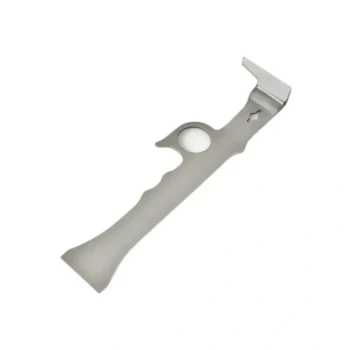
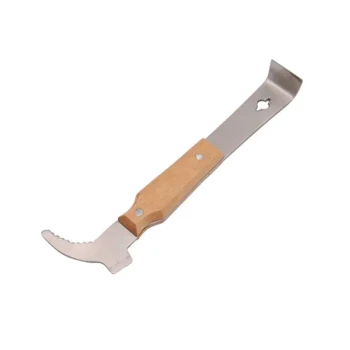
The primary function of the Larvae Grafting Tool is to execute the precise transfer of extremely young worker larvae from their original cells into artificial queen cells. This specialized equipment is critical for minimizing physical damage to the larvae during this delicate move, serving as a fundamental requirement for the success rate and overall quality of large-scale virgin queen production.
The success of queen rearing is defined by the condition of the larva at the moment of transfer. By ensuring a damage-free migration, this tool directly influences whether the colony accepts the larva and raises a healthy queen.
The Mechanics of Precision Transfer
Targeting the Correct Age
The tool is designed to handle extremely young worker larvae, often specifically day-old larvae. At this stage, the larvae are microscopic and highly vulnerable to handling errors.
Using a specialized tool allows the beekeeper to isolate these specific larvae without disturbing the surrounding comb structure.
Preserving the Micro-Environment
Successful grafting is not just about moving the insect; it is about moving its environment. The tool is used to scoop the larva along with its bed of royal jelly.
Maintaining the integrity of the royal jelly during the transfer is critical. It ensures the larva remains fed and prevents the "drying out" that can lead to rejection by the nurse bees.
Mitigating Fatal Risks
Preventing Physical Trauma
The bodies of young larvae are incredibly fragile. The high-precision design of the grafting needle ensures the transfer is completed without crushing or puncturing the larval skin.
Any physical harm inflicted during this stage usually results in the worker bees removing the larva from the queen cup immediately.
Avoiding Orientation Errors
A critical function of the tool is to maintain the larva's original orientation. You must never flip the larva during the transfer process.
If a larva is flipped over, it risks drowning in its own respiratory fluids. The tool facilitates a smooth "scoop and place" motion to keep the larva breathing properly.
Critical Operational Factors
While the Larvae Grafting Tool provides the necessary mechanical precision, it introduces specific operational trade-offs that must be managed.
The Skill Gap
The tool is not automated; it is an extension of the beekeeper's hand. High-precision equipment cannot compensate for unsteady hands or poor eyesight.
If the operator lacks dexterity, the tool can easily become an instrument of damage rather than protection.
Rejection Risks
Even with the correct tool, failure to transfer enough royal jelly or damaging the cell cup can lead to low acceptance rates.
The tool must be used to place the larva gently into the center of the cup. If the larva is placed on the dry walls of the cup rather than the bottom, the nurse bees may ignore it.
Making the Right Choice for Your Goal
To maximize the efficacy of the Larvae Grafting Tool, align your technique with your specific production goals.
- If your primary focus is High Acceptance Rates: Prioritize scooping a generous amount of royal jelly with the larva to ensure seamless integration into the new colony.
- If your primary focus is Queen Quality: rigorous selection of only the youngest, specific day-old larvae is essential, as older larvae produce inferior queens.
The Larvae Grafting Tool is the bridge between a standard worker egg and a viable queen, turning a high-risk manual task into a repeatable, scalable process.
Summary Table:
| Feature | Function in Grafting Process | Impact on Queen Production |
|---|---|---|
| Larvae Transfer | Precise move of day-old larvae to queen cups | Ensures high acceptance rates by colony |
| Royal Jelly Scoop | Transfers larva with its natural food bed | Prevents dehydration and ensures nutrition |
| Physical Protection | Minimizes trauma to fragile larval skin | Reduces mortality and rejection by nurse bees |
| Orientation Control | Maintains correct breathing position | Prevents larval drowning during the transfer |
Scale Your Queen Rearing Success with HONESTBEE
At HONESTBEE, we understand that the success of a commercial apiary depends on the health and quality of your queens. We provide a comprehensive range of professional-grade beekeeping tools, specialized machinery, and essential consumables designed for distributors and large-scale operations.
Whether you need precision larvae grafting needles, hive-making machines, or honey-filling equipment, our wholesale solutions are tailored to enhance your efficiency and production quality. Partner with an industry leader to supply your business with the best hardware and honey-themed cultural merchandise.
Ready to elevate your beekeeping production? Contact us today to explore our full catalog and wholesale pricing!
References
- Agnese Smilga-Spalviņa, Ivars Veidenbergs. Field study: Factors influencing virgin queen bee acceptance rate in Apis mellifera colonies. DOI: 10.17221/22/2024-cjas
This article is also based on technical information from HonestBee Knowledge Base .
Related Products
- Plastic Beekeeping Honey Bee Larvae Grafting Tools for Queen Rearing and Chinese Grafting
- Black 2 Pack Beekeeper Queen Grafting Tool for Bee Queen Larva Transferring Needle
- Stainless Steel Queen Grafting Tool for Beekeeping and Bee Queen Grafting
- Retractable Chinese Queen Rearing Grafting Tools Equipment
- Plastic Chinese Queen Grafting Tool for Bee Queen Rearing
People Also Ask
- How do larvae grafting tools and royal jelly production kits contribute to a diversified bee product strategy?
- What happens if a larva is grafted too late? Avoid Scrub Queens and Failed Rearing
- What is the primary function of a Professional Bee Larvae Grafting Tool in queen rearing? Enhance Breeding Efficiency
- What is the grafting method of queen rearing? Master Controlled Queen Production for Your Apiary
- What is the primary function and technical requirement of a larvae grafting tool? Master Precision Queen Rearing