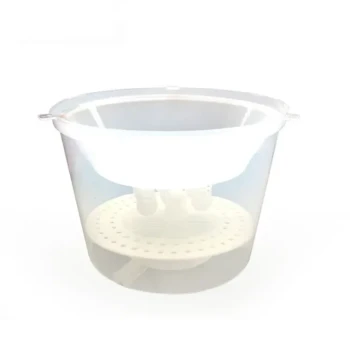
The single greatest risk of using poison-based traps is the accidental poisoning of the honey bees you are attempting to protect. If the trap contains an excessive amount of the toxic bait mixture, heat within the hive can cause the substance to expand, ooze out of the protective housing, and be consumed by the colony.
While designed to eliminate pests, poison-based traps introduce a lethal chemical agent directly into the hive environment. The primary failure point is not the trap's design, but the volume of bait applied relative to ambient temperatures, which can lead to unintended bee mortality.
The Mechanics of the Hazard
The Danger of Overfilling
The most common cause of failure with poison traps is human error during application. Beekeepers often mix the poison with a pollen and honey bait to attract beetles.
If this mixture is applied too liberally, it fills the reservoir beyond a safe capacity. There is very little margin for error when introducing toxins into a closed system like a hive.
The Impact of Ambient Temperature
External weather conditions play a critical role in trap safety. In hot weather, the viscosity and volume of the bait mixture change.
High temperatures can cause the bait to expand or become runnier. This forces the toxic mixture out of the trap's containment area and onto the hive frames.
Unintended Consumption
Because the poison is mixed with food sources (honey and pollen), it is highly attractive to bees.
Once the poison leaks out of the trap, bees will naturally attempt to clean it up or consume it. This leads to ingestion of the toxin and subsequent bee death.
Design vs. Reality
Theoretical Safety
Ideally, these traps function on a mechanical exclusion principle. They feature thin slots on the top of the casing.
These slots are calibrated to be large enough for small hive beetles to enter but too narrow for bees to pass through.
The Exclusion Failure
While the physical slots successfully keep bees out of the trap's interior, they cannot keep the poison in if it overflows.
The safety mechanism relies entirely on the bait remaining contained within the reservoir. Once the bait breaches the exterior, the mechanical selectivity of the trap is rendered useless.
Understanding the Trade-offs
Poison vs. Mechanical Drowning
Many beekeepers opt for mechanical traps filled with vegetable or mineral oil to avoid chemical risks. However, oil traps have their own downsides, primarily regarding handling and maintenance.
Oil can easily spill, creating a mess inside the hive or on the beekeeper. Furthermore, oil can go rancid as beetles decompose inside it, creating an odor that actually repels new beetles from entering.
Chemical Risks vs. Entanglement
Fuzzy disposable sheets are another chemical-free alternative, relying on beetle legs getting tangled in the fibers.
While safer than poison, they are slower to act, often taking days to become effective. Bees may also propolize the sheets (coat them in resin), rendering the entanglement surface useless.
Making the Right Choice for Your Goal
When deciding between poison-based traps and alternative methods, consider your ability to monitor the hive conditions.
- If your primary focus is maximum colony safety: Avoid poison entirely and use oil-based traps or fuzzy sheets to eliminate the risk of chemical leaching.
- If your primary focus is using chemical controls: You must apply the bait conservatively, ensuring the reservoir is never overfilled, especially during peak summer heat.
- If your primary focus is low maintenance: Be aware that oil traps require frequent cleaning to prevent rancidity, whereas poison traps act quickly but require precise application.
Success with small hive beetle traps requires balancing the lethality of the control method with the physical safety of the hive environment.
Summary Table:
| Feature | Poison-Based Traps | Oil-Based Traps | Disposable Fuzzy Sheets |
|---|---|---|---|
| Primary Risk | Accidental bee poisoning via leaks | Messy spills and oil rancidity | Bees may propolize/cover the surface |
| Mechanism | Chemical bait consumption | Drowning in vegetable/mineral oil | Leg entanglement in fibers |
| Efficiency | Very fast acting | Moderate; requires maintenance | Slower; takes days to work |
| Best For | Experienced beekeepers | Maximum colony safety | Low-chemical environments |
Secure Your Apiary’s Success with HONESTBEE
At HONESTBEE, we understand that protecting your colony from small hive beetles requires the right balance of efficiency and safety. As a leading partner for commercial apiaries and distributors, we provide more than just tools—we provide peace of mind. From precision beekeeping hardware to advanced honey-filling machines and high-quality consumables, our comprehensive wholesale offering is designed to scale your operations.
Why choose HONESTBEE?
- Full Spectrum Supply: Everything from specialized hive-making machinery to essential hardware.
- Commercial Expertise: Tailored solutions for large-scale operations and global distributors.
- Reliable Quality: Industry-standard equipment that minimizes risk and maximizes yield.
Ready to elevate your beekeeping business? Contact us today to explore our wholesale portfolio and let us help you build a safer, more productive apiary.
Related Products
- Reusable Aluminium Beetle Trap for Small Hive Beetles Silver Bullet
- Reusable Clear Small Hive Beetle Traps for Beehives Beetle Trapping Tools
- Removable Washable Hive Beetle Trap Attractants for Small Hive Beetles
- Black Plastic Beetle Barn Hive Beetle Trap for Beehives
- Plastic Beetle Blaster Trap Beekeeping Tools and Supplies
People Also Ask
- How should powdered substances be used in beetle traps for hive beetle control? Expert Guide for Maximum Colony Protection
- Why are beetle traps less effective during winter? Seasonal Shifts in Pest Control Explained
- When is the best time to use small hive beetle traps in cold climates? Protect Your Honeybee Winter Stores Now
- When and how should disposable traps for small hive beetles be removed? Master Hive Hygiene and Efficiency
- How do small hive beetle traps contribute to colony management? Enhance Diagnostic Accuracy and Protect Hive Health