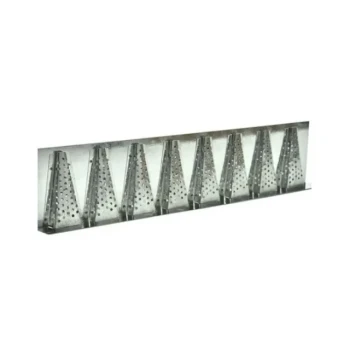
The standard practice of installing field monitoring bee traps at a height of 1 meter is designed to align the equipment with the primary foraging zone of most pollinators. This specific elevation ensures the trap sits within the flowering layer of herbaceous plants and shrubs, maximizing catch rates while protecting the integrity of the collected samples from ground-level interference.
Core Takeaway: Positioning traps at a 1-meter height optimizes data accuracy by placing sensors in the active flight path of target species while simultaneously extending equipment life and reducing sample contamination from the ground.
Maximizing Ecological Alignment
Targeting the Active Flight Zone
Installing traps at 1 meter ensures they are positioned precisely within the active flight paths of diverse bee species. Most herbaceous plants and shrubs flower at this level, making it the primary corridor for foraging activity.
Simulating Natural Foraging Environments
By placing the trap at this height, researchers can more accurately simulate natural foraging conditions. This results in a representative sample of the local pollinator community rather than capturing data skewed by ground-level or high-canopy movement.
Improving Species-Specific Capture
While different bees have different habits, the 1-meter mark serves as a universal baseline for field monitoring. It effectively captures a broad spectrum of pollinators that navigate between low-lying flora and taller vegetation.
Ensuring Data Integrity and Sample Quality
Preventing Ground-Level Contamination
Elevation is critical for minimizing contamination from mud splashes during rain or dust from the soil surface. Keeping the trap off the ground ensures that collected specimens remain clean and identifiable for laboratory analysis.
Mitigating Non-Target Intrusion
Raising the trap helps deter ground-dwelling animals and insects, such as ants or small mammals, from entering the device. This protection is vital for maintaining the purity of the data and preventing the loss of collected samples to scavengers.
Securing Accurate Mortality Data
For specialized traps used to collect dead honeybees, this height prevents scavengers like birds from removing the specimens. This allows for the collection of objective physiological feedback regarding pesticide exposure or pathogen impacts.
Enhancing Operational Efficiency and Durability
Protecting Hardware from Moisture
Elevating equipment protects the structural integrity of the traps from ground moisture and rot. This is a critical consideration for B2B distributors who provide long-lasting, high-quality hardware designed to survive multiple seasons in the field.
Ergonomic Maintenance and Inspection
The 1-meter height is ergonomically optimized for field personnel during routine inspections. It allows for rapid visual checks and efficient data collection without requiring staff to bend to ground level, speeding up large-scale monitoring operations.
Reducing Pest and Disease Proliferation
Physical separation from the soil helps maintain a dry microenvironment, which is essential for reducing mold growth. This hygiene measure is fundamental for both monitoring equipment and the health of any live colonies being studied nearby.
Understanding the Trade-offs
The Limitation of Vertical Specialization
While 1 meter is ideal for herbaceous layers, it may miss canopy-dwelling species that forage much higher or ground-nesting specialists that rarely leave the soil surface. Professionals must determine if a multi-tier trapping strategy is required for comprehensive biodiversity surveys.
Impact of Local Vegetation Height
In environments with exceptionally tall grasses or dense undergrowth, a fixed 1-meter height may be obscured by foliage. In these specific scenarios, the trap may require further elevation to remain visible and accessible to flying pollinators.
Selecting the Right Configuration for Your Project
As a distributor or wholesaler, providing the correct technical guidance ensures your clients achieve the best results from your professional-grade monitoring equipment.
- If your primary focus is agricultural pesticide impact studies: Recommend the 1-meter standard to ensure accurate mortality data and prevent scavenger interference with dead bee samples.
- If your primary focus is general biodiversity monitoring: Advise clients to utilize the 1-meter height to capture the widest variety of pollinators active in the herbaceous flowering layer.
- If your primary focus is equipment longevity and resale value: Highlight that elevation protects hardware from soil-borne moisture and rot, ensuring a higher return on investment for the end-user.
Proper installation height is the bridge between high-quality hardware and high-integrity ecological data.
Summary Table:
| Feature | 1-Meter Installation Advantage | Impact on Monitoring |
|---|---|---|
| Ecological Alignment | Aligns with primary foraging zones of herbaceous plants. | Increases capture rates of diverse pollinator species. |
| Data Integrity | Minimizes mud splashes, dust, and ground-level contaminants. | Ensures clean samples for accurate lab analysis. |
| Sample Security | Deters ground-dwelling scavengers and ants. | Protects dead bee specimens for mortality studies. |
| Hardware Longevity | Keeps equipment away from soil moisture and ground rot. | Extends the lifespan of monitoring hardware. |
| Operations | Optimized for ergonomic inspection and data retrieval. | Increases speed and efficiency for field personnel. |
Scale Your B2B Beekeeping Supply with HONESTBEE
Are you looking to provide your clients with industry-standard monitoring equipment and high-performance beekeeping tools? HONESTBEE is your premier partner for professional-grade wholesale solutions. We cater specifically to distributors, wholesalers, and commercial apiaries, offering a one-stop sourcing experience for the entire beekeeping lifecycle.
Why Partner with HONESTBEE?
- Comprehensive Portfolio: From specialized monitoring traps and hive-making machinery to honey-filling equipment and essential consumables.
- Unmatched Efficiency: Benefit from our ultra-fast delivery, rapid response times, and efficient order fulfillment designed for large-scale operations.
- Professional Expertise: Leverage our deep industry knowledge to provide your customers with the best technical guidance and OEM/ODM support.
Enhance your inventory with reliable, high-margin beekeeping hardware. Contact our B2B team today to receive a custom quote and discover how our global supply chain can support your growth!
References
- Katharina Stein, K. Eduard Linsenmair. Impact of human disturbance on bee pollinator communities in savanna and agricultural sites in Burkina Faso, West Africa. DOI: 10.1002/ece3.4197
This article is also based on technical information from HonestBee Knowledge Base .
Related Products
- Removable Plastic Pollen Trap With Ventilated Tray for Bees Pollen Collector
- 30 cm Plastic Entrance Hole Bee Pollen Trap and Collector
- Plastic Beetle Blaster Trap Beekeeping Tools and Supplies
- Plastic Bee Pollen Trap Strips Comb Catcher Collector
- HONESTBEE Professional Telescopic Pole Bee Swarm Catcher
People Also Ask
- What are the design principles and advantages of pollen traps in the collection of bee pollen? Boost Your Apiary Yield
- What is the function of professional pollen traps in evaluating honey plants? Quantifying Pollination and Crop Potential
- What functions do pollen traps serve for bee bread production? Optimize Your Raw Material Collection
- What maintenance and pest prevention measures should be taken for pollen traps? Protect Your Hive and Harvest Quality
- How does the use of pollen traps in honeybee hives enhance crop fertilization? Boost Your Yield Through Induced Activity