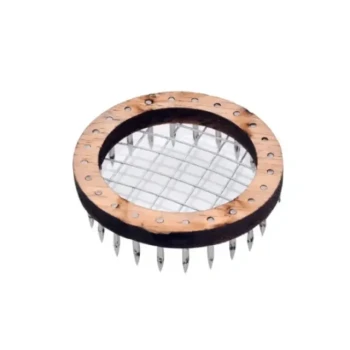
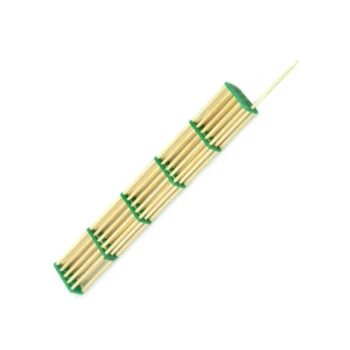
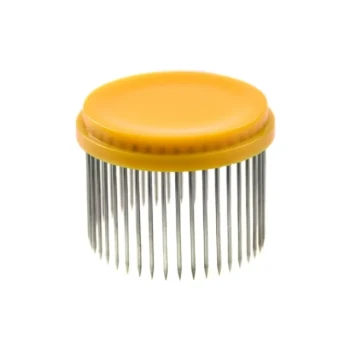
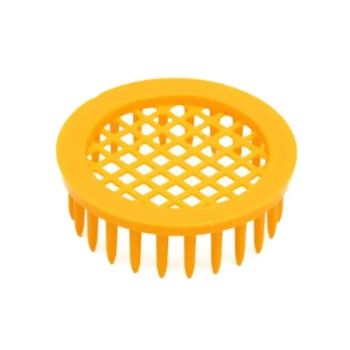
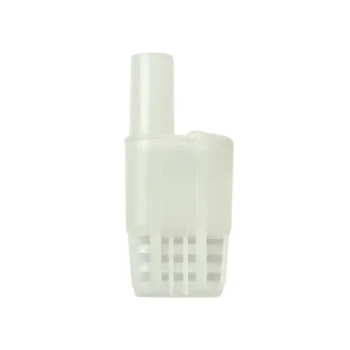
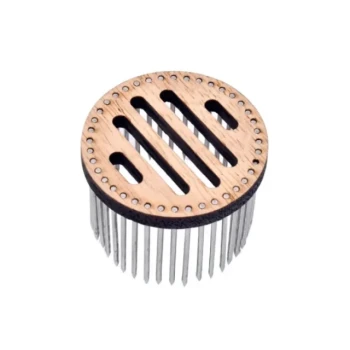
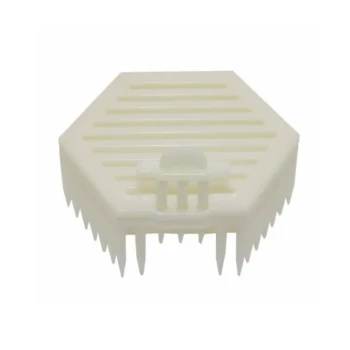
The folded structures, technically known as "dosra," serve a critical mechanical function. They are engineered to create a deep, aggressive interlock between the metal bracket and the wax honeycomb. By embedding into the wax, they anchor the rearing device firmly in place, ensuring it remains stationary despite hive activity.
The folds transform a simple bracket into a secure anchor. By resisting both the cleaning efforts of worker bees and wax expansion caused by heat, they maintain a tight seal that prevents rival queens from breaching the cell from below.
The Mechanics of Stability
The hive environment is dynamic, constantly shifting due to biological activity and thermal changes. The folded structures address these challenges directly.
Increasing Mechanical Interlocking
The primary role of these folds is to maximize grip. Unlike smooth metal, which might slide against waxy surfaces, the folds dig in to create a strong physical bond.
This acts as a "root" system for the bracket. It ensures the device becomes an integral part of the comb rather than a loose attachment sitting on top of it.
Resisting Worker Bee Activity
Worker bees are obsessive cleaners. They often attempt to remove or shift foreign objects introduced into the hive.
The "dosra" folds counteract this behavior. They embed deeply enough that the cleaning manipulation of the bees cannot loosen or dislodge the device.
Withstanding Thermal Fluctuations
Hive temperatures can fluctuate, causing wax to soften and materials to expand or contract.
Without these folds, soft wax could lead to slippage. The deep embedment ensures the bracket stays positioned correctly, even when the surrounding wax becomes pliable due to heat.
Ensuring Queen Safety and Exclusivity
Beyond simple stability, the folds play a vital role in the biological security of the rearing process.
Creating an Impenetrable Seal
Stability is required to maintain a seamless connection between the device and the comb.
If the bracket loosens, gaps can form at the bottom of the rearing area. The folds prevent this shifting, keeping the interface flush and tight.
Preventing External Intrusion
The ultimate goal of this design is to protect the developing queen.
If gaps appear due to instability, external or rival queens can enter the queen cell area. The stability provided by the folds physically blocks these bottom entry points, safeguarding the exclusivity of the rearing process.
Understanding the Installation Requirement
While the folded structures provide immense stability, they introduce a specific requirement for the beekeeper.
The Necessity of Force
For the "dosra" to function, they cannot simply rest on the surface.
The design implies that sufficient pressure must be applied during installation to drive the folds into the wax. If they are not fully embedded, the mechanical advantages—and the resulting security—are lost.
Making the Right Choice for Your Goal
To maximize the effectiveness of your queen-rearing setup, consider the following regarding the bracket alignment:
- If your primary focus is Equipment Longevity: Ensure the folds are fully embedded to prevent bees from loosening and damaging the setup over time.
- If your primary focus is Queen Survival: Verify that the bracket is seated deeply enough to eliminate any bottom gaps that a rival queen could exploit.
The "dosra" folds are the difference between a vulnerable, loose cage and a secure, professional rearing environment.
Summary Table:
| Feature | Function | Benefit |
|---|---|---|
| Mechanical Interlock | Deeply embeds into wax | Prevents the bracket from sliding or shifting |
| Worker Resistance | Counteracts bee cleaning | Ensures the device is not dislodged by colony activity |
| Thermal Stability | Maintains grip during heat | Prevents slippage when wax softens due to hive temperature |
| Security Seal | Eliminates bottom gaps | Blocks rival queens from breaching the rearing cell |
Elevate Your Apiary's Success with HONESTBEE
At HONESTBEE, we understand that professional queen rearing requires precision and reliable equipment. As a leading supplier for commercial apiaries and distributors, we offer a comprehensive wholesale range—from specialized hive-making and honey-filling machinery to essential consumables and beekeeping tools.
Whether you are scaling your honey production or outfitting a large-scale distribution network, our high-quality hardware ensures your operations remain secure and efficient. Partner with HONESTBEE to access industry-leading equipment tailored to your success.
Contact Us Today to Discuss Wholesale Opportunities
References
- Ahmed Abouelnaga, A. Zohairy. A NEW DEVICE (HALF-BALL-CAGE WITH QUEEN EXCLUDER ) AND HONEYBEE QUEEN REARING METHOD WITH QUEENRIGHT.. DOI: 10.21608/jppp.2007.219410
This article is also based on technical information from HonestBee Knowledge Base .
Related Products
- Premium Nicot Style Queen Rearing Kit with Hair Roller Bee Cages
- Professional Multi-Functional Queen Bee Cage
- Professional Queen Cage with Sliding Gate and Feeder Plug
- Professional Queen Bee Introduction and Transport Cage
- Durable Galvanized Steel Spring Queen Bee Cage
People Also Ask
- What is the primary function of a queen rearing kit? Eliminate Manual Grafting for Superior Bee Breeding
- What are some alternative methods to grafting for queen cell production? Discover Graft-Free Queen Rearing Systems
- How do specialized queen rearing kits and queen management tools improve the success rate of bee colony expansion?
- How do modern queen bee rearing and breeding kits improve apiary management? Transition to Proactive Precision Breeding
- How is 'active' queen rearing defined in beekeeping? Master Intentional Colony Management & Genetic Control