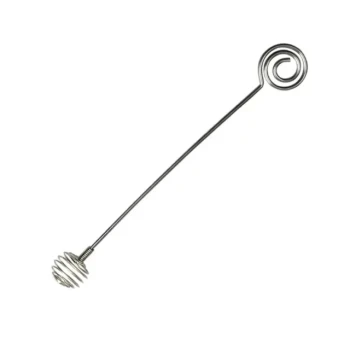
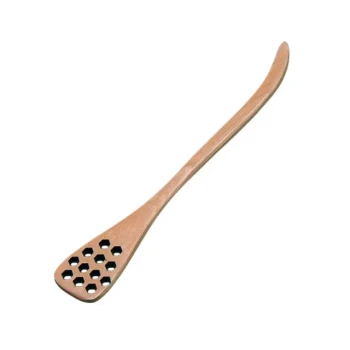
Thorough mixing is the fundamental mechanism used to ensure active ingredients are evenly suspended within a viscous medium like syrup. Without this intensive stirring process, the medication remains separated or clumped, resulting in a treatment solution that varies significantly in concentration from drop to drop.
Core Takeaway: By ensuring active ingredients are uniformly distributed, thorough mixing guarantees that every bee ingests a consistent, predictable dosage. This homogeneity is the absolute prerequisite for accurate efficacy evaluations and the ability to reproduce experimental results reliably.
Achieving Homogeneity in Viscous Media
Overcoming Viscosity
Syrup is a dense, viscous fluid that resists natural dispersion. Simply adding a liquid medication to syrup will not result in a combined solution on its own.
Active, thorough stirring is required to force the ingredients to integrate. This mechanical action breaks down the suspension and distributes it evenly throughout the sugar matrix.
Creating a Stable Solution
The goal of mixing is to create a "stable medicinal solution." This means the active ingredients remain suspended and do not immediately separate or settle out.
Stability prevents the medication from floating to the top or sinking to the bottom, which would alter the concentration over time.
Ensuring Precise Dosage Control
Uniformity for Individual Bees
In an experimental group, the objective is to treat the group as a whole, but the reality is that individual bees consume the syrup.
Thorough mixing ensures that the first bee to feed and the last bee to feed receive the exact same concentration of medication.
Removing Consumption Variables
If the mixture is not uniform, dosage becomes a matter of chance. Some bees might ingest a highly concentrated "hotspot," while others consume pure syrup with no medication at all.
Uniform distribution eliminates this variability, ensuring that consumption equates to a specific, known dosage.
The Foundation of Reliable Data
Accuracy in Efficacy Evaluations
To judge if a treatment works, you must be certain of the dose delivered.
If the mixing is poor, you cannot determine if a treatment failure was due to the drug being ineffective or the bee receiving a sub-optimal dose. Thorough mixing removes this ambiguity.
Reproducibility of Results
Scientific rigor demands that experiments can be repeated with similar results.
If the mixing process is inconsistent, the results will fluctuate wildly between trials. A standardized, thorough mixing protocol ensures that data remains comparable across different studies and timelines.
Operational Considerations and Trade-offs
The Risk of "Hotspots"
The primary risk of insufficient mixing is the creation of localized areas of high concentration.
In a treatment context, this can be dangerous. It may lead to accidental toxicity for some bees, even if the overall calculated dose for the colony was safe.
The Cost of Precision
Thorough mixing requires time and standardized protocols. It is not a step that can be rushed.
While it adds to the preparation time, the trade-off is necessary. Skipping this step renders the subsequent data collection effectively useless due to lack of control.
Making the Right Choice for Your Goal
Whether you are running a laboratory trial or a field treatment, the quality of your mixture dictates the quality of your outcome.
- If your primary focus is Experimental Validity: Rigorous mixing is non-negotiable to ensure your efficacy data accurately reflects the medication's performance, not preparation errors.
- If your primary focus is Colony Safety: Ensure homogeneity to prevent accidental overdosing of individual bees caused by pockets of concentrated medication.
Consistency in preparation yields consistency in results.
Summary Table:
| Mixing Goal | Impact on Treatment | Operational Benefit |
|---|---|---|
| Homogeneity | Eliminates 'hotspots' and uneven distribution | Ensures every bee receives the same dose |
| Stability | Prevents active ingredients from settling | Maintains solution concentration over time |
| Data Integrity | Removes dosage as a variable in trials | Provides accurate efficacy and reproducibility |
| Safety | Prevents localized toxicity/overdosing | Protects colony health during field treatments |
Maximize Your Colony Health with Precision Tools
At HONESTBEE, we understand that successful beekeeping relies on both expert knowledge and professional-grade equipment. Whether you are a commercial apiary managing thousands of hives or a distributor providing essential supplies, we offer the full spectrum of beekeeping tools and machinery—from high-efficiency honey-filling machines to specialized hardware—to streamline your operations.
Don't let inconsistent medication mixing or outdated equipment compromise your results. Partner with HONESTBEE for comprehensive wholesale solutions and premium industry consumables tailored to your needs.
Ready to elevate your apiary's efficiency? Contact our team today to explore our wholesale catalog!
References
- Shukhrat Nasimov, Komiljon Akramov. Testing of Toltrox 2.5% in experimental nosematosis of bees. DOI: 10.1051/bioconf/202518102003
This article is also based on technical information from HonestBee Knowledge Base .
Related Products
- HONESTBEE Round Hive Top Bee Feeder for Syrup
- Automatic Honey Filling and Filtering Machine for Beekeeping Bottle Filling
- Honey Gate Valve with Ergonomic Ball Handle Plastic Bee Honey Tap for Beekeeping Bottling and Honey Extractor Equipment
- Professional Bee Frame Machine for Side Bar Shaping
- Heavy-Duty Ergonomic Grip Galvanized Pollen Shovel
People Also Ask
- What can the round hive top feeder be used for? A Guide to Efficient, Safe Bee Feeding
- What types of hive boxes is the round hive top feeder compatible with? Universal Fit for 8 & 10-Frame Langstroth Hives
- What is the capacity of the round hive top feeder for syrup and pollen? A Guide to Targeted Apiary Support
- What types of feed can be used with the round hive top feeder? Versatile Feeding for Optimal Apiary Health
- What are the different types of top feeders for bees? Choosing the Best Feeder for Your Apiary