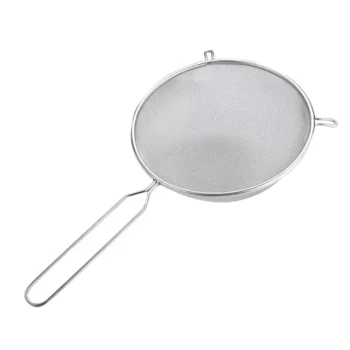
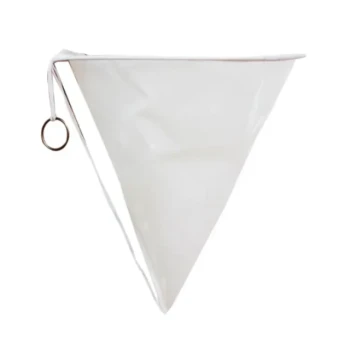
The primary purpose of using a 100-micrometer fine-mesh sieve during honey pollen pretreatment is to serve as a critical filtration barrier. This specific mesh size is designed to mechanically separate large impurities and non-pollen debris from the diluted honey solution. By retaining these larger contaminants while allowing smaller pollen grains to pass through, the sieve ensures the resulting suspension is optimized for analysis.
The 100-micrometer sieve is essential for increasing sample purity. It isolates the pollen by removing visual obstruction, ensuring that subsequent microscopic observation is focused solely on relevant morphological features.
The Mechanics of Sample Purification
Removing Macroscopic Debris
Raw honey often contains various suspended solids that are irrelevant to pollen analysis. These can include wax particles, insect fragments, or other large organic matter.
The 100-micrometer sieve acts as a physical gatekeeper, trapping these larger impurities. This prevents them from entering the final suspension where they would otherwise obscure the view.
Facilitating Pollen Passage
While the sieve blocks large debris, it is calibrated to be permeable to pollen. Most pollen grains are significantly smaller than 100 micrometers.
This allows the target biological material—the fine pollen grains—to flow freely into the filtrate. The result is a solution that retains the necessary data points for identification without the bulk of the raw material.
Enhancing Optical Clarity
The ultimate goal of this pretreatment is accurate morphological analysis under a microscope. Visual interference from debris makes identifying specific pollen features difficult.
By filtering the solution beforehand, you minimize background "noise." This provides a clearer field of view, enabling precise assessment of the pollen's shape, size, and surface texture.
Understanding the Trade-offs
The Balance of Purity vs. Loss
While effective, using a fixed mesh size is a compromise between purity and yield. The 100-micrometer size is generally safe for most pollen types.
However, in rare cases involving exceptionally large pollen grains or clustered masses, there is a theoretical risk of exclusion. The analyst must trust that the standard 100-micrometer limit captures the relevant floral spectrum while rejecting contaminants.
Dependence on Dilution
The sieve cannot function effectively if the honey is too viscous. The efficiency of this step relies heavily on the prior dilution of the honey.
If the solution is too thick, the mesh may clog, preventing even the fine pollen from passing through. Proper preparation of the liquid solution is a prerequisite for the sieve to do its job.
Ensuring Accurate Identification Results
To get the most out of the microscopic identification process, approach the sieving step with specific goals in mind:
- If your primary focus is image quality: Rely on the sieve to remove large particulates that would otherwise clutter the slide and distract from the pollen morphology.
- If your primary focus is sample integrity: Ensure the honey is adequately diluted before filtration to prevent clogging and ensure all pollen grains are successfully transferred to the suspension.
The 100-micrometer sieve is the foundational tool that transforms a raw, messy substance into a clean, scientifically analyzable specimen.
Summary Table:
| Feature | Function in Pretreatment | Benefit for Analysis |
|---|---|---|
| Pore Size (100μm) | Mechanical filtration of large particles | Prevents obstruction of pollen grains |
| Debris Removal | Traps wax, insect fragments, and solids | Minimizes visual background noise |
| Pollen Passage | Allows grains <100μm to pass into filtrate | Retains target biological data points |
| Optical Clarity | Creates a clean suspension | Enables precise morphological assessment |
Elevate Your Beekeeping Operation with HONESTBEE
At HONESTBEE, we understand that precision in analysis and efficiency in production are the foundations of a successful apiary business. Whether you are a commercial apiary or a global distributor, we provide the industrial-grade tools you need to thrive.
Our comprehensive wholesale portfolio includes:
- Advanced Machinery: High-precision honey-filling and automated hive-making machines.
- Specialized Equipment: Professional-grade beekeeping tools and laboratory-ready consumables for quality control.
- Cultural Merchandise: A wide array of honey-themed products to expand your market reach.
Partner with HONESTBEE to streamline your supply chain and scale your honey production today.
References
- Rama Chandra Laha, Nagesh Kuravadi. Meta-barcoding in combination with palynological inference is a potent diagnostic marker for honey floral composition. DOI: 10.1186/s13568-017-0429-7
This article is also based on technical information from HonestBee Knowledge Base .
Related Products
- Professional Stainless Steel Honey Filter with Support Handle
- Stainless Steel Triangle Support Honey Strainer and Filters
- Stainless Steel Double Layer Honey Strainer Sieve Filters
- Conical Nylon Honey Strainer Filter Bag for Beekeeping and Honey Filtration
- Honey Concentrating and Filtering Dehumidifier Machine 2T Capacity for Honey
People Also Ask
- Why are stainless steel filters essential during the initial purification phase of honey processing? Ensure Purity
- What are the benefits of using a high-quality honey filter? Elevate Purity and Preserve Natural Flavor
- What is the primary purpose of honey filters? Achieve Professional Clarity & Pure Honey Quality
- What micron filter should I use for honey? Choose the Right Filter for Sales or Competitions
- Why do people filter honey? For Clarity, Stability, and Consumer Appeal