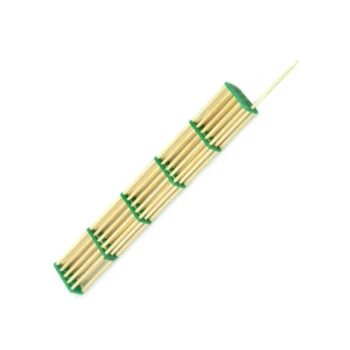
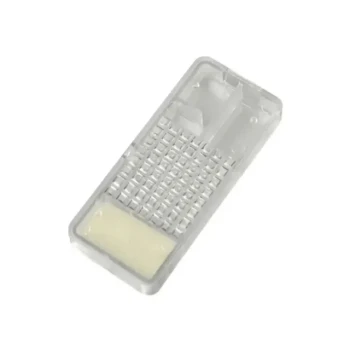
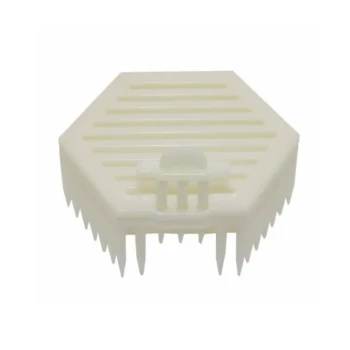
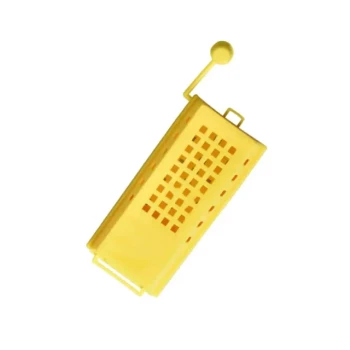
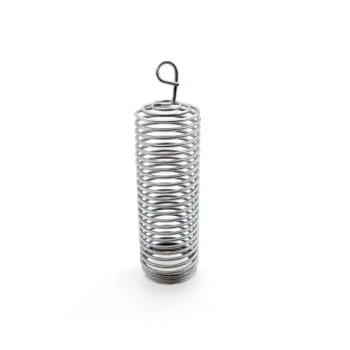
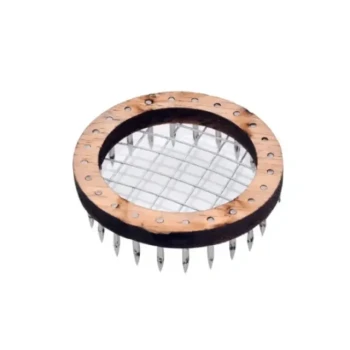
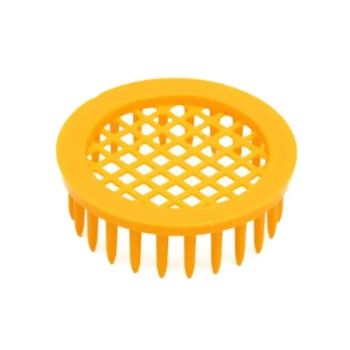
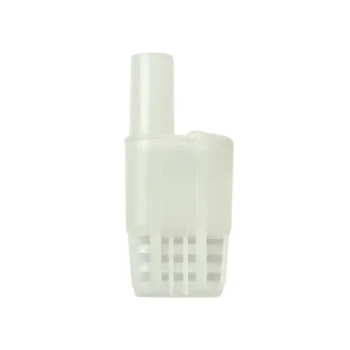
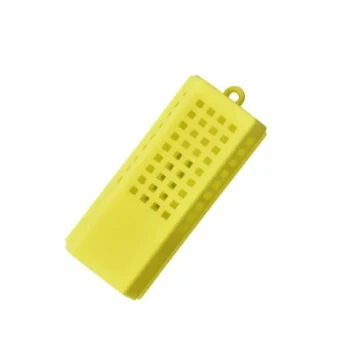
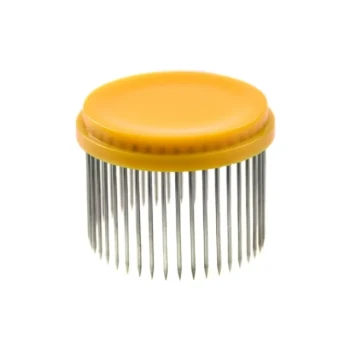
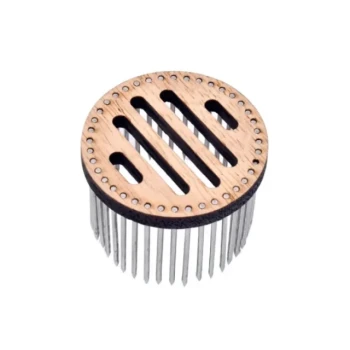
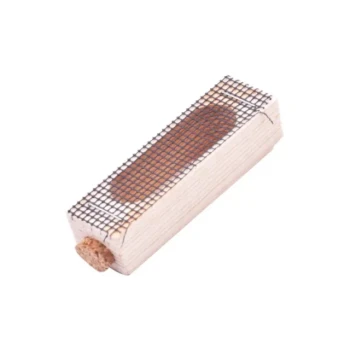
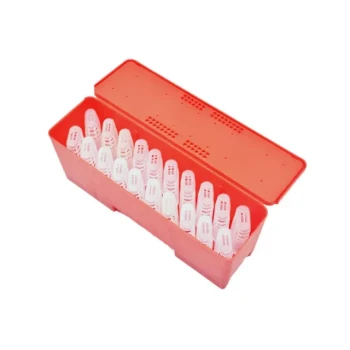
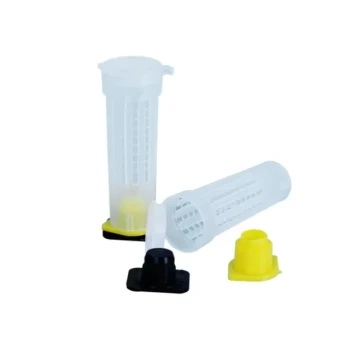
In the context of biotechnological mite control, the queen cage serves as a strategic tool to induce a brood break by temporarily confining the queen. By physically preventing the queen from laying eggs, the cage halts the production of new brood, eventually leading to a hive state where no capped brood exists. This process forces Varroa destructor mites out of the safety of capped cells and onto adult bees, exposing them to treatment.
Core Insight: The queen cage acts as a forcing function to synchronize the Varroa mite population. By eliminating the capped brood where mites reproduce and hide, the cage drives all mites into the "phoretic" phase, making them fully vulnerable to subsequent organic acid treatments.
The Mechanics of Brood Interruption
Creating a Broodless State
The primary function of the queen cage in this specific application is to stop the reproductive cycle of the honey bee colony.
When the queen is confined, she cannot lay eggs, yet the existing brood continues to mature and emerge.
After a specific period (usually 21-24 days), all capped brood will have hatched, leaving the colony completely broodless.
Eliminating the Mite Sanctuary
Varroa mites rely on capped brood cells to reproduce and protect themselves from external threats.
While inside a capped cell, a mite is largely shielded from many interventions.
By utilizing a queen cage to stop egg-laying, you systematically remove the mites' ability to hide and breed.
Enhancing Treatment Efficacy
Forcing the Phoretic Phase
When no brood is available, mites are forced into the phoretic phase.
This means the mites must live attached to the bodies of adult bees rather than hiding inside honeycomb cells.
This shift is critical because it moves the entire mite population into an exposed position.
Maximizing Organic Acid Impact
Many organic treatments, such as oxalic acid, are highly effective against mites on adult bees but cannot penetrate capped brood caps.
If you treat a colony with brood, a significant percentage of mites survive inside the cells.
By using a queen cage to create a broodless period first, you ensure the subsequent treatment achieves a significantly higher contact rate and kill efficacy.
Understanding the Trade-offs
Impact on Colony Growth
It is important to recognize that caging the queen halts colony population growth for the duration of the confinement.
While this is necessary for the treatment, it creates a gap in the workforce generation that the colony must recover from later.
Physical Constraints
The cage restricts the queen's movement and isolates her from the comb.
While this protects her and prevents laying, it is an artificial constraint that requires careful timing to ensure she remains healthy and is accepted back onto the comb once released.
Making the Right Choice for Your Goal
- If your primary focus is maximizing treatment kill rates: Utilize the queen cage to force a brood break, ensuring 100% of mites are exposed to the organic acid application.
- If your primary focus is reducing synthetic chemical use: Use this biotechnological method to make milder organic acids effective enough to replace harder, residual chemical treatments.
The queen cage transforms a standard treatment into a precision strike, leveraging the biology of the bee to dismantle the defense of the mite.
Summary Table:
| Mechanism | Function in Mite Control | Strategic Outcome |
|---|---|---|
| Brood Interruption | Temporarily stops queen from laying eggs | Creates a broodless state within 21-24 days |
| Eliminating Sanctuary | Removes capped cells where mites hide | Prevents mite reproduction and protection |
| Phoretic Shift | Forces mites onto the bodies of adult bees | Exposes 100% of the mite population |
| Treatment Synergy | Pairs with oxalic or organic acid applications | Achieves maximum kill rates and precision treatment |
Maximize Your Apiary Productivity with HONESTBEE
Effective Varroa management is the cornerstone of a successful commercial apiary. At HONESTBEE, we specialize in supporting commercial beekeepers and distributors by providing the professional-grade tools and machinery necessary for high-efficiency operations.
Whether you need specialized queen cages for biotechnological control, high-volume honey-filling machines, or durable hive-making hardware, our comprehensive wholesale portfolio is designed to scale your business. We bridge the gap between advanced beekeeping techniques and industrial-scale success.
Ready to upgrade your equipment and secure your colony health? Contact our expert team today to discuss your wholesale requirements!
References
- Tiziano Gardi. Ailanthus Altissima (Mill.) and Varroa Destructor (Anderson & Trueman) - Two Alien and Invasive Species with Impact on the Environment and on the “Hive System”. DOI: 10.33552/wjass.2020.04.000586
This article is also based on technical information from HonestBee Knowledge Base .
Related Products
- Professional Bamboo Queen Isolation Cage
- Professional Queen Bee Introduction and Transport Cage
- Hexagonal Direct Comb Introduction Queen Bee Cage
- Professional Queen Cage with Sliding Gate and Feeder Plug
- Durable Galvanized Steel Spring Queen Bee Cage
People Also Ask
- Why are specialized queen bee cages used for the banking of mated queen bees? Maximize Commercial Apiary Storage Efficiency
- What is the mechanism of action for using temporary queen bee cages? Master Successful Queen Introduction
- How does the side ventilation design of a queen bee cage impact the safety of the queen during long-distance transport?
- What should you do if the queen is still in the cage and the worker bees have not accepted her? Protect Your Colony from Queen Rejection
- What technical precaution must be taken regarding the mesh or grill side of a queen bee cage? Ensure Queen Survival