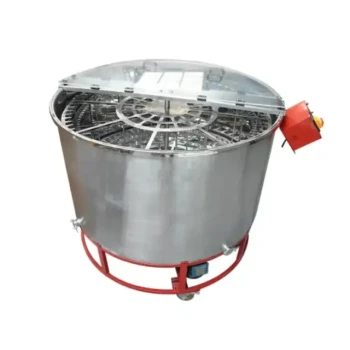
Industrial-grade honey processing facilities act as the critical transformation engine within the honey value chain, converting raw hive output into a stable, commercial commodity. Through the use of high-efficiency filtration, vacuum dehydration, and standardized bottling lines, these facilities ensure the separation of beeswax and impurities while precisely managing moisture levels to deliver high-purity liquid honey.
The central role of industrial machinery is to stabilize a naturally variable product; by mechanically controlling moisture to prevent fermentation and automating filtration for clarity, these facilities ensure raw honey meets the rigorous safety and quality standards required for global trade.
The Mechanics of Stabilization and Purity
Precise Moisture Control
Raw honey often contains varying levels of water, which poses a significant risk of fermentation and spoilage. Industrial facilities utilize vacuum dehydration equipment to concentrate the honey and remove excess moisture.
This mechanized process stabilizes the product, ensuring it remains shelf-stable during storage and transport. By preventing fermentation, producers can guarantee the longevity and safety of the honey for the end consumer.
High-Efficiency Filtration
Industrial filtration systems are designed to perform deep processing on raw honey. These multi-stage filters efficiently separate honey from beeswax, debris, and micro-impurities.
This process significantly improves the physical clarity and sensory quality of the final product. It transforms cloudier, raw substances into the clear, visually appealing liquid honey preferred in many retail markets.
Automated Hygiene and Filling
Advanced bottling lines and specialized filling machines replace manual labor to minimize human contact with the product. This automation is critical for reducing the risk of secondary contamination.
These machines allow for high-precision volumetric dispensing, ensuring every package meets exact weight specifications. This consistency is a prerequisite for entering modern distribution channels and maintaining large-scale production efficiency.
Driving Market Value and Compliance
Meeting International Standards
For honey to be traded globally, it must meet strict physical-chemical indicators, such as specific glucose and fructose ratios. Industrial processing plants often integrate quality testing equipment to monitor these metrics.
This level of quality assurance is essential for exporting to regulated markets like the European Union. It ensures that forest honeys and other specialty varieties comply with international food safety and hygiene protocols.
Enhancing Brand and Retail Readiness
Standardized packaging production lines allow producers to create a professional brand image. Uniform packaging and consistent product quality build the consumer trust necessary for high-end commercial retail.
By leveraging logistics advantages and standardized production, these facilities increase the added value of the honey. This is particularly important for transforming primary products into high-value items, such as apitherapy health products or beekeeping-themed merchandise.
Understanding the Trade-offs
Balancing Purity with Active Ingredients
While industrial processing ensures safety and clarity, there is a delicate balance to be maintained. Aggressive filtration or excessive heating during dehydration can potentially strip honey of beneficial pollen or degrade heat-sensitive enzymes.
The Necessity of Process Calibration
To produce high-value "health" honeys, machinery must be calibrated to retain natural active ingredients. The goal of industrial processing should be to achieve hygiene and stability without compromising the biological properties that make honey valuable for medical or healthcare purposes.
Making the Right Choice for Your Goals
Depending on your position in the value chain, the application of this machinery will vary.
- If your primary focus is Global Export and Retail: Prioritize vacuum dehydration and standardized automated bottling to ensure shelf stability and strict compliance with weight and hygiene regulations.
- If your primary focus is High-Value Niche or Health Markets: Focus on precision filtration and gentle moisture control to remove impurities while strictly limiting heat exposure to preserve natural active ingredients.
Industrial processing is not just about volume; it is the essential step that validates the safety, consistency, and marketability of the final product.
Summary Table:
| Core Function | Industrial Machinery Used | Key Benefit to Value Chain |
|---|---|---|
| Moisture Control | Vacuum Dehydration Equipment | Prevents fermentation; ensures shelf stability for export |
| Impurity Removal | High-Efficiency Filtration Systems | Achieves high clarity and removes beeswax/debris |
| Risk Mitigation | Automated Bottling & Filling Lines | Minimizes human contact; prevents secondary contamination |
| Quality Assurance | Integrated Testing & Calibration | Ensures compliance with EU and international food standards |
| Market Readiness | Standardized Packaging Lines | Increases added value and builds consumer brand trust |
Scale Your Honey Production with HONESTBEE
Are you a commercial apiary or distributor looking to bridge the gap between hive and high-end retail? HONESTBEE provides the industrial-grade solutions you need to dominate the honey value chain. From high-precision honey-filling machines and vacuum dehydration units to specialized hive-making equipment and honey-themed cultural merchandise, we offer the full spectrum of tools to ensure your product meets global standards.
Why partner with us?
- Wholesale Excellence: Comprehensive equipment portfolios tailored for large-scale operations.
- Market Compliance: Our machinery is designed to preserve active ingredients while ensuring hygiene.
- End-to-End Supply: We provide everything from heavy machinery to essential industry consumables.
Ready to enhance your efficiency and product value? Contact HONESTBEE today to discover how our wholesale beekeeping solutions can grow your business.
References
- Mulubrihan Bayissa, Wim Verbeke. System Mapping of the Production and Value Chain to Explore Beekeeping Potential in Southwest Ethiopia. DOI: 10.3390/insects15020106
This article is also based on technical information from HonestBee Knowledge Base .
Related Products
- Fully Automatic Honey Filling Packaging Machine for Processing Line
- Heavy Duty Stainless Steel Honey Processing Machine Decrystallizing Tank
- Electric Double Wall Honey Filtering Machine Purifier Equipment for Honey Processing Plant
- Double Wall Honey Heating Stirring Homogenizer Mixing Machine with Various Capacity
- Economy Honey Homogenizer Mixer and Melting Machine for Beekeeping
People Also Ask
- Why are fully automatic honey filling and packaging lines essential? Boost Your Honey's Market Value and Quality
- What is a fully-automatic honey filler? Streamline Your Production with High-Precision Automation
- How do automated honey filling and packaging machines affect profitability? Boost Margins with HONESTBEE Technology
- How do automated honey filling and packaging machines contribute to the market value of honey products? Maximize Your ROI
- How do industrial-grade automated honey filling and packaging machines mitigate the risk of physical contamination?