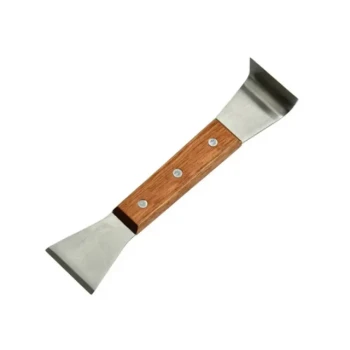
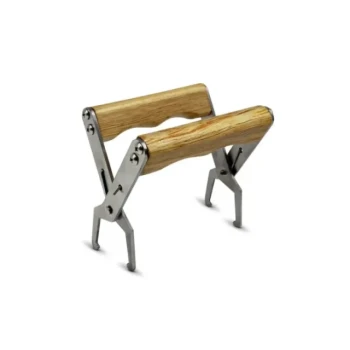
Professional hive inspection tools act as the critical interface between the observer and the colony's internal health. Their primary role in the sampling of American Foulbrood (AFB) is to enable the safe opening of hives and the physical extraction of frames to locate specific diseased tissue. This access is the prerequisite for identifying symptomatic larvae and obtaining the biological material required for genomic analysis.
The core function of these tools is to bridge the gap between field observation and laboratory confirmation. They facilitate the preliminary screening phase, allowing inspectors to identify and isolate precise targets—such as larvae with reddish-brown consistency—which serve as the essential input for whole-genome sequencing.
The Mechanics of Field Diagnosis
Safe Access and Extraction
The first barrier to accurate sampling is the physical structure of the hive itself. Professional tools are essential for safely opening the hive bodies without causing excessive disruption to the colony.
They allow the inspector to pry apart propolis-sealed components and carefully extract individual frames. This physical manipulation is necessary to expose the brood nest, where the evidence of infection resides.
Visual Identification of Symptoms
Once the frames are extracted, these tools facilitate a detailed visual assessment of the larvae. Inspectors use them to manipulate the frame for better lighting and angles to spot mosaic brood patterns.
This visual step is crucial for identifying specific indicators of Paenibacillus larvae infection. Key symptoms include sunken or perforated cell cappings and larvae that have darkened or turned into a reddish-brown semi-fluid.
Bridging Fieldwork and Laboratory Analysis
Defining the Sampling Target
Random sampling is inefficient; professional tools allow for targeted sampling. By revealing the visual symptoms described above, the tools help the inspector decide exactly which section of the comb contains diseased tissue.
This precision ensures that the sample collected is highly likely to contain the pathogen. This "triage" step is vital before initiating further laboratory confirmation.
Facilitating Genomic Sequencing
The ultimate goal of AFB sampling is often deep analysis, such as whole-genome sequencing. The inspection tools are the "first mile" of this data pipeline.
They enable the extraction of the specific biological matter needed to isolate the genomic data of the bacteria. Without the initial physical access provided by these tools, obtaining a viable sample for high-level genetic analysis is impossible.
Understanding the Limitations
Tools Enable, They Do Not Confirm
It is critical to understand that inspection tools are mechanical aids, not diagnostic devices. While they reveal symptoms like sunken cappings, they cannot confirm the presence of AFB spores on their own.
The Risk of Cross-Contamination
Because AFB is highly contagious, the tools themselves can become vectors for disease spread. Using these tools to manipulate infected frames brings them into contact with infectious spores.
If not properly sterilized between hives, the very tools used to detect the disease can inadvertently transfer it to healthy colonies. Biosecurity protocols must always accompany tool usage.
Making the Right Choice for Your Goal
To effectively manage AFB, you must understand where inspection tools fit into your broader disease control strategy.
- If your primary focus is Routine Monitoring: Use inspection tools to conduct regular visual sweeps for mosaic brood patterns and perforated cappings to catch infections early.
- If your primary focus is Disease Confirmation: Use the tools to isolate frames with reddish-brown larval remains to collect targeted samples for laboratory genomic analysis.
Professional inspection tools transform a hive from a sealed box into a readable dataset, providing the physical access necessary to turn visual symptoms into confirmed diagnoses.
Summary Table:
| Tool/Action Phase | Role in AFB Sampling & Diagnosis | Key Benefit |
|---|---|---|
| Hive Body Access | Prying propolis seals and opening hive bodies safely | Enables physical access to the brood nest |
| Frame Extraction | Removal of individual frames from the hive structure | Allows close-up inspection of larvae conditions |
| Visual Screening | Identifying mosaic patterns and sunken cappings | Isolates symptomatic targets for precise sampling |
| Sample Extraction | Collecting reddish-brown larvae for lab testing | Provides biological material for genomic sequencing |
| Biosecurity | Tool sterilization between hive inspections | Prevents cross-contamination of contagious spores |
Secure Your Apiary’s Health with HONESTBEE
Protecting your commercial apiary from American Foulbrood starts with the right equipment. At HONESTBEE, we specialize in supporting commercial beekeepers and distributors with a comprehensive range of professional tools and machinery. Whether you need high-durability hive inspection tools for early disease detection or automated honey-filling machines to scale your operations, we provide the industrial-grade solutions you require.
Our value to you:
- Wholesale Excellence: Full spectrum of beekeeping hardware and essential consumables.
- Advanced Machinery: From hive-making to honey-processing equipment.
- Industry Expertise: Catering specifically to the needs of large-scale commercial operations.
Don't let disease compromise your colonies. Contact us today to equip your team with the best tools in the industry!
References
- Alicia C. Bertolotti, Marie-Pierre Rivière. Development and evaluation of a core genome multilocus sequence typing scheme for <i>Paenibacillus larvae</i> , the deadly American foulbrood pathogen of honeybees. DOI: 10.1111/1462-2920.15442
This article is also based on technical information from HonestBee Knowledge Base .
Related Products
- Professional Multi-Function Stainless Steel Hive Tool
- HONESTBEE Professional Long Handled Hive Tool with Precision Cutting Blade
- Professional Stainless Steel Pry-Bar Hive Tool
- Professional Dual-End Stainless Steel Hive Tool for Beekeeping
- Stainless Steel J Hook Hive Tool for Beekeeping
People Also Ask
- Why are professional hive tools considered indispensable? Master Beekeeping Maintenance with Precision Leverage
- What is the role of professional hive tools in routine apiary maintenance? Expert Tips for Hive Health and Longevity
- What are the benefits of a multi-functional hive tool? Streamline Your Apiary Workflow with One Tool
- What advantages do multi-functional hive tools offer? Maximize Your Apiary Efficiency and Workflow
- What are the common construction features of hive tools? Key Insights for Superior Beekeeping Efficiency