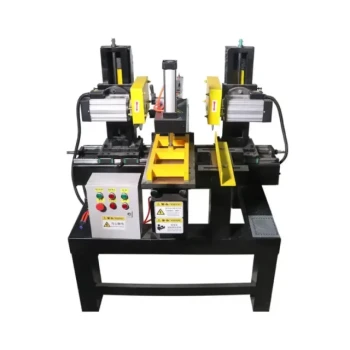
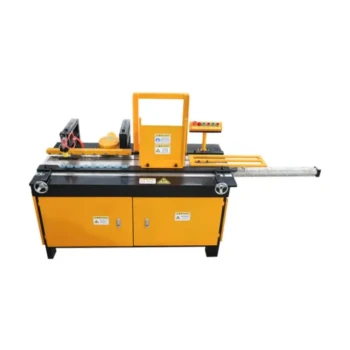
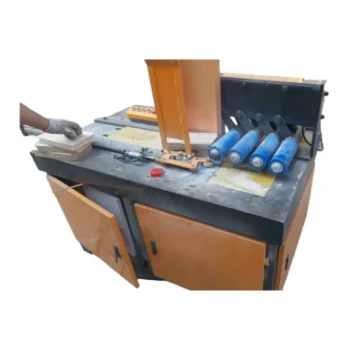
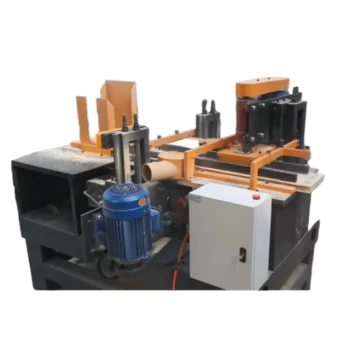
Woodworking machinery serves as the foundational hardware infrastructure for the commercial beekeeping industry. Its primary role is the high-precision manufacturing of standardized beehives, transforming raw timber into stable, manageable environments that facilitate artificial colony management and efficient honey collection.
The core function of this machinery extends beyond simple fabrication; it enforces strict dimensional standardization. By ensuring every component is identical, woodworking machinery allows for the interchangeability of parts and the use of automated extraction equipment, which are prerequisites for economically viable, large-scale apiculture.
The Foundation of Standardization and Scalability
In commercial beekeeping, the ability to manage thousands of colonies relies on uniformity. Woodworking machinery enables this by shifting hive construction from a craft to an industrial process.
Precision and "Bee Space"
Specialized machinery is required to maintain the critical technical standard known as bee space. This is a precise gap between components that allows bees to move freely.
If dimensions vary even slightly, bees will fill gaps with wild wax or propolis (glue). Precision-machined hives prevent this, ensuring frames remain movable for inspection and management.
Component Interchangeability
Industrial-grade saws and planers allow for the mass production of components with identical specifications. This ensures that a frame or box from one hive fits perfectly onto any other hive in the operation.
This interchangeability significantly lowers maintenance costs and creates opportunities for specialized industrial collaboration. Beekeepers can swap out damaged parts instantly without customization.
Facilitating Mass Production
To achieve commercial scale, operators must produce or procure vast quantities of Langstroth or modified hives. Machinery replaces manual construction, offering the speed and volume necessary to expand operations rapidly.
Operational Efficiency and Economic Impact
The role of woodworking machinery impacts the daily workflow of the apiary, directly influencing labor costs and harvest efficiency.
Enabling Mechanized Harvesting
Modern honey extraction relies on automation. Automated uncapping and extraction lines require frames and boxes to have uniform dimensions to function without jamming or breaking equipment.
Mechanized hive production ensures this uniformity, streamlining the harvest process and significantly reducing labor costs compared to manual methods.
Durability for Migratory Beekeeping
Commercial operations often involve transporting hives over long distances for pollination services. Machined hives feature precise joints and assembly, resulting in superior structural integrity compared to hand-built alternatives.
This durability withstands the rigors of transport and provides better environmental adaptability. Tighter manufacturing tolerances also offer superior sealing and thermal insulation, protecting the colony’s micro-climate.
Extending Equipment Lifespan
Professional machinery enables the precise fabrication of repair components. This capability allows operations to refurbish existing equipment rather than replacing it, enhancing the overall economic resilience of the business.
Understanding the Trade-offs
While woodworking machinery is essential for scale, it introduces specific challenges that operators must manage.
Capital Investment vs. Operational Cost
Acquiring industrial-grade woodworking machinery represents a significant upfront capital expenditure. While it reduces the long-term cost per unit of beekeeping equipment, the initial financial barrier is high for smaller operations.
Technical Expertise Requirements
Integrating this machinery shifts the required skill set from pure biology to manufacturing. Operators must maintain the machinery to ensure ongoing precision; a machine out of alignment effectively produces scrap wood, not functional hive parts.
Making the Right Choice for Your Goal
Whether you are manufacturing your own equipment or sourcing from a supplier, understanding the role of this machinery helps you evaluate quality.
- If your primary focus is Scalability: Prioritize machinery or suppliers that guarantee absolute interchangeability of parts to facilitate rapid colony rotation and expansion.
- If your primary focus is Labor Reduction: Ensure the machinery produces components with strict "bee space" adherence to minimize time spent cleaning wild wax and propolis during inspections.
Ultimately, the precision of your woodworking machinery dictates the efficiency of your biological management.
Summary Table:
| Key Role | Impact on Commercial Beekeeping |
|---|---|
| Dimensional Standardization | Ensures interchangeability of parts across thousands of hives. |
| Bee Space Precision | Prevents wild wax/propolis buildup, allowing for easy inspection. |
| Structural Integrity | Provides the durability required for migratory beekeeping and transport. |
| Harvest Automation | Uniform hive dimensions enable the use of automated extraction lines. |
| Scalability | Facilitates rapid colony expansion through high-volume mass production. |
Elevate Your Apiary Operations with HONESTBEE
Precision in the workshop leads to efficiency in the field. At HONESTBEE, we understand that the foundation of a successful commercial apiary is high-quality, standardized hardware. We cater specifically to commercial apiaries and distributors, offering a comprehensive wholesale portfolio designed to scale your business.
Our Value to You:
- Industrial Machinery: High-precision hive-making and honey-filling machines to automate your production.
- Full Spectrum Equipment: From professional beekeeping tools to essential industry consumables.
- Cultural Merchandise: A wide array of honey-themed products to diversify your brand.
Ready to upgrade your infrastructure and lower your operational costs? Contact HONESTBEE today to discover how our wholesale solutions can streamline your success.
References
- Wali Khan, Shaista Naz. Beekeeping in Federally Administered Tribal Areas of Pakistan: Opportunities and Constraints. DOI: 10.17582/journal.sja/2017/33.3.459.465
This article is also based on technical information from HonestBee Knowledge Base .
Related Products
- Manual Beeswax Comb Foundation Machine Wax Foundation Mill Embossing Machine
- Fully Automatic Beeswax Embossing Machine Foundation Mill
- Manual Beeswax Flat Sheet Machine for Beeswax Processing
- Economy Manual Beeswax Embossing Mill Wax Foundation Machine Roller
- Electric Beeswax Flat Sheet Machine with Operating Tray for Wax Processing
People Also Ask
- What are the primary technical challenges faced by beeswax foundation production machinery? Tackling Lipophilic Residues
- What are the advantages of implementing a pulley and belt drive system in beeswax foundation machinery? Master Quality.
- What role does a foundation machine play in the recycling and resource utilization of beeswax within an apiary?
- Why is the introduction of a beeswax foundation machine considered an important step in improving honey yields?
- How do beeswax foundation machines facilitate the internal recycling of beeswax? Build a Self-Sustaining Apiary