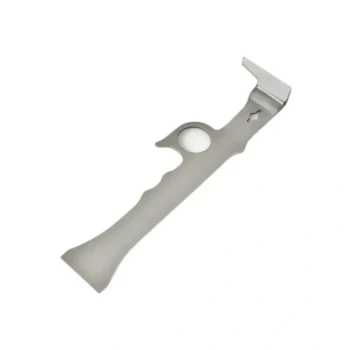
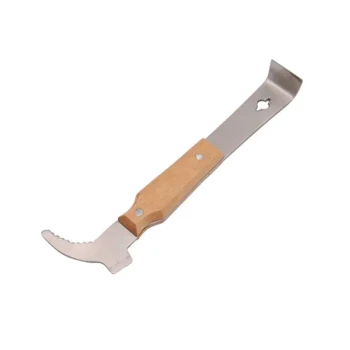
The Larvae Grafting Tool is the fundamental instrument enabling the artificial production of Royal Jelly. It is a specialized precision device designed to transfer extremely young larvae—specifically those less than 24 hours old—from natural honeycomb cells into artificial queen cups. This transfer is the critical catalyst that compels the hive to initiate the mass secretion and deposition of royal jelly.
Core Takeaway Royal Jelly production is a biological response to the presence of potential queen larvae. The significance of the grafting tool lies in its ability to move fragile, microscopic larvae without injury or dehydration, directly dictating the colony's acceptance rate and the final volume of jelly harvested.
The Mechanics of the Grafting Process
Handling Microscopic Targets
The primary function of the tool is the physical relocation of 1-day-old larvae. These organisms are incredibly small and fragile.
The tool’s design allows the operator to reach into deep honeycomb cells. It retrieves the larva without disturbing the surrounding environment excessively.
Initiating the Biological Trigger
Royal jelly is not produced in large quantities for standard worker bees. It is reserved for queen rearing.
By moving larvae into artificial queen cups, the tool simulates a scenario where the hive believes it must raise new queens. This triggers the nurse bees to secrete royal jelly to fill these cups.
Impact on Yield and Viability
Minimizing Physical Trauma
The survival of the larva is the single most important factor in production. If a larva is injured during transfer, the bees will remove it rather than feed it.
The fine tip design of the grafting tool is engineered to slide under the larva. This prevents crushing or puncturing the delicate membrane during the lift.
Reducing Dehydration Risks
Larvae less than 24 hours old are highly susceptible to drying out. Even brief exposure to dry air can be fatal.
A high-quality grafting tool facilitates a rapid transfer. This speed minimizes the time the larva is exposed, preserving its moisture content and viability.
Driving Acceptance Rates
The "acceptance rate" is the percentage of artificial cups the bees choose to tend. This metric defines your yield.
A precise tool ensures the larva is deposited gently and correctly at the bottom of the cup. High precision leads to high acceptance, maximizing the amount of royal jelly collected per hive.
Understanding Operational Trade-offs
The Skill Barrier
While the tool is precise, it is a manual instrument. It relies entirely on the tactile sensitivity and steady hand of the operator.
A high-end tool cannot compensate for poor technique. Improper handling can still result in low yields regardless of the tool's quality.
Material Limitations
Tools with extremely fine tips are often fragile. They may require frequent replacement or delicate maintenance to remain effective.
Using a worn or bent tool is counterproductive. It increases the risk of damaging the larvae, which immediately lowers production efficiency.
Making the Right Choice for Your Goals
To maximize your Royal Jelly production, select your tools based on your specific operational constraints.
- If your primary focus is Maximum Yield: Prioritize tools with the finest, most flexible tips to ensure the highest possible survival rate of 1-day-old larvae.
- If your primary focus is Speed and Efficiency: Look for tools that offer excellent ergonomic tactile feedback to allow for rapid transfers without increasing error rates.
The grafting tool is not just a mover of larvae; it is the precision key that unlocks the hive's production potential.
Summary Table:
| Feature | Significance in Production | Impact on Yield |
|---|---|---|
| Precision Tip | Enables handling of <24hr old larvae without trauma | Increases larval acceptance rate |
| Flexible Design | Slides under larvae without puncturing membranes | Ensures survival of queen candidates |
| Rapid Transfer | Minimizes exposure to air and dehydration | Preserves larval viability and health |
| Trigger Mechanism | Facilitates placement in artificial queen cups | Stimulates mass royal jelly secretion |
Maximize Your Royal Jelly Yield with HONESTBEE
At HONESTBEE, we understand that precision is the foundation of a profitable commercial apiary. As a premier supplier for distributors and large-scale beekeeping operations, we provide the high-quality larvae grafting tools, queen rearing equipment, and specialized machinery you need to scale your production efficiently.
Whether you are looking for advanced honey-filling machines or essential industry consumables, our comprehensive wholesale portfolio is designed to enhance your operational success.
Ready to upgrade your equipment and boost your harvest? Contact our expert team today to discover how HONESTBEE can support your business growth.
References
- Sahin Aydin, Serhat Solmaz. An Ontology for Apiculture Practices (Onto4API): Towards Semantic Interoperability and Knowledge Sharing in the Apiculture Community. DOI: 10.18615/anadolu.1749470
This article is also based on technical information from HonestBee Knowledge Base .
Related Products
- Plastic Beekeeping Honey Bee Larvae Grafting Tools for Queen Rearing and Chinese Grafting
- Black 2 Pack Beekeeper Queen Grafting Tool for Bee Queen Larva Transferring Needle
- Stainless Steel Queen Grafting Tool for Beekeeping and Bee Queen Grafting
- Retractable Chinese Queen Rearing Grafting Tools Equipment
- Plastic Chinese Queen Grafting Tool for Bee Queen Rearing
People Also Ask
- How do larvae grafting tools and royal jelly production kits contribute to a diversified bee product strategy?
- What happens if a larva is grafted too late? Avoid Scrub Queens and Failed Rearing
- What is the primary function of a Professional Bee Larvae Grafting Tool in queen rearing? Enhance Breeding Efficiency
- What is the grafting method of queen rearing? Master Controlled Queen Production for Your Apiary
- What is the primary function and technical requirement of a larvae grafting tool? Master Precision Queen Rearing