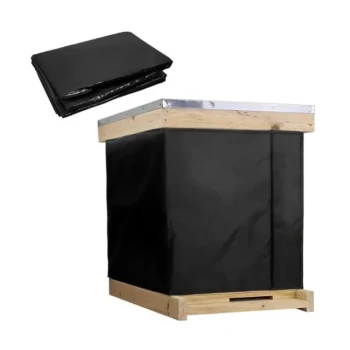
The significance of balancing insulation and ventilation lies in optimizing the bee colony's energy expenditure while preventing the accumulation of lethal moisture.
Proper hive construction and management during overwintering must achieve two simultaneous goals: providing high thermal insulation to minimize the colony's feed consumption and utilizing precise internal spacing to facilitate just enough airflow to prevent condensation. When these factors are balanced, the colony not only resists the cold more effectively but is also positioned for a rapid recovery and population expansion when spring temperatures arrive.
Core Takeaway: Success in overwintering is not merely about temperature; it is about establishing a dry, thermally stable environment. While insulation acts as a barrier to preserve the colony's caloric reserves, ventilation is the critical safety valve that prevents internal moisture from turning a warm hive into a fatal, damp environment.
The Role of Thermal Conservation
To understand the deep need for insulation, one must view the winter colony as an energy-management system.
Minimizing Metabolic Stress
The primary function of insulation is to reduce heat loss. When a hive is well-insulated, the colony does not need to generate as much metabolic heat to maintain a survivable core temperature.
Preserving Food Stores
By retaining heat, the colony consumes significantly less of its winter honey stores. This conservation of resources is vital for survival, particularly during prolonged winters where foraging is impossible.
Accelerating Spring Recovery
The benefits of insulation extend beyond survival. A colony that is thermally protected experiences less stress, allowing for a more rapid recovery of population size once spring arrives.
The Critical Necessity of Ventilation
While heat retention is the goal, sealing a hive completely is dangerous. Ventilation addresses the byproduct of the bees' respiration: moisture.
Preventing Condensation Buildup
As bees consume honey and generate heat, they release water vapor. Without adequate airflow, this vapor hits cold walls or ceilings and condenses into water.
Avoiding the "Cold Drip"
If condensation accumulates on the inner cover, it can drip back down onto the cluster. This combination of freezing temperatures and wet bees is frequently fatal to the colony.
Utilizing Controlled Bee Spaces
Proper ventilation does not mean creating a draft. It involves utilizing precise frame arrangements and maintaining correct bee spaces to allow moist air to escape naturally without stripping away all the heat.
Optimizing Internal Hive Volume
Beyond the exterior shell, the internal geometry of the hive plays a major role in thermoregulation.
Reducing Empty Space
Beekeepers can use follower boards to reduce the internal volume of the hive. By moving the effective walls closer to the cluster, you eliminate cold, dead air space that the bees would otherwise struggle to heat.
Insulation Pillows and Natural Fillers
Placing insulation pillows filled with natural materials above the cluster can absorb moisture while retaining heat. This is particularly useful in biological beekeeping where synthetic materials may be prohibited.
Understanding the Trade-offs
Achieving the perfect balance requires avoiding common extremes that can jeopardize the colony.
The Risk of Over-Ventilation
Too much airflow creates a "chimney effect" that sucks heat out of the hive. This forces the colony to over-consume their honey stores to compensate, potentially leading to starvation before spring.
The Risk of Over-Insulation
If a hive is wrapped too tightly without an upper vent or moisture quilt, humidity becomes trapped. A warm but wet hive promotes mold growth and pathogen transmission, threatening colony health.
Making the Right Choice for Your Goal
Your management strategy should adapt to your specific climate and colony strength.
- If your primary focus is resource conservation: Utilize follower boards and high-performance insulation to minimize the empty space the bees must heat, drastically lowering honey consumption.
- If your primary focus is colony survival in damp climates: Prioritize moisture control by using insulation pillows and ensuring upper ventilation to prevent condensation from dripping on the cluster.
- If your primary focus is rapid spring growth: Ensure high thermal insulation is maintained through late winter to support the early brood rearing required for population recovery.
The ultimate measure of success is a dry, efficient colony that emerges in spring with ample food stores and the energy to grow immediately.
Summary Table:
| Factor | Primary Function | Risk of Lack | Risk of Excess |
|---|---|---|---|
| Insulation | Retains heat & preserves honey stores | High metabolic stress & starvation | Trapped moisture & mold growth |
| Ventilation | Removes moisture & prevents condensation | Fatal 'cold drip' on the cluster | 'Chimney effect' & rapid heat loss |
| Internal Volume | Minimizes dead air space to heat | Inefficient thermoregulation | N/A (Reduced volume is optimal) |
Maximize Your Colony Survival Rate with HONESTBEE
Proper overwintering is the foundation of a productive season. At HONESTBEE, we support commercial apiaries and distributors by providing the high-quality equipment needed to manage hive thermoregulation effectively. From insulated hive components and follower boards to advanced beekeeping machinery and honey-processing tools, our comprehensive wholesale offering ensures your business—and your bees—thrive.
Ready to upgrade your apiary's performance?
Contact Us Today for Wholesale Solutions
References
- Boymakhmat Kakhramanov, Utkir Soatov. Influence of bee family care on honey productivity in hives of different constructions. DOI: 10.1051/e3sconf/202338101009
This article is also based on technical information from HonestBee Knowledge Base .
Related Products
- Professional Insulated Winter Hive Wrap for Beekeeping
- Inner Beehive Cover for Beekeeping Bee Hive Inner Cover
- Wholesales Dadant Size Wooden Bee Hives for Beekeeping
- High-Performance Langstroth Bee Hives for Global Professional Beekeeping
- Professional Insulated Plastic Bee Hives
People Also Ask
- What are the steps to properly wrap a beehive for winter? Ensure Your Colony Survives the Cold
- When is the best time to wrap a beehive for winter? A Guide to Perfect Winterization Timing
- How do professional insulation wraps provide protection for bee colonies? Optimize Winter Survival & Energy Efficiency
- What are the technical benefits of using winter wraps for beehive insulation? Boost Colony Survival & Hive Health
- What are the benefits of using insulated covers for hives? Ensure Colony Survival and Health