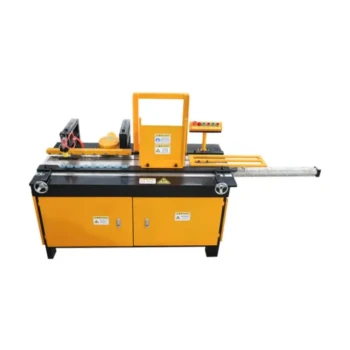
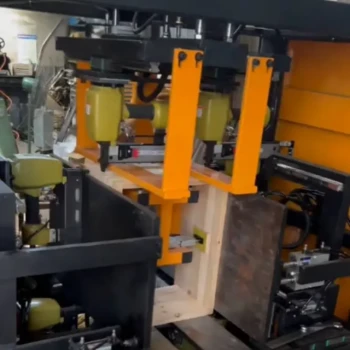
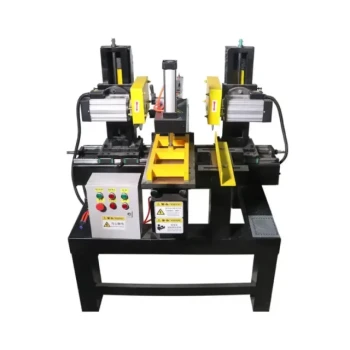
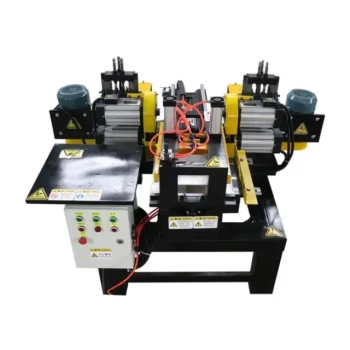
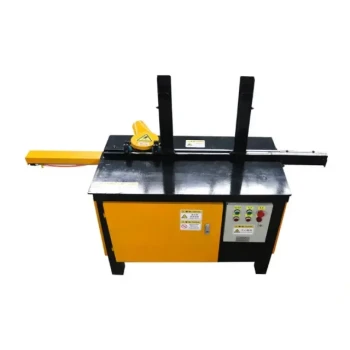
Precision is the operational backbone of modern apiary science. The significance of standardized woodworking and hive-making machinery lies in its ability to manufacture hive components with near-perfect dimensional consistency. This mechanical precision ensures the complete interchangeability of frames, partitions, and boxes across different apiaries, which is a fundamental prerequisite for coordinating large-scale breeding projects and conservation efforts.
By eliminating dimensional variability, standardized machinery transforms beekeeping from a variable craft into a scalable industrial process. It enables uniform management protocols, ensures valid research data through consistent sampling, and significantly lowers long-term maintenance costs.
The Foundation of Scalability
Interchangeability and Efficiency
The primary value of standardized machinery is the creation of interchangeable components. When managing thousands of colonies, operators cannot afford to manually adjust frames that do not fit specific boxes.
Machine-made precision allows equipment to be moved seamlessly between apiaries. This fluidity supports uniform management protocols, allowing teams to apply the same maintenance strategies across extensive bee colony arrays without logistical friction.
Rapid Deployment of Infrastructure
Automated hive-making machines can rapidly produce large quantities of components tailored to specific bee species. This high-efficiency production is critical for establishing ecological infrastructure quickly.
It helps resolve regional imbalances in equipment availability, ensuring that conservation projects can scale up immediately rather than being bottlenecked by hardware shortages.
Enhancing Biological Outcomes
Disease Prevention and Stress Reduction
Standardized equipment supports rigorous disease prevention measures. Uniform dimensions eliminate gaps and structural irregularities where pests or pathogens might harbor, making cleaning and sterilization protocols more effective.
Furthermore, precise manufacturing provides optimized ventilation and insulation. This stabilizes the internal hive environment, reducing physiological stress on the bees and indirectly increasing the yield of honey, pollen, and royal jelly.
Durability in Extreme Climates
Industrial machinery produces components with superior structural strength compared to manual assembly. This is particularly vital for conservation projects in tropical or harsh climates.
High-precision manufacturing ensures tight joins that withstand environmental stress. This enhances hive durability and significantly reduces the long-term costs associated with equipment repair and replacement.
The Critical Role in Data Integrity
Eliminating Experimental Bias
For conservation and research, data accuracy is paramount. Standardized woodworking extends to professional sampling boxes and preservation containers.
Using a unified hardware toolkit ensures that samples regarding winter mortality rates, parasites, and pollen residues are collected identically across all locations.
Ensuring Consistent Baselines
By using standardized sampling boxes, researchers eliminate variables caused by inconsistent tools. This ensures that variations in data reflect the actual biological reality of the colony, not the differences in the equipment used to measure it.
Understanding the Trade-offs
Initial Capital Intensity
Implementing industrial-grade woodworking machinery requires a significant upfront capital investment. While it lowers long-term operational costs, the initial barrier to entry is higher than traditional, manual methods.
Dependency on Technical Maintenance
Reliance on automated machinery shifts the skill requirement from carpentry to machine maintenance. Operations must ensure they have the technical expertise to keep these high-precision machines calibrated and functional, as downtime can halt the deployment of critical infrastructure.
Making the Right Choice for Your Goal
To maximize the impact of your beekeeping or conservation project, align your machinery strategy with your primary objectives:
- If your primary focus is large-scale commercial production: Prioritize machinery that maximizes interchangeability and structural durability to reduce labor costs and equipment failure rates.
- If your primary focus is conservation research: Invest in machinery that produces standardized sampling kits to ensure data integrity and eliminate experimental bias across study sites.
- If your primary focus is rapid ecological restoration: Utilize automated systems capable of high-volume output to deploy hives quickly across geographically diverse regions.
Standardization is not just about convenience; it is the structural guarantee that allows biological ambition to be met with operational reality.
Summary Table:
| Key Aspect | Significance in Large-Scale Projects | Operational Benefit |
|---|---|---|
| Dimensional Precision | Guarantees complete interchangeability of hive components. | Seamless logistical movement and uniform management. |
| Production Efficiency | Enables rapid deployment of ecological infrastructure. | Overcomes hardware bottlenecks for quick scaling. |
| Biological Optimization | Reduces gaps for pests and improves insulation/ventilation. | Enhances colony health and increases product yields. |
| Structural Durability | Tight joins and high-strength industrial manufacturing. | Lower maintenance costs and better climate resistance. |
| Data Integrity | Unified hardware for research and sampling. | Eliminates experimental bias for accurate conservation data. |
Scale Your Apiary Operations with HONESTBEE Precision
Transitioning from manual craft to industrial efficiency is essential for modern beekeeping success. HONESTBEE specializes in supporting commercial apiaries and distributors by providing the industry's most comprehensive range of beekeeping tools, machinery, and essential consumables.
From automated hive-making and honey-filling machines to specialized hardware and cultural merchandise, we deliver the standardized quality needed for global conservation and breeding projects. Partner with us to enhance your production capacity, ensure data accuracy, and reduce long-term operational costs.
Ready to upgrade your infrastructure? Contact us today to explore our wholesale solutions!
References
- Stepan Kerek, Viktor Papp. PREPARATORY STAGES OF ESTABLISHING A TRUE-BRED EXPANSE OF CARPATHIAN BEES WITHIN THE TERRITORY OF KHUST DISTRICT IN THE TRANSCARPATHIAN REGION. DOI: 10.46913/beekeepingjournal.2022.8.05
This article is also based on technical information from HonestBee Knowledge Base .
Related Products
- High-Efficiency Pneumatic Bee Hive Making Machine for Rapid Box Assembly
- Beehive Handle and Frame Rest Cutting Machine: Your Specialized Hive Machine
- Mini Desktop Bee Hive Frame Forming Making Machine
- Automatic High-Speed Bee Hive Box Stapling Machine
- Beehive Machine Double End Saw for Precision Hive Component Manufacturing
People Also Ask
- How does the introduction of professional beehive-making machinery benefit sustainable beekeeping? Scale Your Apiary
- Why is specialized beehive-making machinery critical for low-defense breeding? Enhance Selection with Precision Tools
- How does the introduction of specialized beehive making machinery contribute to increasing the scale of regional beekeeping industries?
- What is the importance of specialized beehive making machinery in a circular bio-economy? Build Local Sustainability
- Why is specialized beehive-making machinery essential? Scale Your Apiary with Precision Industrial Standards