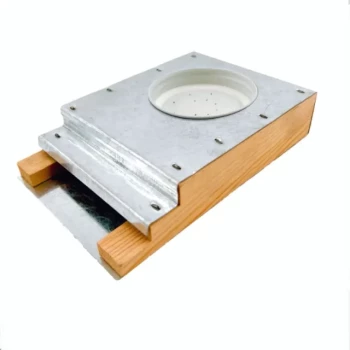
In-hive feeders are the industry standard for ensuring the precise and effective delivery of metabolites during apicultural field trials. By placing syrups containing bacterial metabolites directly inside the hive, researchers ensure efficient consumption while simultaneously protecting active substances from external environmental degradation.
Core Takeaway The use of in-hive feeders is not merely a matter of convenience, but of scientific integrity. It bridges the gap between laboratory control and field reality by protecting volatile compounds from the elements while accurately simulating the routine feeding practices used in commercial beekeeping.
Preserving Chemical Integrity
The primary technical advantage of in-hive feeders is the protection they offer to the metabolites being studied.
Minimizing Environmental Exposure
Metabolites are often sensitive to external factors. In-hive feeders significantly reduce the exposure of these active substances to the outside environment.
This isolation prevents the degradation of the compounds caused by sunlight, rain, or open-air oxidation, ensuring the dosage remains potent.
Ensuring Efficient Consumption
Placing the feeder directly inside the colony structure facilitates immediate access for the bees.
This direct placement guarantees that the colony consumes the syrup efficiently, reducing waste and ensuring the intended dosage is actually ingested.
Simulating Real-World Application
Beyond chemical stability, in-hive feeders provide essential context for how the treatment will perform in an actual production setting.
Replicating Commercial Standards
Field trials must yield results that are applicable to the industry. In-hive feeders simulate the routine feeding processes already employed in commercial beekeeping.
By mimicking these standard practices, the trial data becomes immediately relevant to beekeepers who use similar hardware for nutritional supplementation.
Assessing Long-Term Development
The use of this hardware allows for the accurate observation of long-term effects on colony health.
Researchers can reliably correlate the administration of metabolites with specific outcomes, such as colony development and pathogen control, because the delivery method remains consistent with actual production environments.
Understanding the Alternative Risks
While the primary reference highlights the benefits of in-hive feeding, it is critical to understand the pitfalls of not using this method (external feeding).
The Risk of Substance Degradation
The source explicitly notes that in-hive feeders reduce degradation. Conversely, placing feeders externally introduces uncontrolled variables.
If metabolites are exposed to the external environment, the active ingredients may break down before consumption, leading to inaccurate data regarding efficacy.
The Failure to Simulate Reality
Data derived from non-standard feeding methods may not translate to commercial success.
If a trial utilizes a feeding method that does not reflect routine beekeeping processes, the results regarding pathogen control and colony development may not be reproducible in a real-world apiary.
Making the Right Choice for Your Trial
When designing a field trial protocol, the choice of feeder determines the validity of your data regarding metabolite efficacy.
- If your primary focus is Chemical Stability: Use in-hive feeders to shield active substances from environmental degradation and ensure the colony receives the correct dosage.
- If your primary focus is Commercial Applicability: Use in-hive feeders to align your experimental conditions with standard production routines, ensuring your results on pathogen control are transferable to the industry.
By utilizing in-hive feeders, you transform a theoretical experiment into a robust simulation of practical reality.
Summary Table:
| Feature | In-Hive Feeding Advantage | Impact on Research |
|---|---|---|
| Chemical Stability | Shields metabolites from UV, rain, and oxidation | Preserves potency of active compounds |
| Delivery Precision | Direct access inside the colony | Minimizes waste; ensures accurate dosage |
| Industry Alignment | Mimics commercial nutritional supplementation | Results are directly applicable to beekeepers |
| Data Integrity | Reduces uncontrolled environmental variables | Enhances reliability of colony health observations |
Elevate Your Beekeeping Efficiency with HONESTBEE
At HONESTBEE, we specialize in empowering commercial apiaries and distributors with high-performance hardware designed for professional-grade results. Whether you are conducting scientific field trials or managing large-scale production, our comprehensive wholesale range provides everything from precision in-hive feeders and hive-making machinery to advanced honey-filling equipment.
Why partner with us?
- Full Spectrum Supply: From essential consumables to heavy-duty beekeeping machinery.
- Industry Expertise: We cater to the specific needs of large-scale operations and global distributors.
- Targeted Solutions: Enhance your colony health and honey production with tools built for commercial standards.
Ready to scale your operation or stock the industry's best equipment? Contact us today to explore our wholesale catalog!
References
- Fiorella G. De Piano, Sergio Ruffinengo. Effects of Lactobacillus Johnsonii AJ5 Metabolites on Nutrition, Nosema Ceranae Development and Performance of Apis Mellifera L.. DOI: 10.1515/jas-2017-0007
This article is also based on technical information from HonestBee Knowledge Base .
Related Products
- In-Hive Dual Compartment Frame Bee Feeder for Targeted Colony Nutrition
- Professional In-Hive Frame Bee Feeder by HONESTBEE
- Professional In-Hive Bee Feeder HONESTBEE Frame for Beekeeping
- HONESTBEE Professional Entrance Bee Feeder Hive Nutrition Solution
- HONESTBEE Entrance Bee Feeder Professional Hive Nutrition Solution for Beekeeping
People Also Ask
- What are the advantages of using a frame feeder for bee colonies? Boost Growth and Prevent Robbing Efficiently
- Why should sugar syrup or dry sugar not be left out in the open when feeding bees? Avoid a Dangerous Feeding Frenzy
- What precautions should be taken when feeding bees inside the hive? Safeguard Your Colony from Robbing and Leaks
- How do in-hive feeders support honey bee colonies during autumn? Ensure Overwintering Success for Your Apiary
- What are the advantages of in-hive feeders vs external methods? Boost Colony Health with Precise Spring Feeding