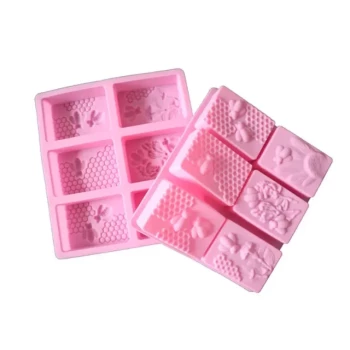
The specific function of a casting mold is to mechanically impress precise, uniform hexagonal cell patterns onto beeswax sheets. By transforming purified wax into a structured foundation, the mold creates a physical "blueprint" that guides honeybees to build neatly arranged combs. This process ensures every cell has standardized dimensions, which is the cornerstone of modern, mechanized beekeeping operations.
While the immediate task of the mold is shaping wax, its deeper purpose is efficiency through standardization. By enforcing a consistent cell geometry, the mold optimizes hive space, allows for the use of extraction machinery, and significantly reduces the biological energy a colony must waste on building comb from scratch.
The Mechanics of the Mold
Imprinting the Geometric Structure
The mold functions by pressing a specific hexagonal relief onto a plain sheet of wax. This is not merely aesthetic; it creates the cell bottoms that serve as the physical basis for bees to accept the sheet and begin construction.
Defining Colony Architecture
By dictating the size and shape of the cell base, the mold controls the final dimensions of the honeycomb. This guidance results in straight, even combs rather than the irregular structures bees might build naturally.
The Transformation Process
To achieve this, melted wax is poured onto the mold, pressed or rolled to ensure even thickness, and removed while still warm and pliable (typically after 1.5 to 2 minutes). The result is a solid yet flexible foundation sheet ready for framing.
Why Standardization Matters
Optimizing Hive Space
High-precision casting molds ensure that no space within the frame is wasted. Uniform cell sizes allow for the maximum number of cells per frame, increasing the total volume available for brood rearing or honey storage.
Enabling Mechanical Extraction
This is the critical link to commercial viability. Honey extractors rely on centrifugal force and balanced frames; without the uniform spacing and structural integrity provided by molded foundation sheets, combs would be irregular and likely to break during mechanical harvesting.
Biological and Resource Efficiency
Reducing Energy Expenditure
Wax secretion is biologically expensive for bees. By providing a molded foundation sheet, you significantly reduce the amount of wax the colony must produce, allowing them to redirect energy from construction to nectar collection.
Resource Recycling
The casting mold allows an apiary to engage in internal recycling. Refined beeswax from previous seasons can be processed back into foundation sheets, turning a byproduct back into a valuable production asset.
Understanding the Trade-offs
Precision vs. Acceptance
The success of the foundation depends entirely on the accuracy of the mold. If the hexagonal pattern does not match the bees' natural instincts, "bee acceptance" will be low, and the colony may reject or rework the sheet.
Process Sensitivity
Working with a casting mold requires precise timing. As noted in the process, the foundation must be removed while warm (1.5 to 2 minutes after pouring). Removing it too late results in brittle wax that cracks; removing it too early can deform the pattern.
Making the Right Choice for Your Goal
To apply this understanding to your apiary operations, consider your specific objectives:
- If your primary focus is Commercial Efficiency: Prioritize high-precision molds that guarantee exact uniformity, as this is the only way to ensure compatibility with automated extraction equipment.
- If your primary focus is Colony Productivity: Use the mold to maximize the surface area of your foundation sheets, reducing the "wax tax" on your bees so they can focus on honey production.
The casting mold is not just a shaping tool; it is the device that bridges the gap between raw natural resources and a managed, productive apiary.
Summary Table:
| Function | Benefit to Apiary | Key Mechanism |
|---|---|---|
| Geometric Imprinting | Ensures bee acceptance and straight combs | Precise hexagonal relief pressing |
| Standardization | Enables use of mechanical extractors | Uniform cell dimensions and spacing |
| Energy Conservation | Increases honey yield by reducing wax production | Provides a pre-built structural blueprint |
| Resource Recycling | Lowers operational costs | Converts refined wax back into foundation |
| Space Optimization | Maximizes brood and honey storage volume | Eliminates irregular natural comb gaps |
Scale Your Apiary Operations with HONESTBEE
At HONESTBEE, we understand that precision is the foundation of a successful commercial apiary. Our high-precision beeswax casting molds and advanced machinery are designed to help distributors and large-scale beekeepers achieve maximum standardization and colony productivity.
From industrial hive-making and honey-filling machines to a full spectrum of beekeeping tools and essential consumables, we provide everything you need to streamline your production and enhance honey yields. Let us help you reduce the 'wax tax' on your bees and increase your bottom line.
Ready to upgrade your equipment? Contact us today to explore our wholesale solutions!
References
- Gebremichael Belets, G Berhanu. Analysis of access to apiculture supporting services by smallholder farmers in northern Ethiopia. DOI: 10.5897/jdae2014.0565
This article is also based on technical information from HonestBee Knowledge Base .
Related Products
- Colorful Silicone Beeswax Foundation Mold Mould for Beekeeping
- Notebook Style Beeswax Foundation Mould Wax Foundation Mold
- Beeswax Machine Press Embosser Wax Foundation Mold Printer Bee Hive Equipment Making Sheet
- Fully Automatic Beeswax Embossing Machine Foundation Mill
- Electric Flatting and Embossing Machine with Tray for Beekeeping
People Also Ask
- How do beeswax foundation molds facilitate the construction of standardized honeycombs? Optimize Your Apiary Efficiency
- How do you use the Foundation Mold to create beeswax foundation? Master DIY Beekeeping with Precision
- How can beeswax value-addition processes be utilized to increase beekeeping revenue? Boost Your Apiary Profitability
- What is the first tip for pouring beeswax into a silicone mold? Ensure a Perfect Release
- Why are specific wax foundation molds used to downsize brood cells? Master Mechanical Pest Inhibition