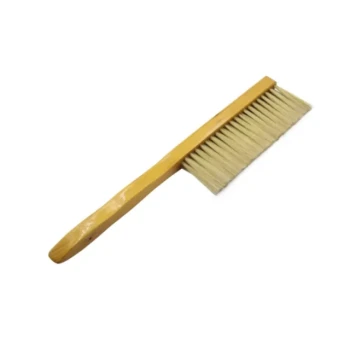
The specialized pinning tool serves as a precision instrument designed to create specific diamond-shaped punctures in sealed brood cells, physically terminating the developing larvae or pupae inside. This action generates a controlled, standardized stimulus of damaged individuals, allowing breeders to objectively measure how quickly a colony identifies and removes dead brood within a 24-hour window.
By simulating the presence of diseased or dead brood through standardized mechanical damage, this tool allows for the objective quantification of a colony's "hygienic behavior." The speed at which worker bees detect and clear these pin-killed cells directly correlates to their genetic potential for disease resistance.
The Mechanics of the Pin-Killed Test
Creating the Standardized Stimulus
The core function of the tool is to apply a lethal but controlled injury. The tool utilizes specialized pins to pierce the capping of the honeycomb cell and the underlying larvae or pupae.
According to the primary technical standard, these punctures are often diamond-shaped. This specific geometry ensures the larva is terminated effectively while minimizing unnecessary structural damage to the surrounding honeycomb walls.
Simulating Disease and Natural Death
The pinning process is not destruction for its own sake; it is a simulation. By manually killing the brood, the technician mimics the presence of pathogens or natural mortality.
This triggers the colony's hygienic instinct—the drive to detect, uncap, and remove compromised individuals. This mimics the response required to battle actual diseases like American Foulbrood or Chalkbrood.
Quantifying Genetic Hygienic Traits
The 24-Hour Evaluation Window
The pinning tool sets the clock for the experiment. Once the specific number of larvae are pierced, the colony is left undisturbed for exactly 24 hours.
This timeframe is the industry standard for determining efficiency. It creates a binary pass/fail condition for the colony's response speed.
Calculating the Removal Rate
The ultimate output of using the pinning tool is a quantifiable metric, often called the Hygienic Behavior (HB) value.
By comparing the number of pierced cells at the start (0 hours) to the number of cleared cells at the end (24 hours), breeders can calculate a percentage. This data point serves as a phenotypic indicator of the colony's genetic disease resistance.
Critical Considerations and Trade-offs
Precision vs. Structural Damage
While the tool is effective, it requires a steady hand and precise application. The goal is to pierce the pupae without destroying the cell walls or causing the comb to collapse.
If the structural integrity of the comb is compromised by clumsy application, worker bees may repair the wax rather than remove the larva. This creates "noise" in the data, leading to inaccurate hygienic scores.
Manual Labor and Scalability
The pin-killed method acts as a direct physical detection tool, but it is labor-intensive compared to other methods (like freeze-killing whole sections).
It requires the technician to manually penetrate cells individually or in small groups. This makes it highly accurate for specific phenotypic data but potentially slower to execute across massive apiaries.
Making the Right Choice for Your Goal
Whether you are a commercial breeder or a researcher, understanding the utility of this tool is essential for stock selection.
- If your primary focus is breeding disease-resistant stock: Use the pinning tool to screen colonies for high removal rates, selecting only those that clear >95% of pin-killed brood in 24 hours.
- If your primary focus is scientific research: Utilize the tool to create a strictly standardized control group, ensuring that every "dead" larva introduced to the system was terminated at the exact same time and manner.
The pinning tool transforms the abstract concept of "colony health" into a hard, measurable data point that drives superior genetic selection.
Summary Table:
| Feature | Function & Purpose |
|---|---|
| Primary Action | Creates precision diamond-shaped punctures to terminate larvae/pupae |
| Simulation Goal | Mimics natural mortality and pathogens like American Foulbrood |
| Metric Measured | Hygienic Behavior (HB) value (removal rate within 24 hours) |
| Selection Criteria | Identifies colonies clearing >95% of killed brood for breeding |
| Key Advantage | Provides a standardized, quantifiable data point for genetic resistance |
Elevate Your Apiary's Genetic Potential with HONESTBEE
Identifying disease-resistant stock is critical for the success of commercial apiaries and distributors. At HONESTBEE, we understand the precision required for hygienic behavior testing and genetic selection.
We provide a comprehensive wholesale offering of professional-grade beekeeping tools, from specialized testing instruments to hive-making and honey-filling machinery. Whether you are scaling a breeding program or supplying the industry with essential consumables, our portfolio is designed to enhance your operational efficiency and honey production.
Ready to upgrade your equipment? Contact us today to discover how our premium hardware and honey-themed merchandise can add value to your business!
References
- İnci Şahin Negiş, İbrahim Aytekin. The association between ClaI polymorphism and hygienic behavior in Apis mellifera. DOI: 10.55730/1300-0179.3159
This article is also based on technical information from HonestBee Knowledge Base .
Related Products
- HONESTBEE Professional Mini J-Hook Hive Tool for Beekeeping
- Professional Frame Preparation: The HONESTBEE Electric Wire Embedder
- HONESTBEE Professional Long Handled Hive Tool with Precision Cutting Blade
- HONESTBEE Premium Italian Style Hive Tool with Hardwood Handle
- HONESTBEE Adjustable Voltage Wire Embedder with Digital Display
People Also Ask
- What specific challenges do beekeeping hive tools address during hive maintenance? Essential Solutions for Apiaries
- What is the recommended method for storing beekeeping tools? Expert Vertical Storage Solutions for Your Apiary
- Why is the treatment of beekeeping tools with high-concentration chemical disinfectants necessary for preventing AFB?
- How does a favorable microclimate interact with beekeeping tools? Boost Overwintering Success and Equipment Longevity
- What is a J-hook hive tool and why is it favored by some beekeepers? Master Gentle Frame Handling