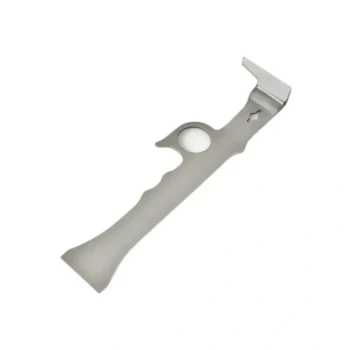
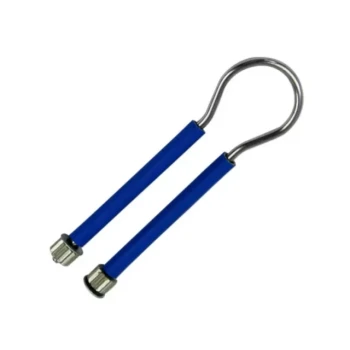
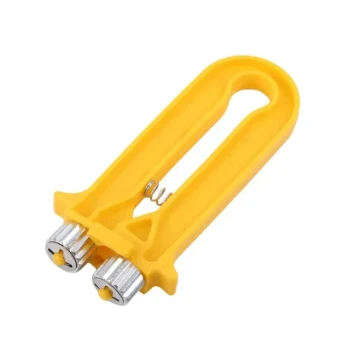
Grafting tools and queen barriers coordinate by balancing active propagation with passive spatial management within the hive. While grafting tools are used to surgically transfer specific larvae into artificial cells for queen rearing, queen barriers delineate the physical boundaries of the colony, isolating the laying queen to prevent her from destroying these new cells or contaminating honey stores with brood.
Success in bee breeding relies on distinct operational zones. Grafting tools allow for the precise selection and placement of genetic material, while queen barriers act as the architectural enforcement that ensures these developing queens are raised in a protected, resource-stable environment.
The Role of Precision Grafting
The grafting tool is the primary instrument for genetic selection and propagation. Its function is active and requires high manual dexterity to ensure the quality of the future queen.
Selecting the Optimal Candidate
Grafting tools are designed to pick up extremely young larvae, specifically those less than 24 hours old. Transferring larvae at this specific stage maximizes their potential physical dimensions, spermatheca volume, and overall reproductive capacity.
Minimizing Physical Trauma
High-precision needles allow beekeepers to lift larvae without damaging their fragile epidermis. By mimicking a natural transfer, these tools ensure the larvae remain viable and are readily accepted and nurtured by nurse bees in the artificial cell cups.
Spatial Management via Queen Barriers
While grafting handles the "what," the queen barrier manages the "where." It is a passive tool that defines the hive's internal geography.
Creating Safe Rearing Zones
Barriers restrict the movement of the existing queen, preventing her from entering the designated breeding area. This is critical because a dominant queen will often destroy competing queen cells; the barrier creates a "queenless" sensation in the rearing zone, prompting nurse bees to focus entirely on feeding the grafted larvae.
Protecting Resource Purity
Beyond breeding, barriers prevent the queen from laying eggs in honey storage areas. This ensures that the honey harvested is free of brood, maintaining the quality and hygiene of the final commercial product.
Synergy: How the Tools Coordinate
The breeding rhythm depends on these two tools working in tandem to manipulate colony behavior.
Controlling the Rhythm
By using grafting tools, the beekeeper dictates exactly when new queens are produced. Simultaneously, the queen barrier dictates where the colony focuses its energy, allowing the beekeeper to switch a colony from honey production to queen rearing without chaos.
Stabilization of Environment
Wooden bars and rearing frames hold the grafted cups in the center of the colony, but the barrier ensures this zone remains stable. This coordination keeps the developing larvae in the core area where temperature and humidity are optimal, undisturbed by the laying queen's movement.
Understanding the Trade-offs
While these tools enhance control, they introduce complexity that requires careful management.
The Skill Barrier
Grafting is a delicate operation; even with professional tools, the margin for error is slim. If the larva is damaged during the transfer or dried out, the colony will reject the cell regardless of barrier placement.
Colony Stress Factors
Using barriers to restrict a queen's movement can artificially constrain the colony. If not managed correctly, this restriction can lead to congestion in the brood nest or impede the natural flow of worker bees moving between honey supers and the brood chamber.
Making the Right Choice for Your Goal
To maximize the effectiveness of your breeding program, align your tool usage with your specific objectives.
- If your primary focus is Genetic Quality: Prioritize the use of high-precision grafting needles to transfer larvae under 24 hours old, ensuring maximum reproductive potential.
- If your primary focus is Workflow Efficiency: Rely on queen barriers to strictly segregate the queen from rearing frames, allowing for faster manipulation of cells without searching for the queen.
- If your primary focus is Honey Purity: Use barriers to strictly lock the queen out of storage supers, ensuring the harvest remains distinct from the breeding cycle.
Effective bee breeding is not just about the tools you use, but the timing and precision with which you apply them to mimic and manipulate natural colony instincts.
Summary Table:
| Tool Type | Primary Function | Core Benefit | Strategic Role |
|---|---|---|---|
| Grafting Tools | Genetic Selection | Precise transfer of <24h larvae | Active control over timing and quality |
| Queen Barriers | Spatial Management | Rearing zone isolation & honey purity | Passive enforcement of hive geography |
Scale Your Apiary Operations with HONESTBEE
Elevate your bee breeding and production efficiency with HONESTBEE. As a dedicated partner to commercial apiaries and distributors, we provide a comprehensive wholesale offering designed for the professional market.
Our portfolio spans the full spectrum of beekeeping needs, from high-precision grafting tools and queen barriers to industrial-grade hive-making and honey-filling machinery. We also supply a wide array of essential industry consumables and honey-themed cultural merchandise.
Contact us today to discuss your wholesale needs and discover how our specialized hardware and equipment can drive your business's success.
References
- Ahlam Ahmed Hassan, Dalia M. Nasr El Batran. An Economic Study of a Honeybee Breeding Project. DOI: 10.32861/jac.94.553.565
This article is also based on technical information from HonestBee Knowledge Base .
Related Products
- Stainless Steel Queen Grafting Tool for Beekeeping and Bee Queen Grafting
- Plastic Chinese Queen Grafting Tool for Bee Queen Rearing
- Stainless Steel Beekeeping Queen Grafting Tool for Honey Bee Rearing
- Plastic Beekeeping Honey Bee Larvae Grafting Tools for Queen Rearing and Chinese Grafting
- Double Head Beekeeping Grafting Tools for Beekeepers
People Also Ask
- What are the benefits of using a queen grafting tool for queen rearing? Master Precision for Superior Bee Genetics
- What is grafting in queen rearing? Take Control of Your Apiary's Genetics
- What are the steps involved in using a queen grafting tool? A Guide to Successful Queen Rearing
- What is the step-by-step process for using a queen grafting tool? Master Larva Transfer for Better Queen Rearing
- What is the primary function of a queen grafting tool? Master Precise Larval Transfer for High Queen Acceptance