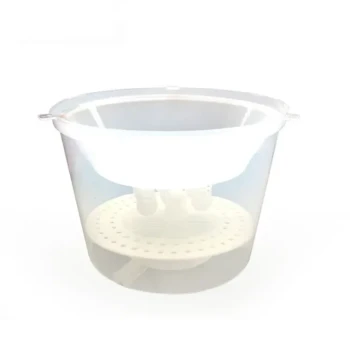
Mounted pollen traps serve as precision mechanical filters designed to intercept foraging bees at the hive entrance. By forcing bees to navigate through specific physical grids, the device mechanically strips pollen pellets from their hind legs, depositing the loads into a collection tray below while leaving the bee unharmed.
The core function of a mounted pollen trap is to enable the automated, non-destructive acquisition of time-specific pollen samples. This allows for the rigorous analysis of pollen quality, volume, and botanical origin without disrupting the colony's workforce.
The Mechanics of Non-Destructive Collection
Physical Interception via Grids
The trap operates by placing a barrier of precisely sized apertures or fences across the hive entrance.
Returning foragers must pass through these narrow openings to enter the hive. The size of the grid is critical; it must be large enough for the bee but too small for the pollen loads attached to their legs.
The Separation Process
As the bee forces its way through the grid, mechanical friction occurs against the pollen baskets on its hind legs.
This friction physically dislodges the pollen pellets, causing them to fall through a screen into a secured drawer or tray beneath the flight path. This ensures the collected material remains clean and separate from the bees.
Utility in Research and Production
Dynamic Time-Segment Sampling
A primary function of these traps, as highlighted in the primary reference, is the ability to collect precise time-segment samples.
Researchers can activate the traps during specific operational periods to capture a snapshot of the environment. This is essential for analyzing dynamic changes in pollen weight, volume, and quality over time.
Botanical Origin Analysis
By intercepting loads as they arrive, the traps provide the raw material needed to identify plant species and assess floral resource abundance across the landscape.
This creates a representative sample of what the colony is foraging, which is critical for understanding the colony's diet and the surrounding biodiversity.
Industrial-Scale Harvesting
Beyond research, these devices facilitate the large-scale automated collection of bee pollen for consumable products.
The method provides high-purity raw materials suitable for immediate processing, serving as the starting point for the industrial production of bee products.
Understanding the Limitations and Variables
Efficiency Variance
It is vital to understand that these traps are not absolute barriers; they typically capture between 30% and 70% of the pollen brought back by foragers.
The collection efficiency relies heavily on the relationship between the size of the grid openings and the size of the specific pollen pellets being collected.
Impact on Hive Traffic
While designed to be non-destructive, the physical presence of the trap can influence bee flight frequency.
Bottom-mounted traps are often preferred in this regard, as they typically cause less interference with hive traffic compared to top-mounted alternatives.
Maximizing the Utility of Your Collection Strategy
When implementing mounted pollen traps, your specific objective should dictate how you manage the collection periods.
- If your primary focus is Environmental Analysis: Prioritize activating traps during specific time segments to capture dynamic changes in floral resources and pollen quality.
- If your primary focus is Commercial Production: Focus on the automated capabilities of the trap to secure high volumes of clean, high-purity raw material for processing.
- If your primary focus is Colony Health: Monitor the trap's efficiency and usage duration to ensure the colony retains enough pollen (the uncollected 30-70%) to sustain its own nutritional needs.
Used correctly, mounted pollen traps provide a definitive window into the colony's foraging habits without compromising the safety of the bees.
Summary Table:
| Feature | Function & Impact |
|---|---|
| Primary Mechanism | Precision mechanical grids strip pollen pellets from foragers' hind legs via friction. |
| Collection Yield | Typically captures 30% to 70% of returning pollen, ensuring colony nutrition is maintained. |
| Sample Integrity | Non-destructive method allowing for time-specific sampling of botanical origins. |
| Industrial Utility | Automated harvesting of high-purity raw materials for large-scale bee product production. |
| Design Advantage | Bottom-mounted configurations minimize hive traffic disruption and maintain bee safety. |
Elevate Your Apiary’s Productivity with HONESTBEE
Are you looking to scale your pollen harvesting or optimize your research accuracy? HONESTBEE provides professional-grade beekeeping tools and machinery tailored for commercial apiaries and distributors. From precision-engineered pollen traps to industrial-scale honey-filling machines and specialized hardware, our comprehensive wholesale catalog is designed to drive your business forward.
Partner with HONESTBEE today for:
- High-Volume Supplies: Full spectrum of beekeeping tools and essential consumables.
- Specialized Machinery: State-of-the-art equipment for hive-making and processing.
- Global Distribution: Expert support for distributors seeking reliable, high-quality portfolios.
Contact us today to explore our wholesale offerings and see how we can enhance your operation's efficiency!
References
- T. Senchuk, О. Zhukorskyi. Influence of temperature conditions of the environment on the dynamics of collecting bee pollen and flower pollen by honey bees. DOI: 10.33730/2077-4893.3.2024.311193
This article is also based on technical information from HonestBee Knowledge Base .
Related Products
- 30 cm Plastic Entrance Hole Bee Pollen Trap and Collector
- Removable Plastic Pollen Trap With Ventilated Tray for Bees Pollen Collector
- Plastic Bee Pollen Trap Strips Comb Catcher Collector
- 8 Frame and 10 Frame Propolis Trap Collector Screen for Propolis Collection
- High-Efficiency Diamond Maze Bee Escape for Clearing Supers
People Also Ask
- What are the design principles and advantages of pollen traps in the collection of bee pollen? Boost Your Apiary Yield
- Why is frequent harvesting of bee pollen from traps necessary for quality control? Ensure Freshness and Prevent Mold.
- How often should bee pollen be harvested from a trap and why? Master Freshness and Prevent Spoilage
- What function do pollen traps serve in quantitative collection? Boost Your Apiary's Data & Production Efficiency
- What is the primary function of bee pollen traps? Optimize Your Pollen Harvest with Advanced Extraction Efficiency