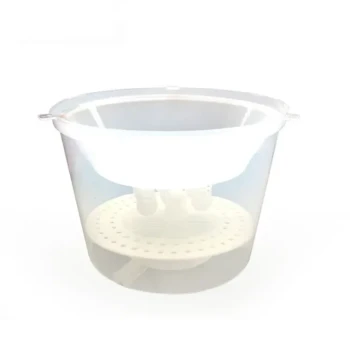
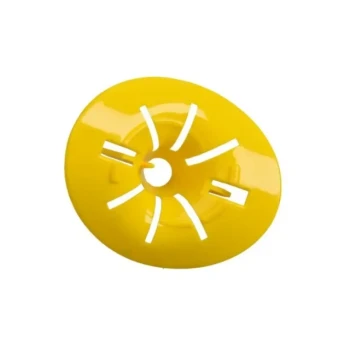
The specific mechanism relies on mechanical abrasion generated at the hive entrance. A pollen trap utilizes a barrier made of plastic or metal equipped with precisely sized holes and filtering screens. As foraging bees squeeze through these restricted openings to re-enter the hive, the physical friction scrapes Varroa mites off their bodies, causing the parasites to fall into a collection sieve below.
Core Insight: This device functions as a mechanical filter for the colony. By forcing bees through a calibrated aperture, the trap physically dislodges external parasites (and pollen) without the need for chemical intervention, effectively separating the host from the pest.
The Mechanics of Physical Separation
The Entrance Barrier
The pollen trap acts as a modified threshold for the colony. It is installed directly at the hive entrance, forcing all returning foragers to navigate through a specific set of filtering screens.
These screens are engineered with holes that are large enough to allow the honeybee to pass through but small enough to create significant surface contact with the bee’s body.
The Friction Principle
The core mechanism is physical scraping. When a bee passes through the hole, the tight fit creates friction against the bee's exterior.
Varroa mites are phoretic, meaning they attach themselves to the bodies of adult bees. The mechanical action of squeezing through the screen dislodges these mites, causing them to detach and drop into a lower collection sieve where they cannot return to the host.
Context: Pollen Traps vs. Brood Traps
To fully understand the utility of a pollen trap, it is helpful to contrast it with other physical control methods. While pollen traps target mites on adult bees, other methods target mites within the brood.
Targeting Adult Carriers (Pollen Trap)
The pollen trap mechanism addresses "phoretic" mites—those currently hitchhiking on adult foragers. It is an exterior defense line that reduces the re-entry of mites or the load on current workers.
Targeting Reproductive Mites (Trapping Combs)
In contrast, Trapping Combs and Drone Trap Combs leverage biological behavior rather than mechanical scraping. As detailed in your supplementary references, these methods rely on the mite's preference for parasitizing larvae (especially drone brood). Beekeepers concentrate mites into specific frames and then remove/destroy the comb.
Targeting Physiology (Hyperthermia)
Another physical method involves Hyperthermia equipment. This exploits the difference in heat tolerance between bees and mites (typically heating the brood to 40°C–47°C). Unlike the pollen trap, which is mechanical, this uses thermal energy to disrupt the mite's physiology.
Understanding the Trade-offs
While the pollen trap offers a residue-free physical control method, there are distinct limitations and side effects to consider.
Incidental Pollen Loss
As the name implies, these devices are traditionally designed to strip pollen pellets. While the mechanism effectively scrapes off mites, it also dislodges pollen from the bees' back legs. This reduces the nutritional resources entering the hive, which can impact colony development if used excessively.
Limited Scope of Control
The pollen trap effectively targets mites attached to foraging bees. It does not address the mites currently reproducing inside capped brood cells. Therefore, it is often best viewed as a supplemental reduction method rather than a standalone eradication solution.
Making the Right Choice for Your Goal
Selecting the correct physical control depends on which part of the mite population you need to target.
- If your primary focus is reducing mites on adult foragers: Utilize the pollen trap mechanism to mechanically scrape parasites off bees as they enter the hive.
- If your primary focus is eliminating reproducing mites: Implement trapping combs or drone brood removal to capture mites that have entered the larval cells.
- If your primary focus is non-destructive brood treatment: Consider hyperthermia equipment to kill mites within capped cells without destroying the comb or larvae.
Effective Varroa management often requires integrating mechanical barriers at the entrance with biological controls within the brood nest.
Summary Table:
| Mechanism Component | Function & Action | Target Population |
|---|---|---|
| Entrance Barrier | Calibrated apertures create a tight fit for returning bees | Adult foraging bees |
| Mechanical Friction | Physical scraping dislodges phoretic mites from the bee's body | Phoretic Varroa mites |
| Collection Sieve | Captures fallen mites and prevents re-entry to the hive | Detached parasites |
| Pollen Stripping | Secondary effect of friction, removing pollen pellets from legs | Nutrients (Side effect) |
Elevate Your Apiary Management with HONESTBEE
Are you looking to implement effective, chemical-free Varroa control for your commercial operations? HONESTBEE specializes in supporting commercial apiaries and distributors with high-performance beekeeping tools and machinery. From specialized hive-making and honey-filling machines to a full spectrum of essential industry consumables, we provide the hardware you need to scale your business.
Our Value to You:
- Comprehensive Wholesale Offering: A one-stop shop for all professional beekeeping equipment.
- Industry Expertise: Solutions tailored for large-scale operations and distribution networks.
- Global Support: We cater to your specific needs, from machinery to honey-themed cultural merchandise.
Ready to optimize your colony health and production efficiency? Contact us today to discuss our wholesale solutions!
References
- Adnan Ayan, Osman Selçuk Aldemir. Control Methods against Varroa Mites. DOI: 10.5281/zenodo.3548388
This article is also based on technical information from HonestBee Knowledge Base .
Related Products
- Removable Plastic Pollen Trap With Ventilated Tray for Bees Pollen Collector
- 30 cm Plastic Entrance Hole Bee Pollen Trap and Collector
- Plastic Bee Pollen Trap Strips Comb Catcher Collector
- High-Efficiency Diamond Maze Bee Escape for Clearing Supers
- Professional Bucket Style Wasp and Moth Pheromone Trap
People Also Ask
- What are the design principles and advantages of pollen traps in the collection of bee pollen? Boost Your Apiary Yield
- What is the function of professional pollen traps in evaluating honey plants? Quantifying Pollination and Crop Potential
- What functions do pollen traps serve for bee bread production? Optimize Your Raw Material Collection
- What maintenance and pest prevention measures should be taken for pollen traps? Protect Your Hive and Harvest Quality
- How does the use of pollen traps in honeybee hives enhance crop fertilization? Boost Your Yield Through Induced Activity