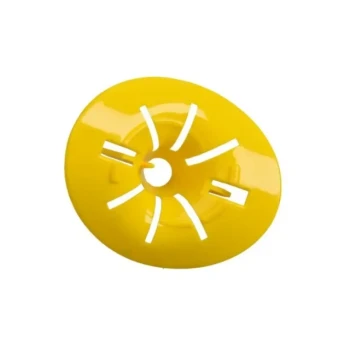
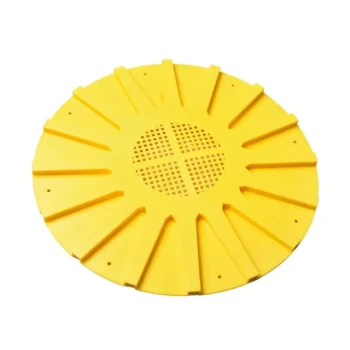
At its core, a bee pollen trap acts as a mechanical sieve for returning foragers. It functions by placing a physical barrier—typically a grid with precisely sized holes—over the hive entrance. As bees squeeze through these narrow openings to return home, the constriction gently dislodges the pollen pellets stored in the "pollen baskets" on their hind legs, causing the pellets to fall into a collection tray below while the bee continues into the hive.
A pollen trap leverages precise aperture specifications to separate pollen from the bee’s body mechanically. This allows for the efficient, non-destructive harvesting of raw pollen without requiring manual extraction from the honeycomb.
The Mechanics of Collection
The Physical Barrier
The primary mechanism of the trap is a grid or screen placed directly in the path of the hive entrance.
This grid contains holes that are calibrated to specific dimensions—large enough for a worker bee to pass through, but narrow enough to restrict her width when she is carrying a load.
The Stripping Action
Bees carry pollen in pollen baskets (corbiculae) located on their hind legs.
As the forager attempts to wiggle through the trap's grid, the edges of the holes scrape against these pollen loads.
The friction dislodges the pellets, stripping them from the bee’s legs without harming the insect itself.
Gravity-Fed Collection
Once dislodged, the pollen pellets fall through a secondary screen or mesh located beneath the entry grid.
They land in a collection tray or drawer, which is inaccessible to the bees to prevent them from retrieving the lost resources.
This tray is designed for easy removal, allowing the beekeeper to harvest the "clean" pollen—meaning it has not yet been processed or packed into the honeycomb by the hive.
Operational Considerations
Controlled Access
Most modern traps include a mechanism to disable the stripping function, such as a sliding grille or a liftable gate.
This allows beekeepers to provide unimpeded access to the hive when necessary, ensuring that drones (who are larger than workers and cannot fit through the grid) can exit and enter freely.
Placement Variations
While the mechanism remains consistent, the physical location of the trap can vary.
Bottom-mounted traps replace the bottom board of the hive, capturing pollen as bees enter from the base, while other models fit strictly over the front entrance.
Understanding the Trade-offs
Nutritional Impact on the Colony
The most critical factor to understand is that a pollen trap steals the colony's primary protein source.
While the trap only removes a percentage of incoming pollen (it does not strip every single bee), leaving a trap on indefinitely can lead to nutritional stress and inhibit brood rearing.
Mechanical Precision vs. Safety
The "safety" of the trap relies entirely on the precision of the grid's aperture specifications.
If the holes are too small, they can damage the bees' wings or legs; if they are too large, the pollen will not be stripped effectively. High-quality traps balance this to ensure physical integrity is maintained for both the pollen and the bee.
Making the Right Choice for Your Goal
To use a pollen trap effectively, you must balance your production goals with the health of your apiary.
- If your primary focus is commercial harvest: Implement a rotation schedule (e.g., trap on for 2-3 days, off for 5 days) to allow the colony to replenish its necessary protein stores.
- If your primary focus is scientific sampling: Use bottom-mounted traps for short durations to analyze the specific nutritional contributions of the surrounding landscape without disturbing the hive structure.
- If your primary focus is colony health: Ensure you regularly open the bypass grille to allow drones to fly and to prevent congestion at the entrance during heavy nectar flows.
Used correctly, a pollen trap is a precision tool that turns a biological process into a measurable resource.
Summary Table:
| Component | Function | Key Mechanism |
|---|---|---|
| Entry Grid | Physical Barrier | Calibrated holes strip pollen pellets from the bee's hind legs as they enter. |
| Secondary Mesh | Separation | Allows pollen to fall through while preventing bees from accessing the collection area. |
| Collection Tray | Storage | A removable drawer that captures clean pollen for easy harvesting by the beekeeper. |
| Bypass Gate | Access Control | Allows drones to pass and colonies to replenish stores by disabling the stripping action. |
Maximize Your Harvest with HONESTBEE Precision Equipment
Elevate your commercial apiary operations with high-quality pollen traps and harvesting machinery designed for efficiency and bee safety. At HONESTBEE, we specialize in supporting commercial apiaries and distributors with a comprehensive wholesale range, including everything from hive-making and honey-filling machines to essential industry consumables.
Partner with us to gain:
- Durable Hardware: Robust beekeeping tools and specialized machinery built for scale.
- Optimized Yields: Precisely engineered equipment that balances production with colony health.
- Full Spectrum Supply: A one-stop shop for hardware, consumables, and honey-themed merchandise.
Ready to scale your beekeeping business? Contact HONESTBEE today to explore our wholesale offerings and customized solutions for your apiary!
Related Products
- 30 cm Plastic Entrance Hole Bee Pollen Trap and Collector
- Removable Plastic Pollen Trap With Ventilated Tray for Bees Pollen Collector
- Plastic Bee Pollen Trap Strips Comb Catcher Collector
- High-Efficiency Diamond Maze Bee Escape for Clearing Supers
- HONESTBEE Professional Telescopic Pole Bee Swarm Catcher
People Also Ask
- What are the design principles and advantages of pollen traps in the collection of bee pollen? Boost Your Apiary Yield
- Why is frequent harvesting of bee pollen from traps necessary for quality control? Ensure Freshness and Prevent Mold.
- How often should bee pollen be harvested from a trap and why? Master Freshness and Prevent Spoilage
- What function do pollen traps serve in quantitative collection? Boost Your Apiary's Data & Production Efficiency
- What is the primary function of bee pollen traps? Optimize Your Pollen Harvest with Advanced Extraction Efficiency