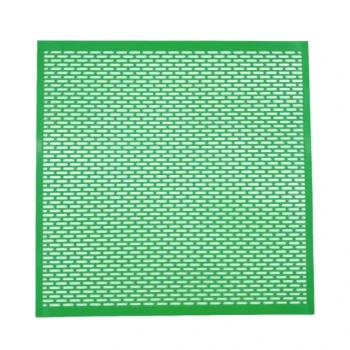
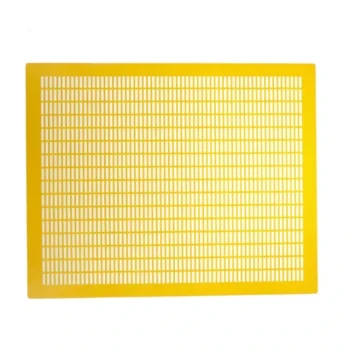
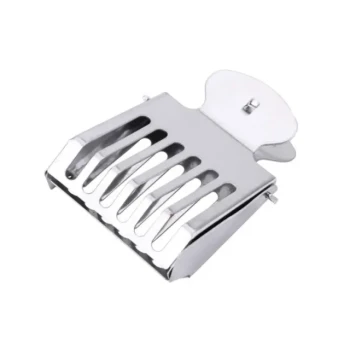
A queen excluder functions as a precision mechanical filter designed to compartmentalize the hive based on biological caste dimensions. It employs a specifically gauged grid that exploits the physical size disparity between the larger queen bee and the smaller worker bees. This device acts as a selective barrier, confining the queen to the lower brood chamber while permitting workers to pass through and access the upper honey supers.
Core Technical Function The queen excluder is an isolation tool that ensures the structural separation of the hive's reproductive zone from its food storage zone. By preventing the queen from entering the upper levels, it guarantees that harvested honey frames remain pure and free of eggs or developing larvae.
The Mechanics of Caste Separation
Exploiting Thorax Geometry
The excluder operates on a simple anatomical principle: the thorax (chest section) of a queen bee is significantly larger than that of a worker bee.
While the workers are small enough to navigate tight spaces, the queen's larger skeletal structure physically prevents her from squeezing through specific apertures.
Precision Aperture Sizing
To function correctly, the grid must be manufactured with extreme precision.
The gaps in the excluder are typically engineered to be between 4.1 and 4.4 millimeters.
This specific tolerance creates a "pass-fail" filter: it is wide enough for workers to move vertically through the hive without injury, yet too narrow for the queen to breach.
Operational Impact on Hive Management
Preservation of Honey Purity
The primary technical objective of the excluder is to maintain the quality of the harvest.
Without this barrier, the queen naturally moves upward to lay eggs in the honey supers.
By restricting her to the lower boxes, the excluder ensures the upper frames contain only honey, eliminating the contamination risk of brood (eggs and larvae) during extraction.
Streamlining Colony Maintenance
Beyond honey purity, the excluder serves as a spatial management tool.
By confining the queen to the brood boxes, it significantly narrows the search area for the beekeeper during inspections.
This is particularly useful for locating the queen quickly or when preparing to requeen a hive, as the beekeeper only needs to search the designated brood section rather than the entire multi-layered stack.
Understanding the Trade-offs
Impact on Drones
It is important to note that the queen is not the only bee with a larger thorax; drones (males) are also larger than workers.
Consequently, a queen excluder also functions as a drone excluder, preventing males from moving freely between the brood chamber and honey supers.
The Necessity of Grid Integrity
The effectiveness of the system relies entirely on the structural integrity of the grid.
Because the size differential is a matter of millimeters, any damage that bends the grid or widens the gap renders the device useless.
If the mesh is not maintained as a flat, gauged section, the queen may breach the containment, compromising the separation of brood and honey.
Making the Right Choice for Your Goal
To effectively utilize a queen excluder in your system, consider your specific operational objectives:
- If your primary focus is maximum honey purity: Install the excluder between the brood box and supers to strictly prevent egg-laying in the harvest zone.
- If your primary focus is colony manipulation or requeening: Use the excluder temporarily to isolate the queen to a specific box, simplifying the search process and reducing labor time.
Ultimately, the queen excluder is a tool of standardization, converting the chaotic nature of colony expansion into a predictable, vertically stratified system.
Summary Table:
| Feature | Technical Specification / Function |
|---|---|
| Aperture Size | 4.1mm - 4.4mm (Precision-gauged) |
| Primary Mechanism | Physical filtration based on thorax geometry |
| Core Purpose | Confines queen to brood chamber; protects honey supers |
| Key Benefit | Ensures brood-free honey frames and easier inspections |
| Affected Castes | Restricts Queens and Drones; permits Workers |
Maximize Your Apiary Efficiency with HONESTBEE
At HONESTBEE, we understand that precision is the backbone of commercial beekeeping success. As a leading provider for commercial apiaries and distributors, we offer a comprehensive wholesale range of high-quality beekeeping tools, from precision-engineered queen excluders to advanced honey-filling and hive-making machinery.
Whether you are scaling your operation or supplying the industry, our portfolio of essential consumables and specialized hardware is designed to streamline your production and ensure the highest honey purity. Let us help you convert hive complexity into a predictable, profitable system.
Ready to elevate your production? Contact us today to discuss your wholesale needs!
References
- Kalayu Aregawi, Tiruneh Woreknesh. Challenges and opportunities of honey production in north- east dry land areas of Amhara National Regional State, Ethiopia. DOI: 10.5897/jabsd2018.0308
This article is also based on technical information from HonestBee Knowledge Base .
Related Products
- High Performance Plastic Queen Excluder for Beekeeping and Apiary Management
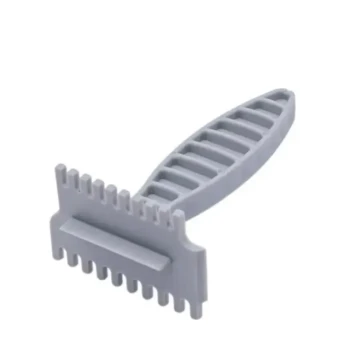
- Lightweight Durable Plastic Queen Excluder Scraper for Beekeeping
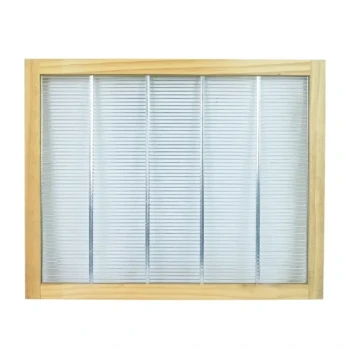
- Premium Wood Framed Metal Wire Queen Bee Excluder
- Professional Plastic Queen Excluder for Modern Beekeeping
- Metal Queen Bee Excluder for Beekeeping
People Also Ask
- What are the characteristics of a plastic queen excluder? Key Benefits for Cost-Effective Beekeeping
- What are the operational and cost advantages of using plastic queen excluders over metal or wire excluders in commercial hive management? Discover how they reduce labor, prevent wing damage, and lower total costs.
- What types of queen excluders are available for beekeepers? Choose the Right Tool for Your Hive
- Why are standardized hive frames and queen excluders essential for maintaining honey purity and quality? Scale Your Purity
- Do plastic queen excluders work? A Cost-Effective Solution for Modern Apiaries