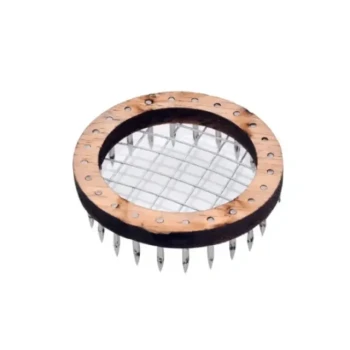
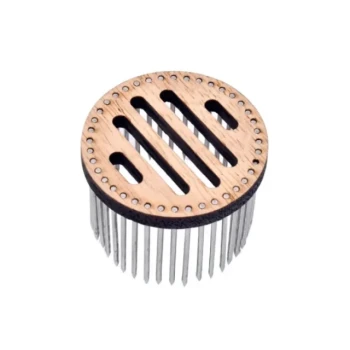
The fundamental technical principle behind using Wooden Blocks for propolis induction is the intentional creation of a persistent structural gap within the hive architecture. By inserting these blocks between the hive cover and the brood chamber, you artificially disrupt the hive's physical integrity, triggering the colony's instinctive drive to seal the opening with resin.
This method leverages the honeybee's biological imperative to maintain a sealed environment. By introducing a controlled opening, you effectively convert the hive’s defense mechanism into a production process, forcing the bees to deposit propolis at specific boundaries to close the gap.
The Mechanics of Induction
Creating the Structural Breach
The primary function of the Wooden Blocks is to separate the hive cover from the brood chamber.
This separation creates a continuous physical opening that the bees perceive as a threat to the hive's internal climate and security.
Defining Spatial Boundaries
Beyond simply creating a gap, the blocks serve as physical guides for the bees.
They define the specific spatial boundaries where resin deposition must occur, allowing you to control exactly where the propolis is accumulated.
The Biological Response
Restoring Hive Integrity
Honeybees are genetically programmed to eliminate drafts and seal crevices to protect the colony.
When the blocks create an opening, the colony prioritizes restoring the integrity of the hive structure.
Forced Accumulation
The presence of the blocks forces the bees to actively hunt for and process resins.
They accumulate propolis at the opening not as a surplus resource, but as a necessary repair material to close the breach created by the blocks.
Chemical and Quality Implications
Influence on Mineral Content
It is critical to understand that this induction method is not chemically neutral.
The use of Wooden Blocks can result in specific mineral variations within the harvested propolis samples.
Seasonal Variations
These chemical changes are often linked to environmental timing.
For example, samples collected using this method may exhibit increased levels of magnesium, particularly during specific seasons.
Understanding the Trade-offs
Compositional Consistency
While this method is effective for inducing production, it introduces variables into the final product's chemistry.
The interaction between the spatial boundaries and seasonal factors can alter the mineral profile (e.g., magnesium levels), meaning the propolis you harvest may differ chemically from propolis collected via other methods.
Structural Stress
This method relies on creating a "problem" for the bees to solve.
You are intentionally compromising the hive's insulation to force production, which requires the colony to divert energy toward gathering resin rather than other hive maintenance tasks.
Making the Right Choice for Your Goal
To apply this principle effectively, consider your specific production objectives:
- If your primary focus is inducing accumulation: Utilize Wooden Blocks to create a persistent gap that triggers the bees' natural sealing instinct.
- If your primary focus is chemical standardization: Be aware that this method may elevate specific minerals like magnesium, potentially altering the chemical profile of your yield based on the season.
By controlling the physical structure of the hive, you directly dictate the biological behavior of the colony.
Summary Table:
| Feature | Technical Detail | Impact on Production |
|---|---|---|
| Core Mechanism | Structural gap creation | Triggers instinctive sealing behavior |
| Placement | Between hive cover and brood chamber | Defines precise spatial boundaries for collection |
| Biological Driver | Hive integrity restoration | Forces active resin gathering and deposition |
| Chemical Profile | Potential mineral variation | May increase magnesium levels seasonally |
| Efficiency | High-volume induction | Concentrates propolis at accessible contact points |
Elevate Your Propolis Production with HONESTBEE
At HONESTBEE, we specialize in empowering commercial apiaries and global distributors with the professional-grade tools needed for high-yield propolis harvesting. Whether you are seeking precision-cut consumables like wooden blocks or advanced honey-filling and hive-making machinery, our comprehensive wholesale portfolio is designed to optimize your operations.
Our Value to You:
- Full Spectrum Supply: From specialized hardware to essential industry consumables.
- Expert Solutions: Specialized machinery tailored for commercial-scale beekeeping.
- Cultural Merchandise: A wide array of honey-themed products to diversify your market reach.
Ready to scale your apiary's efficiency? Contact us today to discover how HONESTBEE’s premium equipment and wholesale expertise can drive your business forward.
References
- Edison Antônio de Souza, Ricardo de Oliveira Orsi. Effects of seasonal variations and collection methods on the mineral composition of propolis from Apis mellifera Linnaeus Beehives. DOI: 10.1590/1519-6984.16714
This article is also based on technical information from HonestBee Knowledge Base .
Related Products
- Wood and Mesh Push-In Queen Cage
- Premium Wood and Steel Push In Queen Cage
- 8 Frame and 10 Frame Propolis Trap Collector Screen for Propolis Collection
People Also Ask
- When is a queen introduced with a push-in cage ready for full release? Key Signs for Maximum Colony Acceptance
- How are queen cages used to protect newly hatched queens? Secure Your Virgin Queens During Development
- Why are queen cages or grid cages used in bee studies? Achieve Precise Biological Data for Research
- What advantages do push-in queen cages offer? Boost Acceptance Rates for Artificially Inseminated Queens
- What is a push-in queen cage and how does it differ from a standard queen cage? Boosting Your Queen Acceptance Rates