Wild rockbee wax must be treated as a lower-melting, impurity-rich, compositionally variable feedstock. Industrial operators should account for its approximately 59.6°C melting point, acid value of about 6.64, high wax-ester content of 85–90%, low specific gravity, and elevated pollen, dust, and comb-debris load. These properties determine heating controls, filtration capacity, separation methods, and the suitability of the wax for foundation sheets, candles, and commercial blocks.
The key operating principle is precise, gentle heating combined with staged clarification. Wild wax must be heated enough to liquefy completely, but not exposed unnecessarily to high temperatures that can darken the material or degrade its ester-rich composition.
Why Wild Wax Requires Different Processing Controls
Its melting point is lower than standard beeswax
Wild rockbee wax has a reported melting point of approximately 59.6°C, below the commonly cited 62–65°C range for ordinary beeswax.
This difference matters when configuring wax melters, heated transfer lines, refining tanks, and foundation machinery. A temperature profile designed for conventional beeswax may apply excessive heat to wild wax.
Its composition is rich in wax esters
Wax esters represent approximately 85–90% of wild rockbee wax. These compounds contribute to the material’s structure, hardness, and useful forming characteristics.
However, the high ester concentration also reinforces the need for controlled thermal exposure. Excessive or prolonged heating can contribute to darkening and thermal degradation, reducing appearance and potentially affecting finished-product performance.
Its acid value affects quality control
An acid value of approximately 6.64 provides an important chemical quality indicator. It can be used by processors and buyers as part of incoming-lot testing and supplier qualification.
The value should not be considered in isolation. It is most useful alongside melting behavior, color, contamination levels, moisture, and the intended end use.
Thermal Properties That Affect Machinery
Heating must be sufficient but tightly controlled
The wax must reach full liquefaction before filtration, pumping, or molding. Incomplete melting can cause blockages, uneven flow, and inconsistent foundation thickness.
At the same time, operators should avoid treating the material as if it requires the higher temperature normally used for a different beeswax grade. The correct approach is calibrated heating near the minimum effective liquefaction temperature, with reliable temperature monitoring throughout the system.
Tank temperature is not the same as wax temperature
A heater setpoint does not necessarily represent the actual wax temperature. Heat-transfer surfaces, tank walls, circulation zones, and stagnant pockets may be significantly hotter than the bulk material.
Industrial systems should therefore use multiple temperature checks where practical, especially near heating elements, discharge outlets, and recirculation points. Agitation or controlled circulation can improve uniformity without requiring excessive heat.
Thermal residence time matters
Even when the temperature is acceptable, holding wax hot for too long can increase color change and degradation risk. Processing lines should minimize unnecessary dwell time between melting, clarification, and forming.
Insulated tanks, properly sized heating elements, and efficient transfer arrangements help maintain flow while reducing repeated reheating cycles.
Contamination Properties That Affect Rendering
Raw wild wax can carry a heavy debris load
Crude wild wax may contain elevated amounts of pollen, dust, larval residue, comb fragments, and other debris. These contaminants can enter pumps, valves, filters, molds, and foundation-forming equipment.
The result may be reduced throughput, frequent cleaning, dark product color, surface defects, or premature wear on filtration components.
Multi-stage filtration is essential
Pre-filtering through stainless-steel strainers should occur before the wax enters precision equipment. A staged arrangement allows coarse comb debris to be removed first, followed by finer particulate clarification.
Using several filtration stages is generally more practical than relying on one fine filter, because the first stage protects the finer elements from rapid blockage. Filter selection should match the incoming contamination level and the required purity of the finished product.
Clarification improves downstream reliability
Clarification equipment allows suspended material to separate before the wax is converted into blocks, candles, or foundation sheets. This is particularly important when the final product requires a smooth surface, consistent color, or dependable forming behavior.
For commercial operations, the clarification stage should be treated as a production-control step rather than an optional finishing process.
Physical Properties That Influence Separation and Forming
Low specific gravity supports hot-water separation
Beeswax has a specific gravity of less than 1.0, so it is less dense than water and tends to float. Hot-water separation systems can use this property to separate wax from heavier debris and slumgum.
The separation tank must still provide adequate heating and residence time. If the wax is not fully liquefied, solid fragments and trapped impurities may reduce separation efficiency.
Wild wax may be particularly strong and stiff
Wax from giant honey bees, including Apis dorsata, is described as exceptionally strong and stiff because it naturally supports large open-air combs.
This characteristic can be beneficial for candles, blocks, and foundation sheets, but it may also affect forming pressure, cooling behavior, and mold release. Foundation machinery should be selected and adjusted according to the actual wax grade rather than assuming all beeswax behaves identically.
Water insolubility affects washing and drainage
Beeswax is insoluble in water, which supports water-based separation and washing methods. However, residual water must be removed before final molding, storage, or packaging.
Water remaining in the wax can cause foaming, spitting, surface defects, and inconsistent block quality. Drying, settling, or controlled drainage should therefore be included where the process uses hot water.
What Equipment Operators Should Monitor
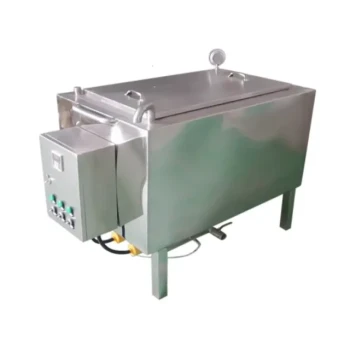
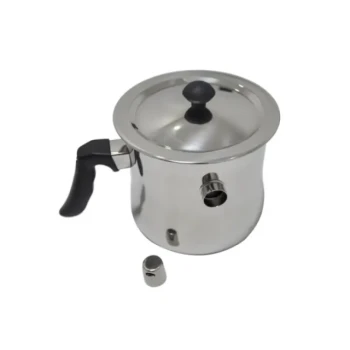
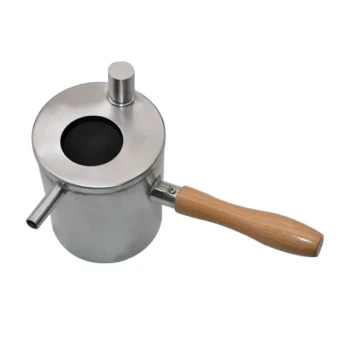
Wax melters
Wax melters should provide:
- Accurate temperature control near the wax’s actual melting range.
- Even heat distribution without localized scorching.
- Sufficient capacity for the expected debris load.
- Easy access for removing settled slumgum and cleaning internal surfaces.
Direct contact between wax and overheated heating elements should be avoided whenever possible.
Refining tanks
Refining tanks should support:
- Controlled heating and steady circulation.
- Adequate settling time for suspended impurities.
- Drainage of heavier residues from the lower section.
- Sampling before the wax moves to the forming stage.
A tank that melts wax quickly but cannot clarify it consistently is not adequate for premium commercial output.
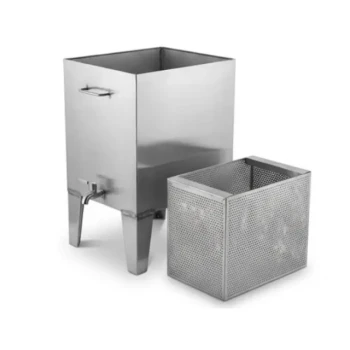
Strainers and clarification equipment
Strainers should be arranged from coarse to fine. Operators should monitor pressure rise, flow reduction, and filter loading because wild wax may block screens faster than relatively clean cappings wax.
Stainless-steel contact surfaces are preferred for durability, sanitation, and compatibility with repeated cleaning.
Foundation and molding machinery
Foundation presses, rollers, molds, and cooling systems must accommodate the wax’s melting and stiffening behavior. Inconsistent temperature can produce brittle sheets, uneven thickness, sticking, or poor dimensional stability.
Before full production, processors should conduct a controlled trial using the specific wild-wax lot and adjust cooling, pressure, and feed rate accordingly.
Understanding the Trade-offs
Lower-temperature processing protects quality but can reduce flow margin
Operating close to the wax’s melting point helps limit darkening and ester degradation. However, insufficient temperature can create high viscosity, incomplete filtration, and unstable flow.
The practical solution is not simply “lower is better.” It is the lowest temperature that maintains complete liquefaction and reliable transfer, verified through actual process measurements.
More filtration improves purity but may reduce throughput
Fine filtration can produce cleaner wax, but it also increases pressure drop and maintenance requirements. If a fine filter is used without upstream coarse screening, the system may clog quickly.
A staged filtration train offers a better balance between product quality, uptime, and operating cost.
Stronger wax can improve product durability but complicate forming
High stiffness may produce durable commercial goods, including foundation sheets and candles. It can also require closer control of forming pressure, temperature, and cooling.
Processors should validate finished-product flexibility and strength rather than relying only on raw-material descriptions.
Natural variation complicates standardized production
Wild wax can vary by colony, location, harvest method, age, contamination, and storage conditions. A single fixed machine setting may therefore be unsuitable for every incoming shipment.
Distributors and processors should use lot-based specifications and retain representative samples for quality comparison.
Common Pitfalls to Avoid
Applying standard beeswax settings without testing
Using a conventional 62–65°C process profile without considering wild wax’s approximately 59.6°C melting behavior may expose the material to unnecessary heat.
Temperature settings should be confirmed against the actual lot and equipment design.
Confusing heater settings with safe process conditions
A thermostat set below a target temperature does not eliminate hot spots. Poorly positioned sensors or undersized circulation can cause localized overheating even when the displayed temperature appears acceptable.
Sensor calibration and temperature mapping are especially important in industrial tanks.
Skipping pre-filtration
Sending crude wild wax directly into foundation rollers, pumps, or fine clarification units can cause blockage and contamination. Pre-filtering protects both the machinery and the commercial value of the finished wax.
Overlooking cleaning and residue management
Pollen, dust, comb debris, and slumgum accumulate in tanks, screens, valves, and transfer lines. Without a defined cleaning schedule, contamination can carry over between batches and degrade product consistency.
How to Apply This to Your Processing Operation
The most reliable approach is to match equipment configuration and operating settings to each wild-wax lot.
- If your primary focus is maximum wax purity: Use staged stainless-steel filtration followed by controlled clarification before the wax reaches molding or foundation equipment.
- If your primary focus is protecting color and chemical quality: Use calibrated, uniform heating near the minimum effective liquefaction temperature and minimize hot residence time.
- If your primary focus is high production throughput: Select melters, pumps, strainers, and tanks with enough capacity for heavy debris loads, and monitor filter pressure to prevent unplanned stoppages.
- If your primary focus is durable foundation or molded products: Test the lot’s stiffness and forming behavior, then adjust pressure, feed temperature, and cooling conditions through a controlled production trial.
- If your primary focus is reliable sourcing: Require lot-level specifications covering melting point, acid value, ester content, color, contamination, and delivery consistency.
When wild honeybee wax is treated as a distinct raw material rather than ordinary beeswax, industrial equipment can deliver cleaner output, better uptime, and more consistent commercial quality.
Summary Table:
| Property | Value/Characteristic | Processing Implication |
|---|---|---|
| Melting point | ~59.6°C (lower than standard beeswax) | Use lower heating profiles to avoid darkening and degradation. |
| Wax ester content | 85–90% | Controlled thermal exposure to preserve quality. |
| Acid value | ~6.64 | Use as quality indicator for incoming lot testing. |
| Specific gravity | <1.0 (floats on water) | Use hot-water separation to remove debris. |
| Contaminants | High pollen, dust, comb debris | Implement multi-stage filtration to protect equipment. |
| Stiffness | Exceptionally strong & stiff | Adjust forming pressure and cooling settings. |
Ready to optimize your beeswax processing line for wild honeybee wax? At HONESTBEE, we specialize in supplying commercial apiaries and distributors with a full spectrum of beekeeping tools, machinery, and equipment. Our comprehensive portfolio includes hive-making and honey-filling machines, along with essential consumables. We understand the unique challenges of processing different wax types and can provide tailored solutions. Benefit from our rapid response, dedicated customer service, and ultra-fast delivery. For distributors and B2B resellers, we offer competitive profit margins, OEM/ODM support, and certified quality. [Contact us today] (#ContactForm) to discuss your specific requirements and enhance your operational efficiency.
Related Products
- Manual Beeswax Flat Sheet Machine for Beeswax Processing
- Electric Flatting and Embossing Machine with Tray for Beekeeping
- Fully Automatic Beeswax Embossing Machine Foundation Mill
- Electric Beeswax Flat Sheet Machine with Operating Tray for Wax Processing
- Manual Beeswax Comb Foundation Machine Wax Foundation Mill Embossing Machine
People Also Ask
- What is the primary function of the double-roller extrusion system? Master Precision Beeswax Foundation Production
- How do cultural merchandise processing machines contribute to the economic value chain? Boosting Apiary Profitability
- What are some practical tips for managing equipment and workspace when processing beeswax? Essential Studio Setup Tips
- How do specialized beeswax processing machines maximize the value of beekeeping by-products? Boost Your Apiary's ROI
- What role does beeswax processing equipment play in development of by-products? Turn Apiary Waste into High-Value Profit